Aster, Genus, tataricus, Species,
- Genus & species
Tatarian aster
Siberia, Mongolia, northern China, Korea, Japan
Overview
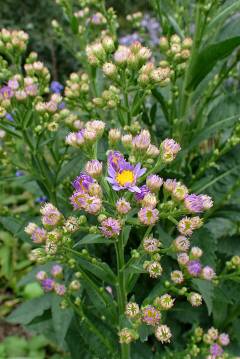
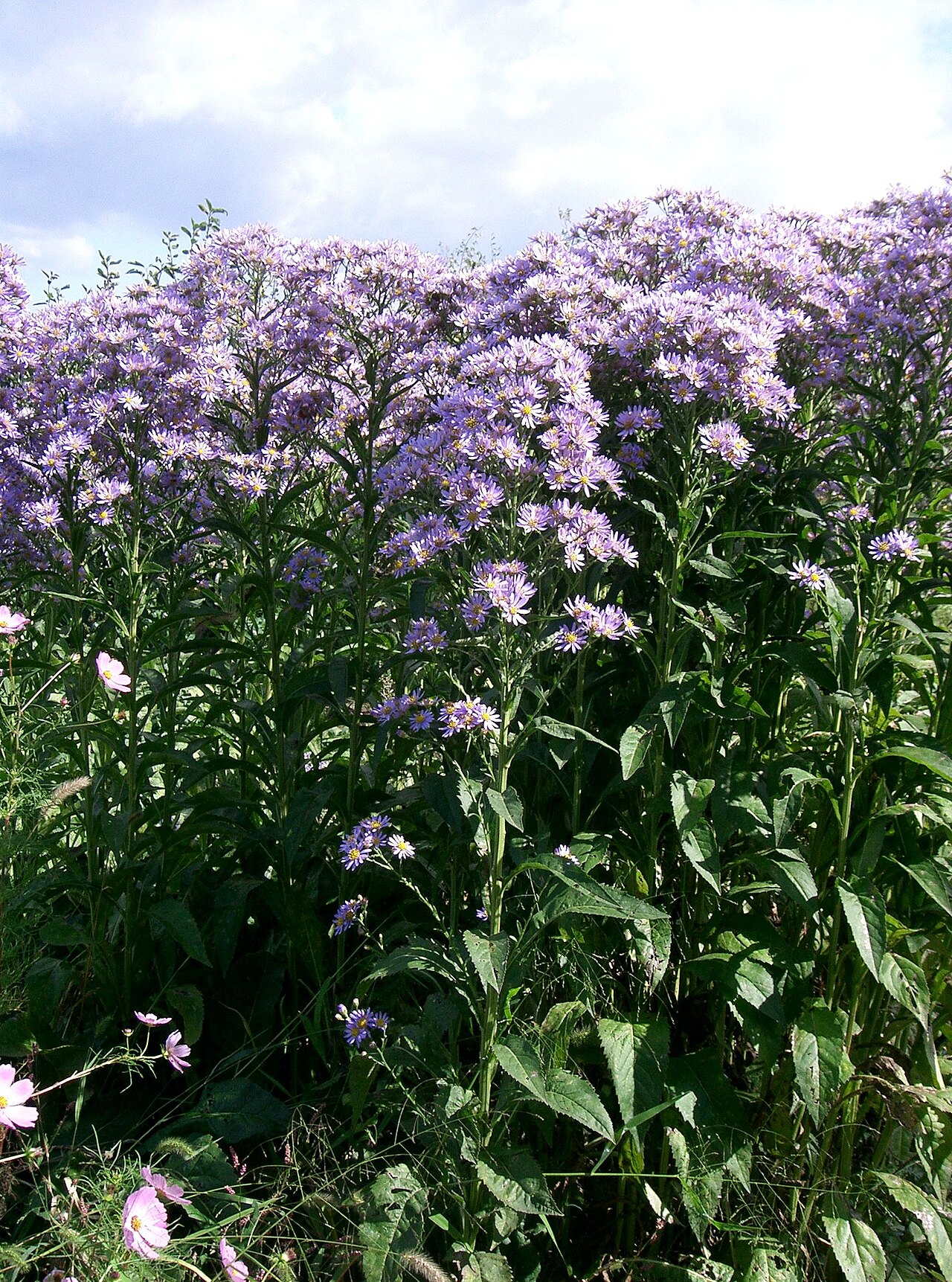
Aster tataricus is a rhizomatous herbaceous perennial in the daisy family (Asteraceae), forming upright, branching stems 4–7 feet (1.2–2.1 m) tall and 2–4 feet (60–120 cm) wide. Basal leaves are lanceolate to elliptic, up to 24 inches (60 cm) long and 4–6 inches (10–15 cm) wide, with rough, sandpapery surfaces and toothed margins. Stem leaves are progressively smaller, 2–6 inches (5–15 cm) long, and clasp or taper toward the stem. Flower heads open from September to October in flat-topped clusters, each head 0.8–1.2 inches (2–3 cm) across, with lilac-blue to pale violet ray florets surrounding a yellow disc. Plants spread by thick underground rhizomes and form colonies 3–4 feet (90–120 cm) wide over several seasons. Stems stand at heights that bend or lodge in wind and heavy rain without support. Foliage is susceptible to powdery mildew in humid summers and dies back after frost. Seed heads with pappus-tipped achenes persist into early winter. The species flowers later than most garden asters, extending bloom into October in zones 5–7.
Native Range
Aster tataricus is native to Siberia, Mongolia, northern China, Korea, and Japan. It grows in moist meadows, stream margins, and open woodland edges from lowlands to elevations of about 4,500 feet (1,400 m).Suggested Uses
Used at the back of perennial borders, in naturalistic meadow plantings, and along pond edges where soil stays moist. Flowers are visited by bees and butterflies in October, when few other perennials are blooming.How to Identify
Appearance
Size & Dimensions
Height4' - 7'
Width/Spread2' - 4'
Bloom Information
Flower heads open from mid-September to October and remain for 4–6 weeks. Ray florets are lilac-blue to pale violet, and the central disc is yellow. Heads are held in flat-topped clusters at the stem tips, and each plant produces 50–150 heads in established clumps.
Detailed Descriptions
Flower Description
Lilac-blue ray florets with yellow discFoliage Description
Mid to dark green with rough textureGrowing Conditions
Sun Requirements
Requires 6-10 hours of direct sunlight daily
• Full Sun: 6+ hours of direct sunlight
• Partial Shade: 3-6 hours of direct sunlight
• Full Shade: Less than 3 hours of direct sunlight
Care & Maintenance
Care Guide
Grows in full sun to light shade in moist, humus-rich soil with a pH of 6.0–7.5. Soil that dries for extended periods causes lower leaves to scorch and drop. Hardy in USDA zones 4–8. Plants spread by rhizomes and are divided every 3–4 years in spring to limit colony size. Stems reaching 6 feet (1.8 m) lodge in wind without staking or a cutback in early summer. Powdery mildew develops on leaves in humid conditions with poor air circulation, with spacing of 36 inches (90 cm) between plants reducing its spread.Pruning
Stems are cut to 6–12 inches (15–30 cm) above ground in late fall after frost or in early spring before new growth. Cutting stems back by half in late May to early June reduces final height to 3–4 feet (90–120 cm) and delays bloom by 1–2 weeks. Seed heads can be left standing through winter.Pruning Schedule
Prune: March, May & November
fallearly springlate spring