Image 1 of 5
1 / 5
© I would appreciate being notified if you use my work outside Wikimedia. More of my work can be found in my personal gallery., some rights reserved (CC-BY) · Wikimedia Commons
Asplenium, Genus, scolopendrium, Species, 'Angustatum', Cultivar,
- Genus & species
- Cultivar
narrow Hart's tongue fern
Europe, Asia, and eastern North America
Overview
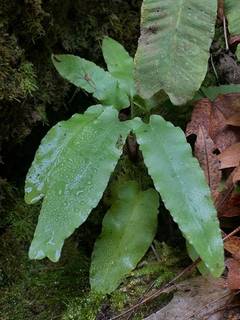
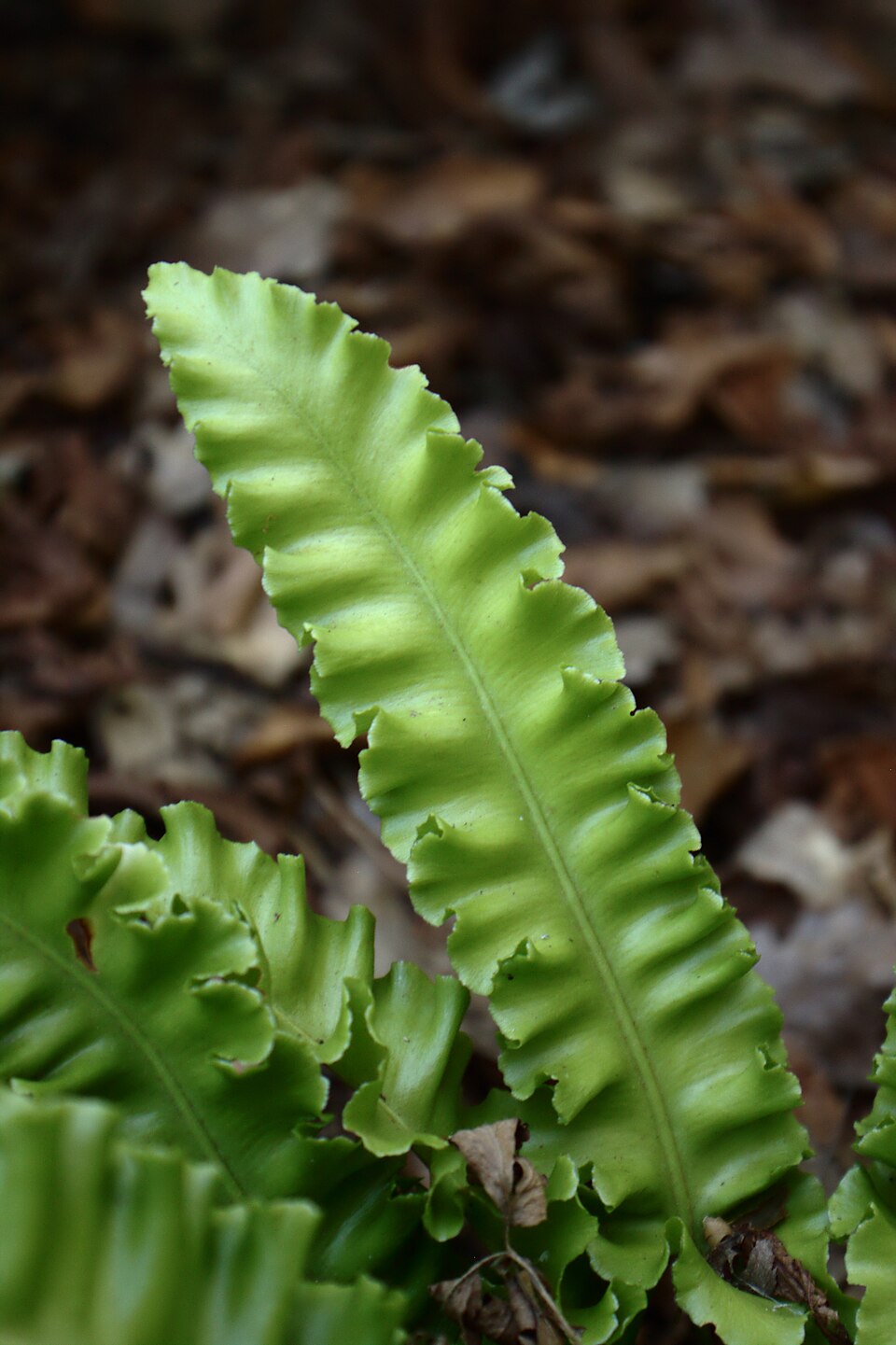
Asplenium scolopendrium 'Angustatum' is an evergreen fern with strap-shaped, undivided fronds that are narrower than those of the species, growing 10-16 inches (25-40 cm) long and 0.75-1.25 inches (2-3 cm) wide. The fronds are glossy mid-green with slightly wavy margins and arch outward from a central crown, forming a shuttlecock-shaped clump 12-18 inches (30-45 cm) wide. The foliage is a single undivided blade rather than the divided frond of most ferns. On the underside, rows of brown spore cases run in herringbone bands at right angles to the midrib. New fronds unfurl in spring from tightly coiled crosiers, and old fronds persist through winter in mild climates. Plants reach full size within three to four years. Asplenium scolopendrium 'Angustatum' grows in part to full shade on moist, well-drained soil rich in organic matter and lime. The fronds scorch and brown at the edges in direct sun or dry wind, and growth stalls in dry soil. Slugs sometimes graze the young crosiers in spring. The clump is slow to establish but long-lived once settled.
Native Range
The species Asplenium scolopendrium is native to Europe, parts of Asia, and eastern North America, where it grows on shaded limestone rocks, walls, and woodland banks. 'Angustatum' is a narrow-fronded selection of this species.Suggested Uses
Planted in shaded borders, woodland gardens, and damp, north-facing beds, spaced 12-18 inches (30-45 cm) apart. Used in groups for the glossy evergreen foliage and grown in containers and on shaded walls. Suited to limestone soils where many ferns struggle.How to Identify
Appearance
Size & Dimensions
Height10" - 1'4"
Width/Spread1' - 1'6"
Bloom Information
Ferns do not flower. Brown spore cases mature on the frond undersides through late summer and autumn and release spores in herringbone bands. New fronds unfurl from coiled crosiers in spring.
Detailed Descriptions
Foliage Description
glossy mid-greenGrowing Conditions
Sun Requirements
Tolerates up to 4 hours of direct sunlight daily
• Full Sun: 6+ hours of direct sunlight
• Partial Shade: 3-6 hours of direct sunlight
• Full Shade: Less than 3 hours of direct sunlight
Care & Maintenance
Care Guide
Grow in part to full shade on consistently moist, well-drained soil enriched with leaf mold and a source of lime. Water during dry spells, as the fronds brown at the edges if the soil dries out. Mulch the crown with leaf mold in autumn to conserve moisture and add organic matter. Tattered or winter-damaged fronds are removed in early spring before the new crosiers unfurl. Direct sun and drying wind scorch the foliage, so a sheltered, shaded site keeps the fronds intact. Slugs sometimes damage emerging fronds and may need managing in spring.Pruning
Cut away old, damaged, or browned fronds at the base in early spring before new growth begins. The evergreen fronds are otherwise left in place through winter for cover. No other pruning is needed.Pruning Schedule
Prune: March
early spring
Container Growing
Suitable for container growing
Minimum container size: 2 gallons