Asplenium, Genus, platyneuron, Species,
- Genus & species
ebony spleenwort
Overview
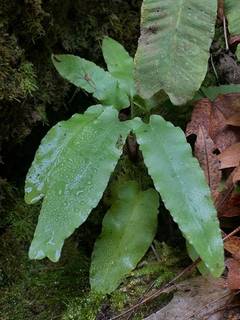
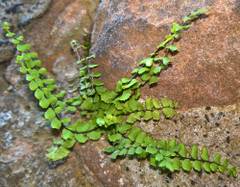
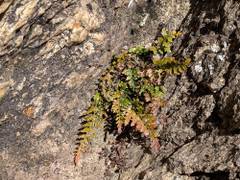
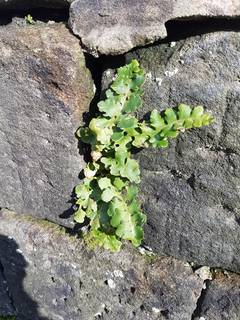
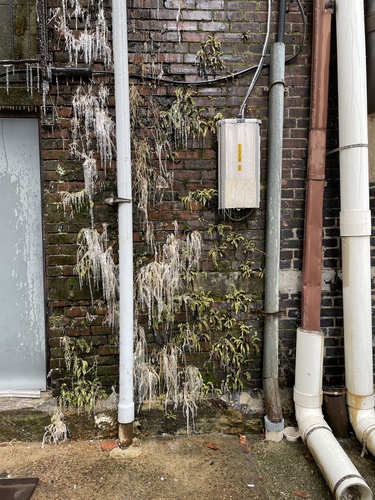
Asplenium platyneuron is a small, semi-evergreen fern of eastern North America, forming clumps of erect fronds 6-18 inches (15-45 cm) tall and 6-12 inches (15-30 cm) wide. The fronds are once-pinnate, with a glossy dark reddish-brown to blackish-purple rachis that gives the plant its common name. Pinnae are alternate, oblong, and auricled at the base where they meet the rachis, each measuring 0.4-0.8 inch (1-2 cm) long. The plant produces two frond forms: tall, narrow fertile fronds that stand upright, and shorter sterile fronds that spread outward and persist through winter in milder zones. Linear sori line the undersides of fertile pinnae, releasing spores in late summer. A. platyneuron grows on rocky banks, wooded slopes, and the mortar of old masonry, tolerating drier and more exposed sites than most spleenworts. It spreads slowly by short rhizomes and by spores, occasionally colonizing disturbed ground. Established clumps stay compact rather than forming large colonies. The fern requires consistent drainage and declines in waterlogged soil. Foliage is dark green and leathery, holding color into winter where temperatures stay above roughly 0F (-18C).
Native Range
Asplenium platyneuron is native to eastern and central North America, from Ontario and Maine south to Florida and west to Texas and the Great Plains. Disjunct populations also occur in South Africa. It grows on rocky banks, wooded slopes, and old masonry.Suggested Uses
A. platyneuron is used in shade and woodland gardens, rock gardens, and crevice plantings on stone walls. It suits naturalistic plantings over alkaline or rocky soil where larger ferns fail to establish. Plants are spaced 8-12 inches (20-30 cm) apart to fill in as a low groundcover.How to Identify
Appearance
Size & Dimensions
Height6" - 1'6"
Width/Spread6" - 1'
Bloom Information
As a fern, A. platyneuron does not flower or set seed. It reproduces by spores borne in linear sori on the undersides of fertile fronds. Spores ripen and release from midsummer through autumn, typically July to October.
Detailed Descriptions
Foliage Description
dark green with reddish-brown to blackish rachisGrowing Conditions
Sun Requirements
Tolerates up to 4 hours of direct sunlight daily
• Full Sun: 6+ hours of direct sunlight
• Partial Shade: 3-6 hours of direct sunlight
• Full Shade: Less than 3 hours of direct sunlight
Care & Maintenance
Care Guide
A. platyneuron grows in part to full shade and tolerates more sun than most spleenworts where soil stays moist. It establishes in well-drained, circumneutral to slightly alkaline soils and occurs naturally over limestone and old mortar. Water needs are low to moderate once established, as the rhizomes decay in saturated ground. Hardy in USDA zones 3-8, it withstands winter cold, and a loose leaf mulch protects the rhizomes on exposed sites. Plants in humus-rich soil need no supplemental feeding. Clumps divide in spring, though divisions re-establish slowly.Pruning
A. platyneuron needs no routine pruning. Browned or winter-damaged fronds can be removed in early spring before the new crosiers unfurl. Old fertile fronds may be cut at the base once spores have shed.Pruning Schedule
early spring
Container Growing
Suitable for container growing
Minimum container size: 1 gallons