Asplenium, Genus, trichomanes, Species,
- Genus & species
maidenhair spleenwort
Circumboreal — North America, Europe, Asia, parts of Africa
Overview
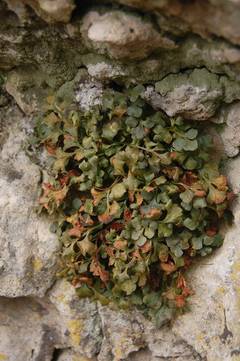
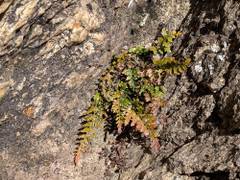
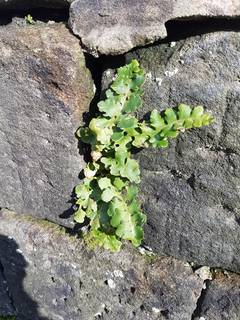
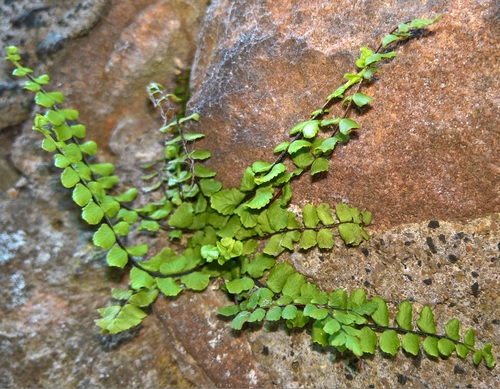
Asplenium trichomanes is a compact, clump-forming evergreen fern reaching 4–8 inches (10–20 cm) tall with a spread of 6–12 inches (15–30 cm). Fronds are pinnate, 3–8 inches (8–20 cm) long, with 15–35 pairs of small rounded to oval pinnae, each 0.2–0.4 inch (5–10 mm) long, arranged along a wiry dark brown to black rachis (central stalk). New fronds emerge in spring, unfurling from a central rosette. The dark rachis persists after the green pinnae have dropped, creating a wiry, thread-like texture at the crown. The plant grows from a short erect rhizome and forms tight tufted rosettes. Multiple crowns develop over time, producing a dense cluster of rosettes within 3–5 years. Sori (spore-producing structures) appear as linear patches on the underside of the pinnae, covered by a narrow indusium. Two subspecies are common in cultivation: ssp. trichomanes grows on acidic substrates, while ssp. quadrivalens grows on alkaline and calcareous substrates, including limestone and mortar. The fern is slow-growing, adding 2–4 new fronds per crown per year. Old fronds brown at the tips and rachis bases accumulate at the crown; in poorly drained crevices, this debris can trap moisture and promote crown rot.
Native Range
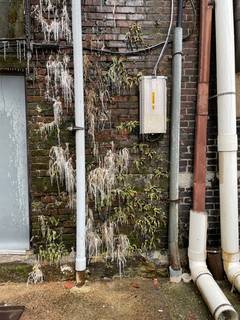
Asplenium trichomanes is native throughout the Northern Hemisphere, occurring across North America, Europe, Asia, and parts of Africa. In North America, it ranges from Alaska and Newfoundland south to Arizona and Georgia. It grows on rock faces, cliff crevices, stone walls, and rocky slopes, typically in shaded or partially shaded sites at elevations from near sea level to 10,000 feet (3,000 m).Suggested Uses
Planted in rock garden crevices, stone walls, and shaded rock faces where sharp drainage is available. Suitable for troughs and alpine containers of at least 1 gallon (4 L) with a gritty, well-drained mix of equal parts gravel, sand, and leaf mold. The compact size suits small-scale shade gardens, terrarium edges, and crevice plantings between pavers. Space 6–8 inches (15–20 cm) apart when planting multiple crowns.How to Identify
Appearance
Size & Dimensions
Height4" - 8"
Width/Spread6" - 1'
Bloom Information
Ferns do not produce flowers. Sori develop on the undersides of fertile fronds from mid-summer through fall, appearing as narrow linear patches covered by a thin indusium. Spores ripen and release from August–October. Spore germination requires consistently moist, shaded conditions on appropriate substrates.
Detailed Descriptions
Foliage Description
Medium green pinnae on dark brown-black rachisGrowing Conditions
Sun Requirements
Requires 1-4 hours of direct sunlight daily
• Full Sun: 6+ hours of direct sunlight
• Partial Shade: 3-6 hours of direct sunlight
• Full Shade: Less than 3 hours of direct sunlight
Care & Maintenance
Care Guide
Plant in well-drained rocky or gravelly soil in partial shade to full shade. This fern requires sharp drainage at the crown; it grows naturally in rock crevices where water drains away quickly. Standing moisture at the crown causes rot. Match the substrate to the subspecies: ssp. trichomanes requires acidic conditions (pH 5.0–6.5), while ssp. quadrivalens requires alkaline to neutral conditions (pH 6.5–8.0) and grows on limestone, tufa, and old mortar. Supplemental water during extended dry periods of more than 2 weeks maintains frond quality, though overwatering in poorly drained soil is more damaging than brief drought. The slow growth rate means damaged or lost fronds take one full season to replace.Pruning
Remove brown or dead fronds at the base in early spring before new fronds unfurl. Clear accumulated rachis debris from the crown to prevent moisture trapping. No other pruning is required. The wiry rachis is brittle and snaps if bent during handling.Pruning Schedule
Prune: March
early spring
Container Growing
Suitable for container growing
Minimum container size: 1 gallons