Asplenium, Genus, scolopendrium, Species,
- Genus & species
harts tongue fern
Europe (Britain, Ireland, western and central Europe, the Mediterranean) and rarely in eastern North America; shaded limestone outcrops, walls, and woodland soils
Overview
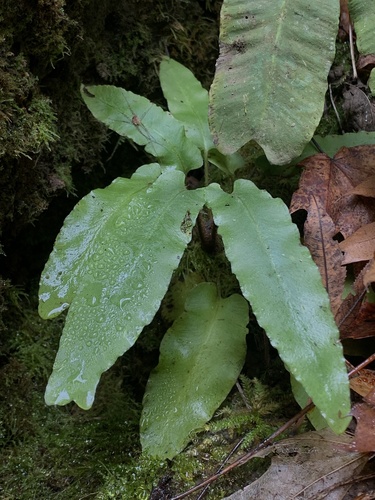
Asplenium scolopendrium (hart's tongue fern, European hart's tongue fern) is a clumping evergreen fern growing 12-18 inches (30-45 cm) tall and 12-18 inches (30-45 cm) wide. Foliage consists of glossy bright to mid-green undivided strap-shaped fronds with a prominent midrib and a heart-shaped (cordate) base. The undivided fronds resemble a deer's tongue and give the plant its common name. The undivided strap-shaped fronds contrast with the pinnate or further-divided fronds typical of most temperate ferns. Family Aspleniaceae; some authorities place the species in the genus Phyllitis as Phyllitis scolopendrium. The species epithet scolopendrium refers to the herringbone arrangement of the linear sori on the frond undersides, which the early botanists likened to a centipede. Native to Europe (Britain, Ireland, western and central Europe, the Mediterranean) and rarely in eastern North America, where it occurs on shaded limestone outcrops, walls, and woodland soils. Lime-tolerant — the species grows in alkaline conditions (pH 6.5-8.0) where most ferns fail, and is well-suited to chalky soils. Susceptible to crown rot in waterlogged soil and to slug damage on young fronds. Growth rate is slow; clumps reach mature size in 3-5 years. Plants are deer-resistant and non-toxic to pets and humans. Hardy in zones 5-9. Grown in full to partial shade.
Native Range
Native to Europe (Britain, Ireland, western and central Europe, the Mediterranean), where it occurs on shaded limestone outcrops, old walls, and woodland soils. The species is also rare in eastern North America, where it is found in scattered populations in limestone ravines.Suggested Uses
Asplenium scolopendrium is grown in shaded woodland gardens, on limestone walls, in fern collections, and in containers of at least 2 gallons (7.5 L), spaced 12-18 inches (30-45 cm) apart. The species grows on chalky soils where many other ferns do not survive. Slugs damage young fronds in moist locations. Plants are deer-resistant and non-toxic. Hardy in zones 5-9.How to Identify
Appearance
Size & Dimensions
Height1' - 1'6"
Width/Spread1' - 1'6"
Bloom Information
Ferns reproduce by spores rather than flowers. Spores form in linear sori arranged in a herringbone pattern on the undersides of mature fronds from June through September.
Detailed Descriptions
Foliage Description
Glossy bright to mid-green undivided strap-shaped fronds with a prominent midrib and a heart-shaped (cordate) base; the fronds resemble a deer's tongue, the source of the common name.Growing Conditions
Sun Requirements
Tolerates up to 3 hours of direct sunlight daily
• Full Sun: 6+ hours of direct sunlight
• Partial Shade: 3-6 hours of direct sunlight
• Full Shade: Less than 3 hours of direct sunlight
Care & Maintenance
Care Guide
Grown in full to partial shade with 0-3 hours of direct sun. Soil is moist, well-drained loam or chalky soil with a pH of 6.5-8.0; the species tolerates alkaline conditions where most ferns fail. Winter-damaged fronds are removed in February-March before new fronds expand. Crown rot develops in waterlogged soil, and slugs feed on young fronds. Plants are deer-resistant and non-toxic to pets and humans. Hardy in zones 5-9.Pruning
Winter-damaged or dead fronds are cut back in early spring (February-March) before new fronds expand. No other pruning is required.Pruning Schedule
Prune: February–March
early spring
Container Growing
Suitable for container growing
Minimum container size: 2 gallons