Asimina, Genus, triloba, Species,
- Genus & species
pawpaw
Eastern North America (Ontario to Florida, west to east Texas)
Overview
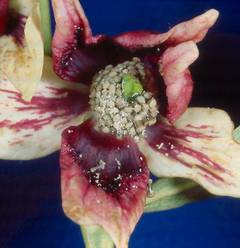
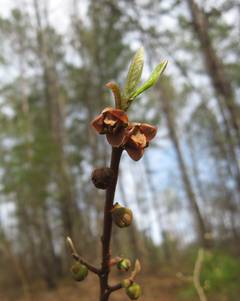
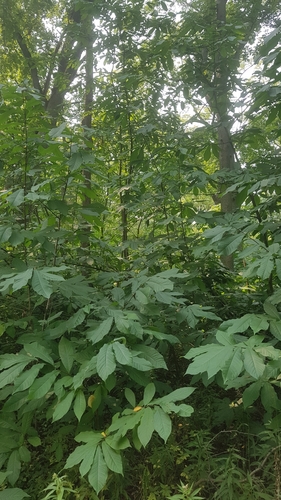
Asimina triloba is a deciduous tree reaching 15–30 feet (4.5–9 m) tall with a spread of 15–25 feet (4.5–7.5 m), often forming a pyramidal to rounded crown. In the wild, it frequently suckers from the root system to form multi-stemmed thickets. Leaves are alternate, oblong-obovate, 6–12 inches (15–30 cm) long and 3–5 inches (8–13 cm) wide, medium green, drooping slightly along the branches. Foliage emits an unpleasant odor when crushed. Flowers appear before or as leaves emerge in April–May, 1–2 inches (2.5–5 cm) across, with six fleshy petals that open green and age to dark maroon-purple. Individual flowers last 7–10 days. Fruit is an oblong berry 2–6 inches (5–15 cm) long, green ripening to yellow-brown in September–October, with soft custard-like yellowish flesh and large brown seeds — the largest edible fruit produced by any tree native to temperate North America. Fruit production requires cross-pollination between genetically distinct trees; a single tree or a clonal thicket produces little to no fruit. Flowers are pollinated primarily by flies and beetles rather than bees. Fall foliage turns yellow. Bark is gray-brown, thin, and smooth on young trees, becoming slightly warty with age. Transplanting is difficult due to a long, fleshy taproot; container-grown stock establishes more reliably than bare-root. Deer browse foliage occasionally, and raccoons and opossums consume ripe fruit.
Native Range
Asimina triloba is native to eastern North America, from Ontario and Michigan south to Florida and east Texas. It occurs in moist bottomland forests, stream banks, ravines, and the understory of mesic deciduous forests from near sea level to 2,600 feet (800 m) elevation. It is the northernmost member of the tropical family Annonaceae.Suggested Uses
Planted as a specimen or understory tree in woodland gardens, native plant gardens, and edible landscapes at 15–20 foot (4.5–6 m) spacing. The suckering habit suits naturalistic plantings and wildlife hedgerows where thicket formation is acceptable. Fruit production requires two or more genetically distinct trees. Not suited for containers due to the deep taproot and mature size.How to Identify
Appearance
Size & Dimensions
Height15' - 30'
Width/Spread15' - 25'
Bloom Information
Fleshy maroon-purple flowers 1–2 inches (2.5–5 cm) across appear in April–May before or as leaves emerge. Individual flowers last 7–10 days. Flowers are protogynous, with the female stage preceding the male stage, requiring cross-pollination from a genetically distinct tree for fruit set. Fruit ripens in September–October, 60–80 days after pollination.
Detailed Descriptions
Flower Description
Green aging to dark maroon-purpleFoliage Description
Medium greenGrowing Conditions
Sun Requirements
Requires 4-8 hours of direct sunlight daily
• Full Sun: 6+ hours of direct sunlight
• Partial Shade: 3-6 hours of direct sunlight
• Full Shade: Less than 3 hours of direct sunlight
Care & Maintenance
Care Guide
Plant container-grown stock in spring in moist, well-drained, slightly acidic soil. Young trees require shade for the first 1–2 years; establish in partial shade and transition to full sun as the canopy develops. The long fleshy taproot makes transplanting difficult; container-grown stock with minimal root disturbance is more reliable than bare-root. Fruit set requires two genetically distinct trees (not root suckers from the same parent) within 30 feet (9 m) of each other. Supplemental water during drought in the first 3–4 years supports establishment. Suckering from the root system produces a thicket if left unmanaged; sucker removal at ground level is an annual task. Few insect pests or diseases affect this species. Fruit drops when ripe and bruises within 1–2 days; hand harvest when fruit yields to gentle pressure.Pruning
Prune in late winter to early spring while dormant to shape the crown and remove crossing or damaged branches. To maintain a single-trunk tree form, remove root suckers at ground level annually during the growing season. Minimal pruning is needed for established trees beyond sucker management and removal of dead wood. Heavy pruning reduces fruit production for 1–2 years.Pruning Schedule
Prune: February–March
early spring