Asimina, Genus, ×, Hybrid, piedmontana, Species,
- Genus & species
- Hybrid
piedmont pawpaw
Southeastern United States (Piedmont and sandhills)
Overview
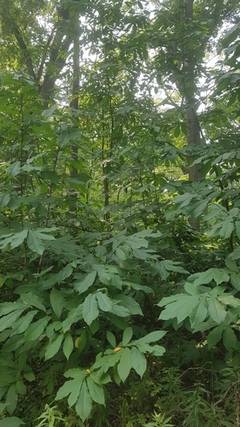
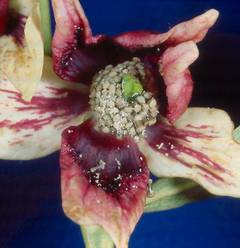
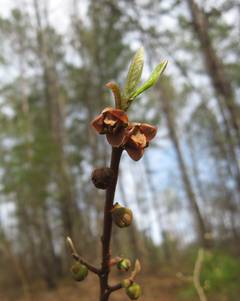
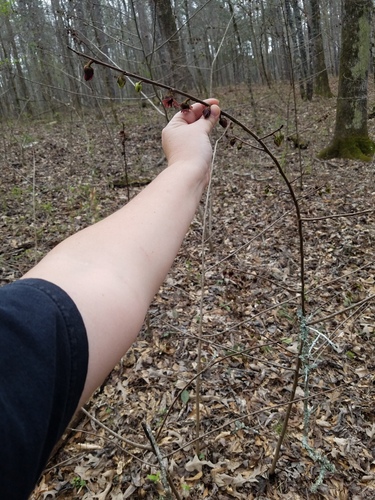
Asimina × piedmontana is a deciduous shrub of natural hybrid origin in the pawpaw genus, found in the southeastern United States. It grows as an upright, suckering shrub usually 3–8 feet (0.9–2.4 m) tall, sometimes forming small thickets from root sprouts. The simple leaves are alternate, oblong to obovate, 3–7 inches (8–18 cm) long, and release a scent when crushed; they turn yellow before dropping in autumn. Bell-shaped flowers about 1 inch (2.5 cm) across hang from the branches in spring as the leaves expand, opening cream to maroon-purple with thick, leathery petals. The flowers are pollinated by flies and beetles drawn to their faint odour. Fruit, where it forms, is a fleshy berry that ripens green to yellowish and is intermediate in size between the fruit of its parent species. The shrub grows in sandy, well-drained soil in open woodland and along sandhill margins, in sun to light shade. As a hybrid it sets fruit irregularly, and plants spread mainly by root suckers.
Native Range
The hybrid occurs in the Piedmont and sandhill regions of the southeastern United States, where the ranges of its parent pawpaws overlap. It grows in dry, sandy woodland and along clearings and roadsides.Suggested Uses
Planted in native and woodland gardens on sandy soil, and in naturalized plantings where its suckering habit suits informal areas. Grown by collectors of the pawpaw genus for its hybrid flowers and foliage.How to Identify
Appearance
Size & Dimensions
Height3' - 8'
Width/Spread3' - 6'
Bloom Information
Bell-shaped flowers open in spring, often March to April, as the new leaves expand. Each bloom has thick, leathery petals shading from cream to maroon-purple and gives off a faint odour that draws flies and beetles. Fruit, where pollinated, develops through summer.
Detailed Descriptions
Flower Description
Cream to maroon-purpleFoliage Description
Green, yellow in autumnGrowing Conditions
Sun Requirements
Requires 4-8 hours of direct sunlight daily
• Full Sun: 6+ hours of direct sunlight
• Partial Shade: 3-6 hours of direct sunlight
• Full Shade: Less than 3 hours of direct sunlight
Care & Maintenance
Care Guide
Grows in sandy, well-drained, acidic soil in full sun to light shade, with a pH from 5.0 to 6.5. Tolerates dry sandhill conditions once established and needs little supplemental water. Young plants grow slowly and establish poorly after root disturbance, so they are set out small and left in place. The shrub spreads by root suckers, forming loose colonies over time. Fruit set is irregular, as the hybrid flowers are not reliably fertile. Hardy through about USDA zones 6–9.Pruning
Little pruning is needed beyond removing dead or damaged stems in late winter. Root suckers are cut back where a single-stemmed form is wanted. The shrub flowers on older wood, so hard pruning reduces the following bloom.Pruning Schedule
Prune: February–March
winterearly spring