Image 1 of 9
1 / 9
© No machine-readable author provided. Laurascudder assumed (based on copyright claims)., some rights reserved (CC-BY-SA) · Wikimedia Commons
Argyroxiphium, Genus, sandwicense, Species,
- Genus & species
Silversword
Hawaiian Islands, alpine zones of Haleakala and Mauna Kea
Overview
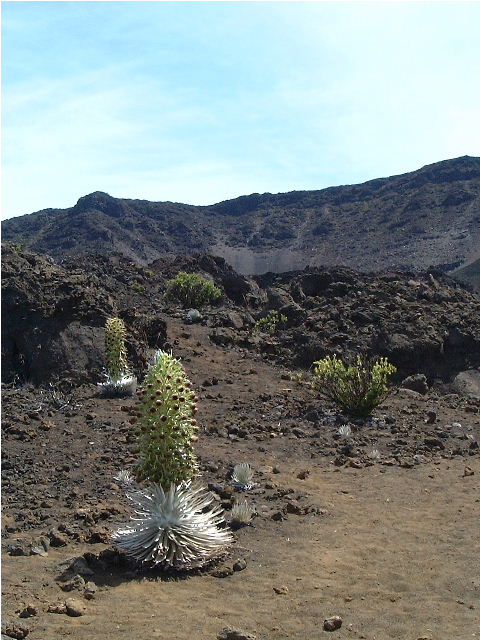
Argyroxiphium sandwicense is a monocarpic rosette perennial of Hawaiian alpine cinder desert, forming a dense hemispherical mound of sword-shaped leaves 1-2 feet (30-60 cm) across. Leaves are 4-10 inches (10-25 cm) long, 0.4-0.8 inch (1-2 cm) wide, and clothed in dense silvery hairs that reflect high-elevation ultraviolet radiation and trap moisture. The rosette persists 15-50 years without flowering, then bolts a single erect stalk 3-6 feet (1-2 m) tall carrying 50-600 nodding heads with maroon to purple ray florets and yellow disc florets. The plant dies once seed ripens, so reproduction rests entirely on that one flowering event. Two subspecies occupy separate mountains: subsp. macrocephalum on Haleakala, Maui, between 6,900 and 9,800 feet (2,100-3,000 m), and subsp. sandwicense on Mauna Kea, Hawaii island, between 8,500 and 12,300 feet (2,600-3,750 m). Both are listed under the United States Endangered Species Act. Feral goats and sheep removed most wild plants before fencing was installed, and disruption of native pollinators by introduced ants limits seed set in the remaining populations. Cultivation outside the tropical alpine zone seldom succeeds, since the plant requires cool nights, intense sun, and sharply drained cinder.
Native Range
Argyroxiphium sandwicense is endemic to Hawaii and confined to two volcanic summits. Subspecies macrocephalum grows in Haleakala crater and on the outer slopes of that mountain on Maui, and subspecies sandwicense on the upper slopes of Mauna Kea on Hawaii island. Both occupy open cinder and lava substrate above the tree line, where annual rainfall is 15-50 inches (380-1,270 mm) and night temperatures drop below freezing through much of the year.Suggested Uses
Grown almost entirely in botanical collections, conservation nurseries, and outplanting programs within the Hawaiian alpine zone. Planted in fenced restoration plots on Haleakala and Mauna Kea at spacings of 3-6 feet (0.9-1.8 m) on open cinder. Outside that habitat it is held under glass in cool alpine houses on cinder substrate at low humidity.How to Identify
Appearance
Size & Dimensions
Height1' - 6'
Width/Spread1' - 2'
Bloom Information
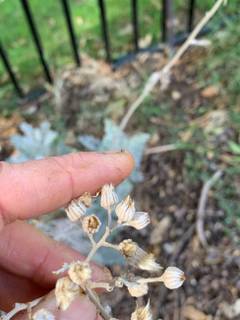
Flowering occurs once in a plant lifetime, between June and November with a July to September peak. The stalk elongates over 4-6 weeks, then heads open in sequence from the base upward across a further 4-8 weeks. Seed ripens 6-10 weeks after flowering and the plant dies, leaving a dry standing stalk that releases achenes through the following winter. Flowering age ranges from 3 to 90 years, with most plants bolting between 15 and 50.
Detailed Descriptions
Flower Description
Maroon to purple ray florets with yellow disc floretsFoliage Description
Silver-grayGrowing Conditions
Sun Requirements
Requires 8-12 hours of direct sunlight daily
• Full Sun: 6+ hours of direct sunlight
• Partial Shade: 3-6 hours of direct sunlight
• Full Shade: Less than 3 hours of direct sunlight