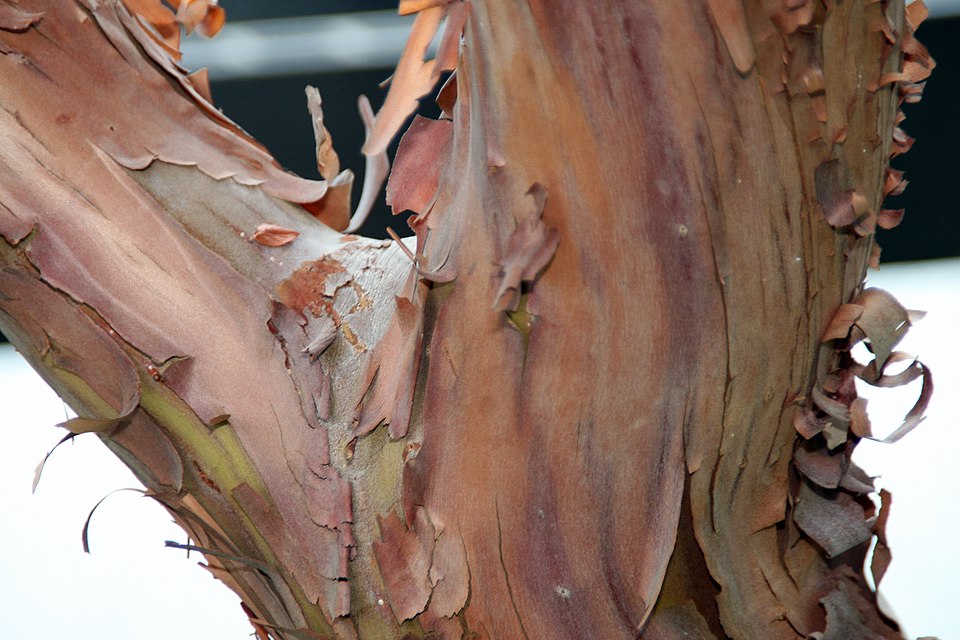
Arbutus, Genus, 'Marina', Cultivar,
- Genus
- Cultivar
marina strawberry tree
Garden hybrid (San Francisco, California); parent species from Mediterranean regions
Overview
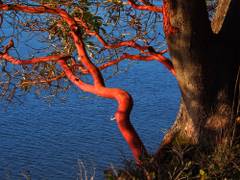
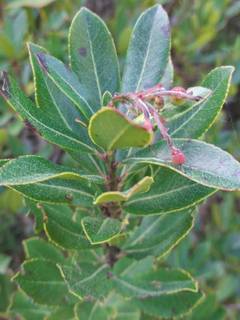
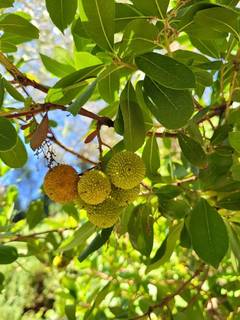
Arbutus 'Marina' is an evergreen tree reaching 20–40 feet (6–12 m) tall and 20–30 feet (6–9 m) wide with a rounded, spreading crown. The cultivar is a hybrid of uncertain parentage, likely involving A. unedo and possibly A. andrachne or A. canariensis; the original tree was found in a garden in the Marina district of San Francisco, California. Bark is reddish-brown, smooth, and exfoliating in thin sheets to reveal green to cinnamon inner bark — more extensive exfoliation than in A. unedo. Leaves are ovate to oblong, 3–5 inches (8–13 cm) long, dark green with smooth to lightly serrated margins, larger than the leaves of A. unedo (2–4 inches / 5–10 cm). Pendant clusters of pink to rosy-pink urn-shaped flowers, each 8 mm long, appear September through December. Fruit is round, warty, 0.5–0.75 inch (1.3–2 cm) in diameter, ripening from yellow to red-orange over 12 months; flowers and fruit are present simultaneously. Growth rate is 18–24 inches (45–60 cm) per year. Cold hardiness is lower than A. unedo, with branch damage below 20°F (−7°C) and significant dieback below 15°F (−9°C). Fallen fruit creates litter on paved surfaces.
Native Range
Arbutus 'Marina' is a garden hybrid of uncertain parentage, discovered growing in the Marina district of San Francisco, California. The probable parent species — A. unedo (Mediterranean Europe), A. andrachne (eastern Mediterranean), and possibly A. canariensis (Canary Islands) — are all from Mediterranean climates.Suggested Uses
Planted as a specimen tree, patio tree, or street tree in Mediterranean-climate regions at 20–25 foot (6–7.5 m) spacing. Year-round structure from evergreen canopy, exfoliating bark, and overlapping flower-and-fruit cycles. Not suited to zones below 8 without protection, wet or poorly drained soils, or sites where fruit litter is unacceptable on paths and patios.How to Identify
Appearance
Size & Dimensions
Height20' - 40'
Width/Spread20' - 30'
Bloom Information
Flowers September through December in zones 8–10, lasting 6–8 weeks. Pink flower color deepens in cooler temperatures below 60°F (16°C). In zone 10, bloom may begin in late August. Fruit from the prior year's bloom ripens concurrently with new flower clusters.
Detailed Descriptions
Flower Description
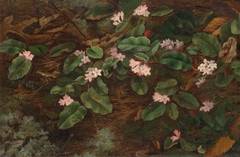
pink to rosy-pink, urn-shapedFoliage Description
dark green, ovate to oblong, smooth to lightly serrated marginsGrowing Conditions
Sun Requirements
Requires 6-10 hours of direct sunlight daily
• Full Sun: 6+ hours of direct sunlight
• Partial Shade: 3-6 hours of direct sunlight
• Full Shade: Less than 3 hours of direct sunlight
Care & Maintenance
Care Guide
Plant in well-drained soil with a pH of 5.5–7.5 in full sun. This cultivar tolerates a broader pH range than most Ericaceae, accepting mildly alkaline conditions to pH 7.5. Water weekly during the first 2–3 growing seasons; reduce to deep watering every 4–6 weeks after establishment. Tolerates coastal salt spray, poor soils, and drought intervals of 6–8 weeks once established. Root rot develops in soggy or poorly drained soils. Sustained temperatures below 20°F (−7°C) cause branch damage; temperatures below 15°F (−9°C) cause significant dieback. Fallen fruit produces persistent litter and can stain paving.Pruning
Prune in early spring (March–April) to shape and remove winter-damaged branches. Can be trained as a single-trunk tree or allowed to develop a multi-stemmed form over 5–7 years. Raising the canopy by removing lower branches exposes the reddish-brown exfoliating bark. Tolerates moderate thinning. Recovery from severe cutbacks is slow, with 3–5 years needed to regain shape.Pruning Schedule
Prune: March–April
early spring