Image 1 of 19
1 / 19
Plant Reference
Arbutus, Genus, unedo, Species,
- Genus & species
strawberry tree
Mediterranean Europe, the Atlantic coast of western Ireland, and North Africa — Portugal, Spain, France, Italy, Greece, Turkey, and the Killarney region of County Kerry, Ireland; maquis scrubland, rocky slopes, and open woodlands on well-drained substrates
Overview
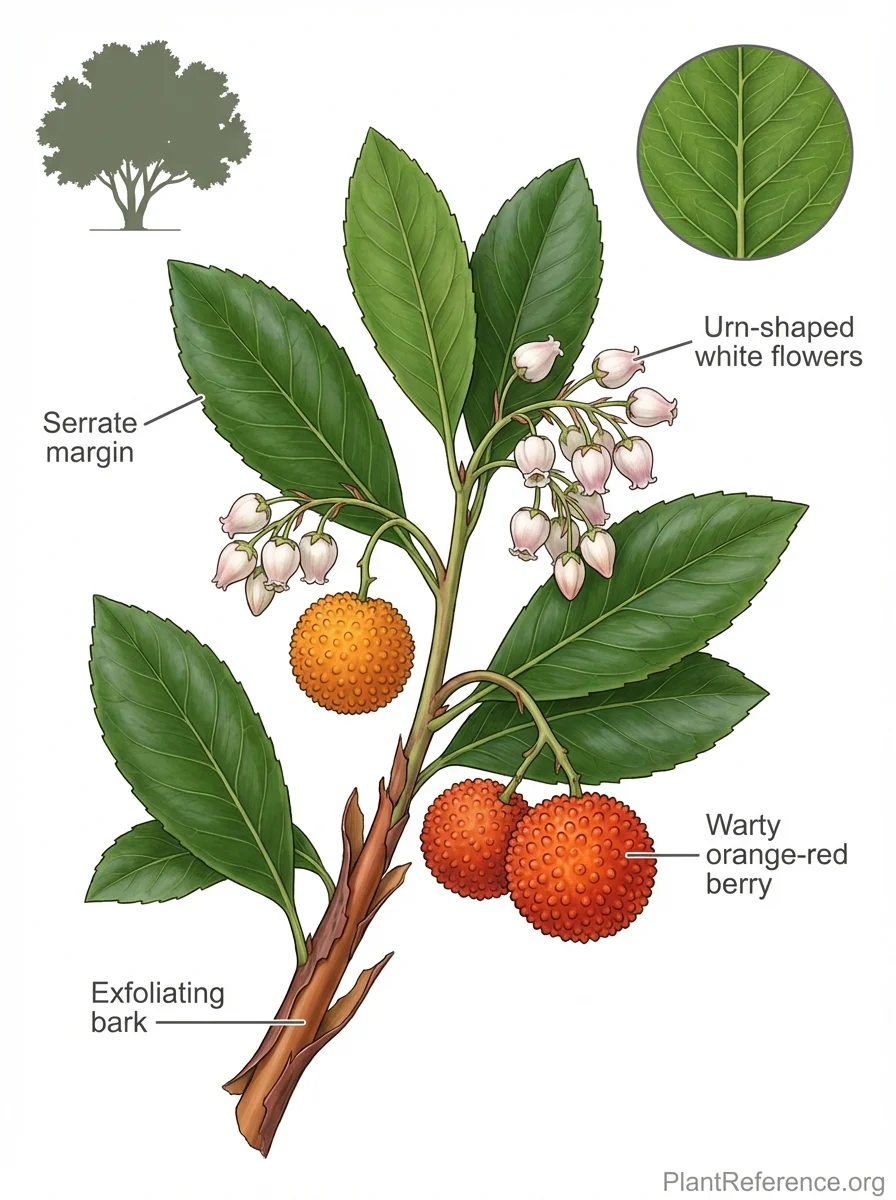
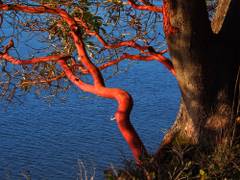
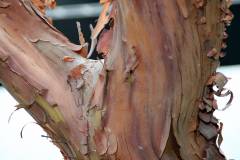
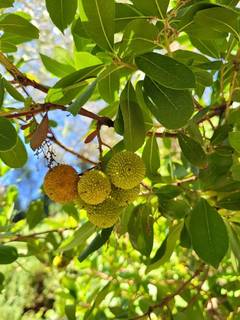
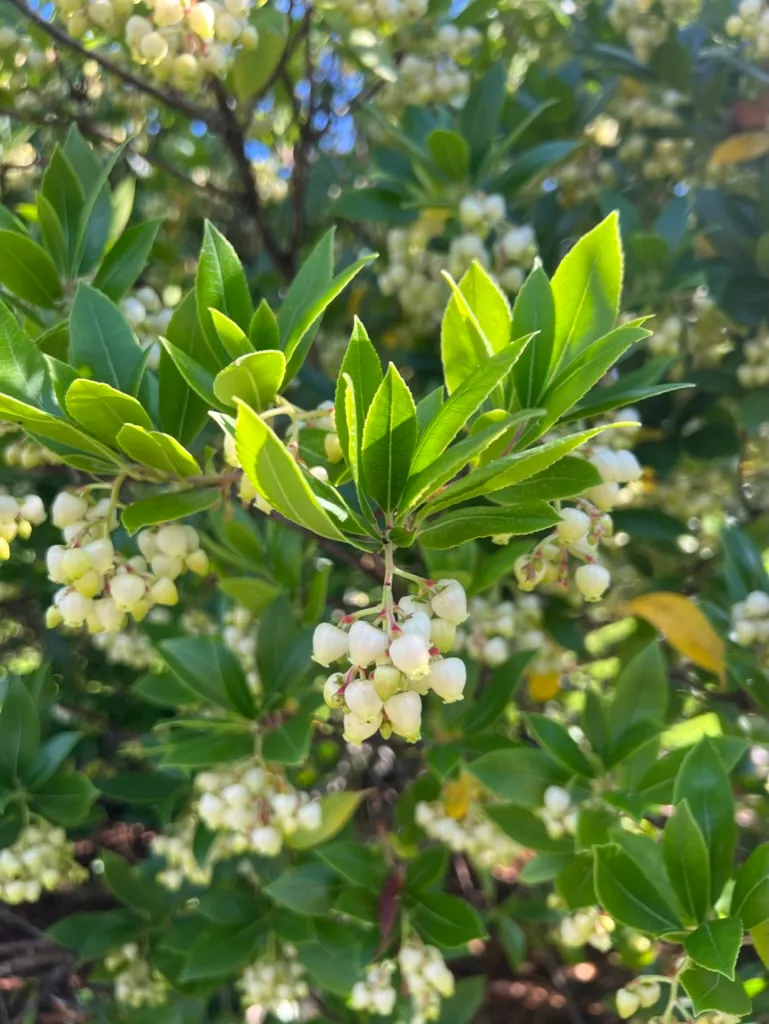
Arbutus unedo is a large upright evergreen shrub or small tree in the heath family Ericaceae growing 10–20 feet (3–6 m) tall and 10–15 feet (3–4.5 m) wide from a multi-stemmed base that develops peeling cinnamon-red bark on the main trunks and branches after several years of growth. The specific epithet unedo is attributed to Pliny the Elder and translates loosely as I eat one — a reference to the bland mealy flavor of the fruit that discourages eating more than one at a sitting. Leaves are glossy dark green, leathery, elliptic to oblanceolate with serrate margins, 2–4 inches (5–10 cm) long, and held through the full year as a dense evergreen canopy. Cream-white to pale pink urn-shaped (urceolate) flowers 0.3 inch (8 mm) long open in pendulous panicles 2–3 inches (5–7 cm) long in October, November, and December across an 8-week bloom period, and the flowers appear on the same branches simultaneously with the round bumpy red strawberry-like fruit 0.5–0.75 inch (1.3–2 cm) from the previous year's flowers that are ripening at the same time as the current year's flowers open — this simultaneous display of open flowers and ripe fruit on the same plant is not matched by any other commonly cultivated woody plant and is the main ornamental character that draws attention to the species during the fall and early winter months. The fruit is edible raw (bland and mealy in texture) and is used in Portugal and other Mediterranean countries to produce medronho, a traditional fruit brandy distilled from the fermented berries. The species tolerates more alkaline soil than most members of the Ericaceae (to pH 7.5), which separates it from the strict acid-soil requirement of most other heaths, azaleas, and blueberries. Native to Mediterranean Europe (Portugal, Spain, France, Italy, Greece, Turkey), the Atlantic coast of western Ireland (the Killarney region of County Kerry), and North Africa. The Irish populations are part of the Lusitanian flora — a group of species shared between the Iberian Peninsula and the Atlantic coast of Ireland that are absent from the intervening regions and represent a biogeographic pattern that predates the last glacial period. Limitation: the species is hardy to approximately 10 °F (−12 °C) and the limited cold hardiness restricts cultivation to USDA zones 7 through 10. Drought-tolerant once established. Non-toxic and deer-resistant.
Native Range
Native to Mediterranean Europe — Portugal, Spain, France, Italy, Greece, and Turkey — the Atlantic coast of western Ireland (the Killarney region of County Kerry), and North Africa. The species grows in maquis scrubland, rocky slopes, and open woodlands on well-drained substrates across the Mediterranean basin. The Irish populations are part of the Lusitanian flora, a biogeographic group of species shared between the Iberian Peninsula and the Atlantic coast of Ireland that are absent from the intervening regions of northern France and Britain and represent a distribution pattern that predates the last glacial period.Suggested Uses
Used as an evergreen specimen shrub or small tree, a screen or windbreak, and a Mediterranean-climate garden anchor in USDA zones 7 through 10 at 10–15 foot (3–4.5 m) spacing between plants. The simultaneous fall display of cream-white flowers and red strawberry-like fruit, the peeling cinnamon-red bark, and the glossy dark green evergreen canopy carry the species through four seasons of ornamental interest, and the edible fruit adds a productive element to garden plantings where the berries are harvested for jam or for the Portuguese medronho brandy tradition. Cold-climate gardens in USDA zones 6 and colder, wet poorly drained positions, and heavy clay soils are unsuitable because of the cold hardiness limit, the drainage requirement, and the tendency for root rot in saturated winter soils.How to Identify
Appearance
Size & Dimensions
Height10' - 20'
Width/Spread10' - 15'
Bloom Information
Cream-white to pale pink urn-shaped flowers 0.3 inch (8 mm) long open in pendulous panicles 2–3 inches (5–7 cm) long in October, November, and December across an 8-week bloom period. The flowers are a late-season nectar source for honeybees and other pollinators that are still active during the mild fall and early winter months in the Mediterranean and maritime climates where the species is grown. Round bumpy red strawberry-like fruit from the previous year's flowers ripens simultaneously with the current year's bloom, and the simultaneous display of flowers and fruit is the main ornamental character of the species during the fall and early winter months.
Detailed Descriptions
Flower Description
cream-white to pale pink urn-shaped (urceolate) flowers 0.3 inch (8 mm) long carried in pendulous panicles 2-3 inches (5-7 cm) long; the flowers open in October through December and appear simultaneously with the ripening red fruit from the previous year's flowersFoliage Description
glossy dark green; leathery elliptic to oblanceolate serrate-margined leaves 2-4 inches (5-10 cm) long; evergreen year-roundGrowing Conditions
Sun Requirements
Requires 4-8 hours of direct sunlight daily
• Full Sun: 6+ hours of direct sunlight
• Partial Shade: 3-6 hours of direct sunlight
• Full Shade: Less than 3 hours of direct sunlight
Care & Maintenance
Care Guide
Site in full sun to partial shade with 4–8 hours of direct sun per day in well-drained soil with a pH of 5.5–7.5. The species tolerates more alkaline soil than most members of the Ericaceae and does not call for the strictly acidic conditions required by most heaths, azaleas, and blueberries in the same family. Drought tolerance develops once the root system is established after the first or second growing season, and the species does not call for supplemental irrigation outside of extended dry periods during the establishment period. The species is hardy to approximately 10 °F (−12 °C) and is grown outdoors permanently in USDA zones 7 through 10. Pruning is done in late winter (February or March) to shape the multi-stemmed canopy and remove crossing or dead branches, and the species can be trained as either a multi-stemmed large shrub or a single-trunk small tree depending on the design goal. Non-toxic and deer-resistant.Pruning
Pruning is done in late winter (February or March) to shape the multi-stemmed canopy and remove crossing, dead, or damaged branches. The species can be trained as a multi-stemmed large shrub or as a single-trunk small tree by selecting a central leader and removing the lower side stems during the early years of growth. The peeling cinnamon-red bark on mature trunks and branches is a main ornamental feature that develops over several years and is displayed to advantage when the lower canopy is lifted to expose the trunk structure.Pruning Schedule
Prune: February–March
late winter
Toxicity
Non-toxicBotanical Flashcard