Antennaria, Genus, rosea, Species,
- Genus & species
rosy pussytoes
Overview
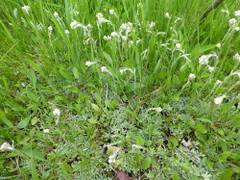
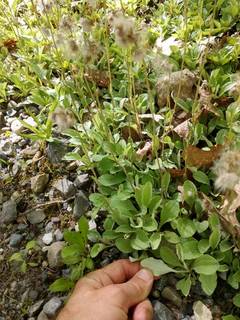
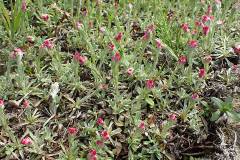
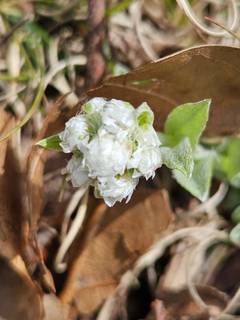
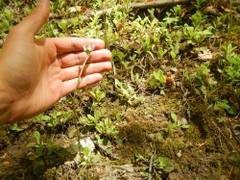
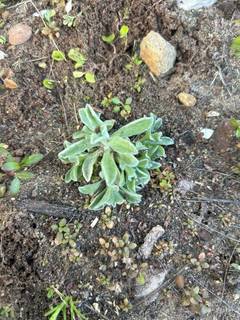
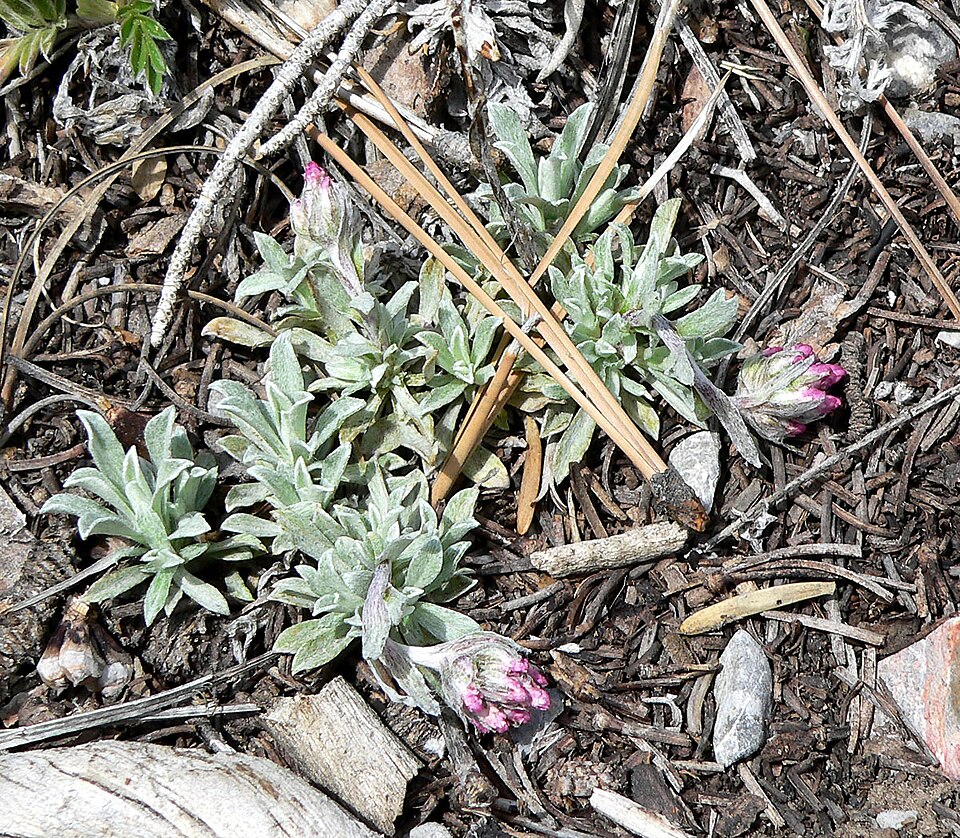
Antennaria rosea is a low, mat-forming perennial in the aster family that spreads by surface runners to form patches of silvery basal rosettes 1–3 inches (2.5–8 cm) tall. The spoon-shaped leaves are 0.4–1.2 inches (1–3 cm) long and covered in dense white woolly hairs that give the mat a gray-felted look. In late spring and summer, upright stems 4–16 inches (10–40 cm) tall carry tight clusters of small flower heads, each surrounded by papery bracts that range from rose-pink to red and white. The plants are mostly female and set seed without fertilization, so colonies are often genetically uniform. The flower heads draw bees and butterflies and serve as a larval host for the American lady butterfly. After bloom the papery heads dry and hold their shape, and seed disperses on white pappus. The mat is evergreen to semi-evergreen and roots along the runners to colonize bare ground. It grows on dry, open, rocky or sandy sites in full sun and tolerates poor soils and drought, but it declines in shade, rich soil, or wet ground and can be crowded out by taller plants.
Native Range
Native across western North America, from Alaska and western Canada south through the Rocky Mountains and Great Basin into the southwestern United States. It grows in dry meadows, sagebrush slopes, open conifer forest, and rocky alpine and foothill sites.Suggested Uses
Antennaria rosea is used as a drought-tolerant groundcover in rock gardens, gravel gardens, and dry slopes, and between stepping stones in low-traffic areas. Its flowers supply nectar for pollinators and it hosts the American lady butterfly. The silvery mat suits dry, sunny sites where lawns and richer plants struggle.How to Identify
Appearance
Size & Dimensions
Height4" - 1'4"
Width/Spread1' - 2'
Bloom Information
Detailed Descriptions
Flower Description
rose-pink to red and whiteFoliage Description
silvery gray-greenGrowing Conditions
Sun Requirements
Requires 6-12 hours of direct sunlight daily
• Full Sun: 6+ hours of direct sunlight
• Partial Shade: 3-6 hours of direct sunlight
• Full Shade: Less than 3 hours of direct sunlight
Care & Maintenance
Care Guide
Antennaria rosea grows in full sun on dry, well-drained sandy, gravelly, or rocky soils and tolerates poor, low-nutrient ground. It needs little water once established and withstands drought, cold, and exposed sites. The plant spreads by runners that root as they go, forming a low groundcover that can be divided in spring or autumn. It does not tolerate shade, rich soil, or wet, poorly drained conditions. Foliage stays silvery through mild winters and is grazed lightly by wildlife. Crowding by taller, faster plants thins the mat over time.Pruning
Antennaria rosea needs little pruning. Spent flower stems can be sheared off after bloom to keep the mat low, or left for seed and winter texture. Runners can be trimmed to contain the spread.Container Growing
Suitable for container growing
Minimum container size: 1 gallons