Antennaria, Genus, dioica, Species, 'Rubra', Cultivar,
- Genus & species
- Cultivar
red pussytoes
Overview
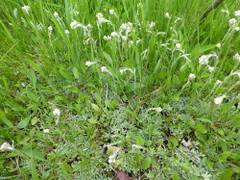
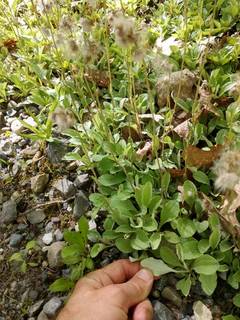
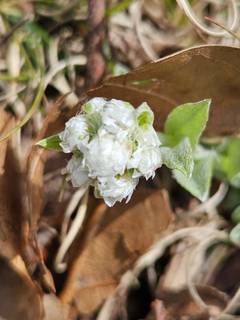
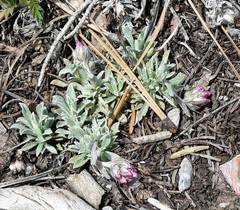
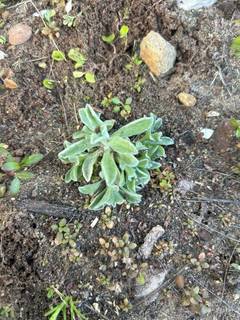
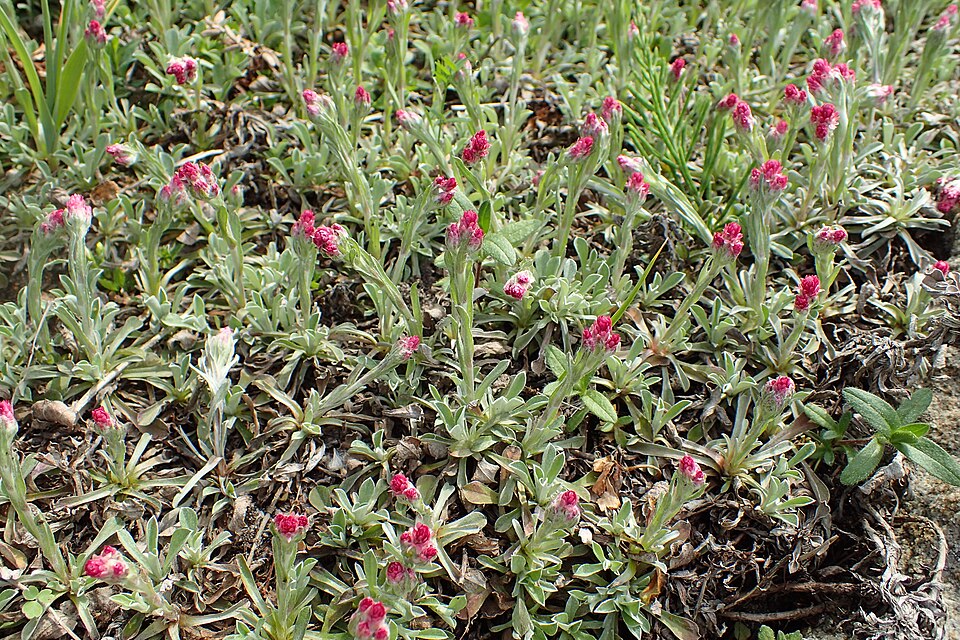
Antennaria dioica 'Rubra' is a low, mat-forming evergreen perennial in the Asteraceae family, forming a dense carpet 1-2 inches (2.5-5 cm) tall that spreads 12-18 inches (30-45 cm) wide by surface runners. Leaves are spoon-shaped, 0.5-1 inch (1-2.5 cm) long, gray-green above with white woolly undersides, forming tight rosettes. In late spring, upright stems rise 4-6 inches (10-15 cm) above the mat, each bearing clustered flower heads with rose-red bracts that resemble a cat's paw, the feature behind the common name pussytoes. The species is dioecious, so male and female flowers occur on separate plants; female heads are slightly larger and more deeply colored. 'Rubra' is selected for red flower bracts, deeper than the pink-white of the species. The plant is hardy in USDA zones 2 through 6 and grows poorly in hot, humid summers, where the mat can rot or thin from the center. It requires sharp drainage and full sun; in shade or rich soil the foliage loosens and loses its silver tone. Spread is steady but not aggressive, knitting into gaps between paving and rock. Flowers draw small bees and butterflies, and the woolly foliage is grazed by few animals. Native across the cooler regions of Europe, Asia, and North America, it is grown in rock gardens and alpine troughs.
Native Range
Antennaria dioica is native to the cooler temperate and subarctic regions of Europe, Asia, and North America, where it grows in dry grasslands, heaths, and rocky alpine slopes. 'Rubra' is a cultivated selection rather than a wild population.Suggested Uses
Grown in rock gardens, alpine troughs, gravel gardens, and the gaps between paving stones, spaced 10-12 inches (25-30 cm) apart. The low mat works as a small-scale groundcover in dry, sunny sites. The dried flower stems are sometimes cut for small arrangements.How to Identify
Appearance
Size & Dimensions
Height2" - 6"
Width/Spread1' - 1'6"
Colors
Bloom Information
Flowers from late May through June, with stems holding color for about three to four weeks. The papery bracts dry in place and hold their form for several weeks after the true flowers fade. A single flush occurs each year with no significant rebloom.
Detailed Descriptions
Foliage Description
Gray-green with silver-white undersidesGrowing Conditions
Sun Requirements
Requires 6-12 hours of direct sunlight daily
• Full Sun: 6+ hours of direct sunlight
• Partial Shade: 3-6 hours of direct sunlight
• Full Shade: Less than 3 hours of direct sunlight
Care & Maintenance
Care Guide
Grows in full sun and gritty, sharply drained soil of low fertility. Water needs are low once established, and the mat is prone to rot in wet or humid conditions. Hot, humid summers shorten the plant's life and can cause the center of the mat to die out. In USDA zones 2 through 6 it is fully cold hardy and stays evergreen through winter. Thinning or bare patches can be filled by lifting and replanting rooted runners in spring. Lean soil keeps the foliage compact and silver, while rich soil produces loose, greener growth.Pruning
Spent flower stems are trimmed to the foliage mat once the bracts brown to keep the planting tidy. No other regular pruning is needed. Congested or hollow-centered mats are lifted and divided in spring to renew growth.Pruning Schedule
Prune: June–July
summer
Container Growing
Suitable for container growing
Minimum container size: 1 gallons