Antennaria, Genus, spp., Multiple species,
- Genus
- Multiple species
pussytoes
Northern Hemisphere and the Andes of South America
Overview
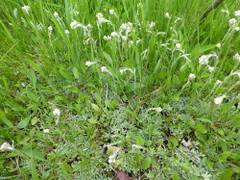
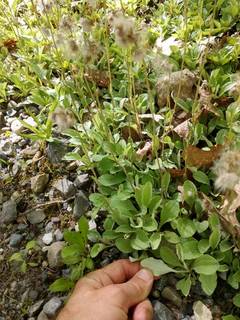
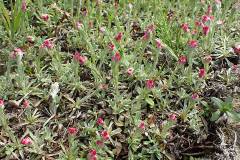
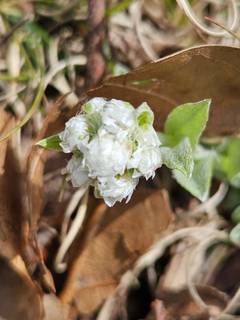
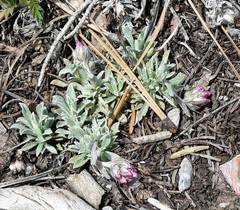
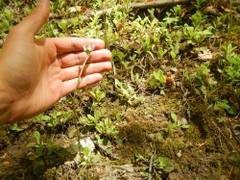
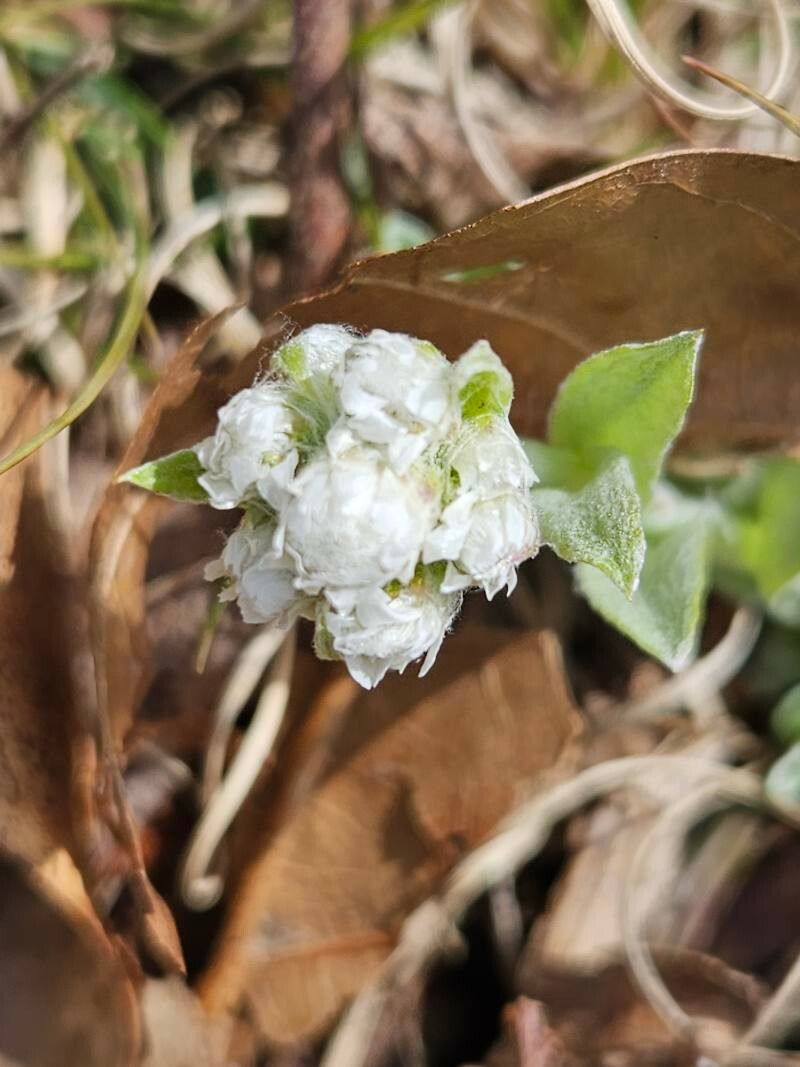
Antennaria is a genus of about 45 species of low, mat-forming perennial herbs in the daisy family, Asteraceae, found across the cooler parts of the Northern Hemisphere and in South America. Plants form ground-hugging rosettes of small, spoon-shaped leaves 0.5–2 in (1.3–5 cm) long that are covered in dense white-woolly hairs, giving the mats a silvery grey-green color. The mats spread outward by short stolons to form colonies a foot or more wide. Most species are dioecious, with separate male and female plants, and the genus can also set seed without fertilization. Slender flowering stems 2–16 in (5–40 cm) tall carry tight clusters of small, fuzzy flower heads in white or pink whose soft bracts resemble a cat's paw, the source of the common name pussytoes. The fruit is a tiny achene tipped with a tuft of bristles for wind dispersal. Plants grow in dry, sunny, poor soils and decline in rich, moist, or shaded conditions. Several species are larval host plants for the American lady butterfly. The genus occupies dry meadows, rocky slopes, open woodland, and tundra.
Native Range
Antennaria is native across North America, Europe, and northern Asia, with additional species in the Andes of South America. North American native species include field pussytoes A. neglecta, plantain-leaved pussytoes A. plantaginifolia, and A. parlinii. The genus is well represented in dry grasslands and mountains of the western United States.Suggested Uses
Antennaria species are grown as drought-tolerant groundcover, in rock and gravel gardens, and between paving stones. Native species are used in meadow, prairie, and pollinator plantings and as butterfly host plants. The flowers draw small bees and other insects.How to Identify
Appearance
Size & Dimensions
Height2" - 1'4"
Width/Spread6" - 1'6"
Bloom Information
Most Antennaria species flower from mid-spring to early summer, roughly April to June, on short stems above the foliage mats. The fuzzy flower clusters last 2 to 4 weeks and fade to papery seed heads. Male and female plants flower at the same time but bear different-looking heads. After bloom, the silvery foliage mats remain through the season.
Detailed Descriptions
Flower Description
white to pale pinkFoliage Description
silvery grey-greenGrowing Conditions
Sun Requirements
Requires 6-10 hours of direct sunlight daily
• Full Sun: 6+ hours of direct sunlight
• Partial Shade: 3-6 hours of direct sunlight
• Full Shade: Less than 3 hours of direct sunlight
Care & Maintenance
Care Guide
Antennaria species grow in full sun and lean, sharply drained, sandy or rocky soil with a pH around 5.5 to 7.0. Established plants are drought tolerant and spread to form dense, weed-suppressing mats once settled. They decline in rich, moist, or shaded sites, where the mats thin and rot. Plants need no feeding, and added nutrients reduce their density and silvering. Mats spread by stolons and are divided in spring or autumn to start new colonies. Light foot traffic is tolerated, which suits plants to gaps between stepping stones.Pruning
Antennaria species need little pruning. Spent flower stems are sheared off after bloom to tidy the mats. Overgrown or bare patches are lifted, divided, and replanted to renew the colony.Container Growing
Suitable for container growing
Minimum container size: 1 gallons