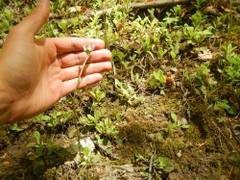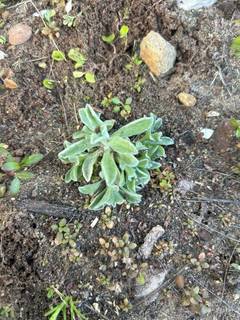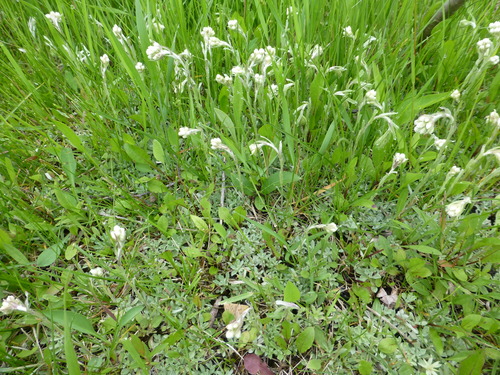
Antennaria, Genus, microphylla, Species,
- Genus & species
rosy pussytoes
Overview
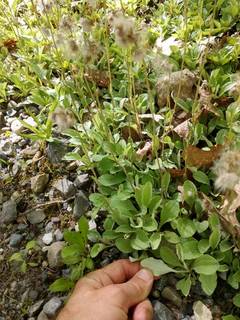
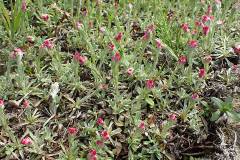
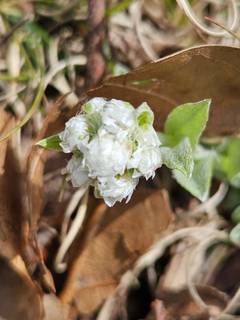
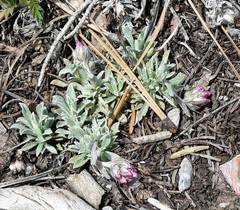
Antennaria microphylla is a mat-forming evergreen to semi-evergreen perennial reaching 2-6 inches (5-15 cm) tall in foliage and spreading 12-24 inches (30-60 cm) wide by stolons. Basal rosettes 1-2 inches (2.5-5 cm) wide, densely woolly with silver-white tomentum on both leaf surfaces; leaves spatulate to obovate, 0.4-1 inch (1-2.5 cm) long with entire margins. Flowering stems erect, 4-12 inches (10-30 cm) tall, bearing small flat-topped clusters of 3-7 flower heads at the tip. Disc flowers pink to rose, 0.2-0.3 inch (5-7 mm) wide; surrounding involucral bracts dry, papery, pink to rose-pink, persisting after bloom as everlastings. Dioecious — male and female plants on separate clones; female plants are more common in cultivation. Bloom May through July across most of the range. Spreads 4-8 inches (10-20 cm) per year by stolons in well-drained soil; mats reach 12-24 inches (30-60 cm) wide within 2-3 years. Foliage persists year-round in zones 5-8 and dies back in zones 3-4. Crowns are short-lived (3-5 years) but stolon-rooted plantlets continually replace them, producing functionally indefinite mats.
Native Range
Native to western and central North America from southern Alaska and Yukon south through the Rocky Mountains, Cascade Range, and Sierra Nevada to New Mexico and Arizona, east to Manitoba and the Black Hills. Found in dry meadows, open conifer forests, gravelly slopes, sagebrush steppe, and exposed ridges at 2,500-11,500 feet (760-3,500 m) elevation. Most populations occur on lean, gravelly, calcareous soils.Suggested Uses
Planted as a low groundcover, rock garden mat, and crevice filler at 6-12 inch (15-30 cm) spacing in zones 3-8. Used in green roof, gravel garden, and native plant restoration projects across the western United States. Combines with other dry-meadow species but cannot tolerate competition from aggressive turfgrasses or fast-spreading clovers.How to Identify
Appearance
Size & Dimensions
Height2" - 1'
Width/Spread1' - 2'
Bloom Information
May through July across most of the range, with peak bloom in June at mid-elevations and into early August above 9,000 feet (2,700 m). Individual flower heads last 2-3 weeks; total bloom on a single plant extends 4-5 weeks. Dried bracts retain pink coloration on the plant for 2-3 months after fresh bloom.
Detailed Descriptions
Flower Description
Pink to roseFoliage Description
Silver-whiteGrowing Conditions
Sun Requirements
Requires 6-12 hours of direct sunlight daily
• Full Sun: 6+ hours of direct sunlight
• Partial Shade: 3-6 hours of direct sunlight
• Full Shade: Less than 3 hours of direct sunlight
Care & Maintenance
Care Guide
Plants establish from divisions or rooted stolons within one growing season at 6-12 inch (15-30 cm) spacing. Water lightly during the first 4-6 weeks after planting; mature mats decline in heavy or organic soils with consistent moisture. Crown rot occurs in clay soils or with summer overhead watering. Few pest pressures occur in well-drained sites; rust may spot foliage in damp climates. Mats can be lifted, divided, and replanted every 4-5 years to refresh thinning sections. Tolerates foot traffic in well-drained soil but compaction reduces stolon spread.Pruning
Cut spent flower stems back to basal foliage in late July or August; alternatively, leave for dried-everlasting display through autumn. Lift and reset thinning portions of the mat in spring or early fall every 4-5 years. Marginal stolons that escape the planting bed are clipped at the rooted node during the growing season.Pruning Schedule
Prune: July–August
summer
Container Growing
Suitable for container growing
Minimum container size: 1 gallons