Image 1 of 2
1 / 2
Plant Reference
Allium, Genus, 'Red Giant', Cultivar,
- Genus
- Cultivar
red giant ornamental onion
Hybrid cultivar of horticultural origin; parent species in the genus Allium come from the mountains and steppes of central Asia, especially Kazakhstan, Uzbekistan, Kyrgyzstan, Tajikistan, and adjacent regions of the former Soviet Union
Overview
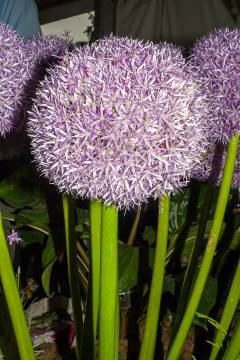
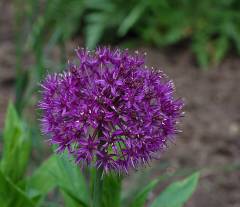
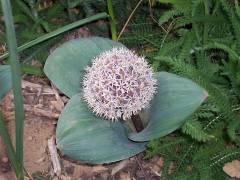
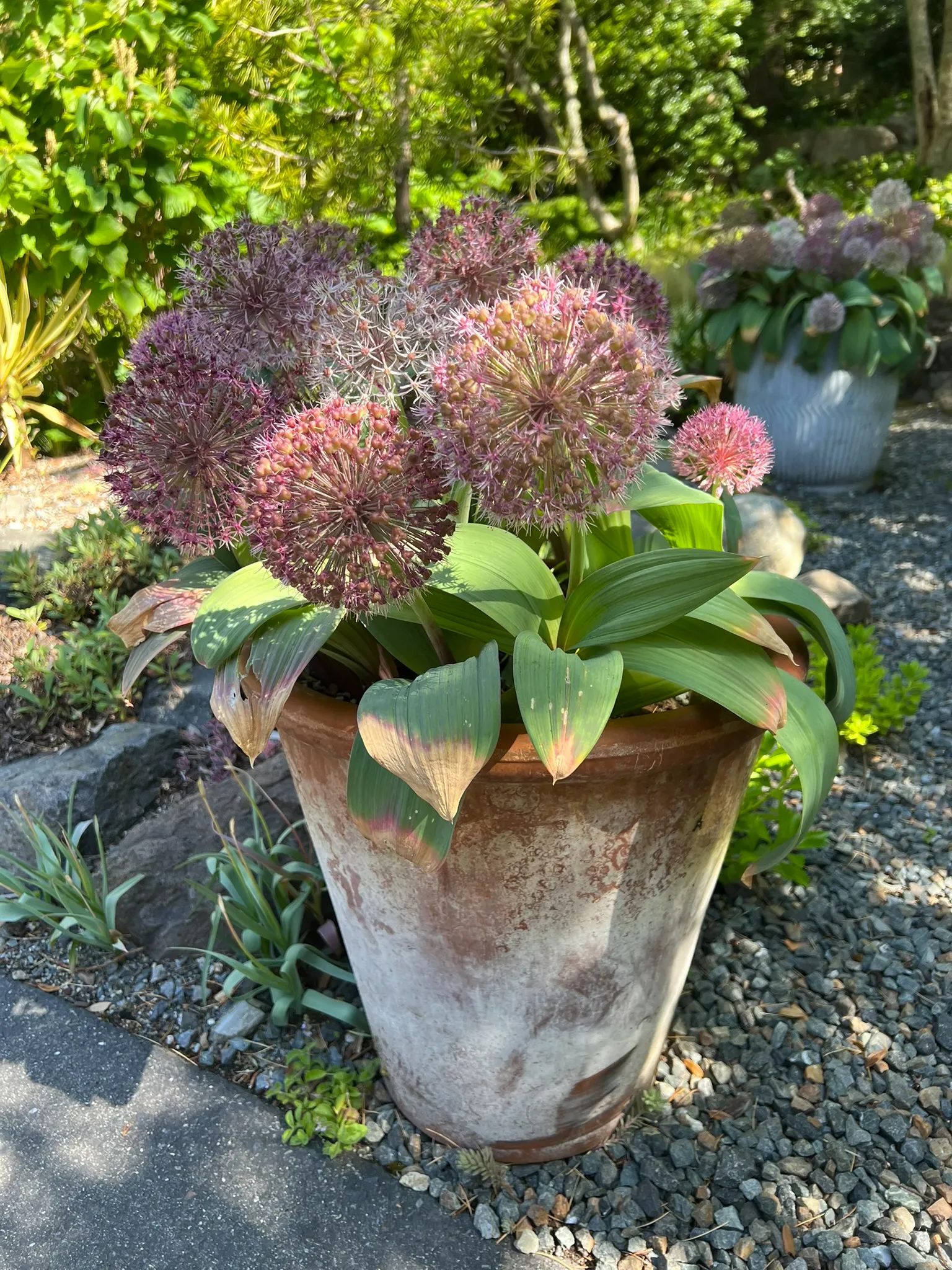
Allium 'Red Giant' is a bulbous hybrid ornamental onion in the family Amaryllidaceae growing 36–48 inches (90–120 cm) tall in bloom and 12–18 inches (30–45 cm) wide from a large bulb 4–6 inches (10–15 cm) in circumference. The cultivar is a horticultural hybrid rather than a wild species, and the parent species from which it was selected trace to the genus Allium of the central Asian mountains and steppes. A basal rosette of broad grey-green strap-shaped leaves emerges in early spring, and a single stiff leafless scape 36–48 inches (90–120 cm) tall rises from the center of the rosette to carry a dense spherical umbel 6–8 inches (15–20 cm) in diameter of hundreds of tiny deep reddish-purple to violet-purple star-shaped florets that open in late spring and early summer (May and June) across a 2–3 week bloom period. The 6–8 inch (15–20 cm) umbel diameter places 'Red Giant' among the largest-flowered ornamental alliums in cultivation alongside 'Globemaster', 'Gladiator', and A. giganteum, and the deep reddish-purple coloration separates this cultivar from the violet-purple of 'Globemaster' and the lighter lavender-purple of the straight species alliums. Limitation: the basal foliage begins to yellow and die back as the flower scape rises and reaches bloom size, and the yellowing leaves leave a ragged ground-level appearance at the base of the plant through the full bloom period — this foliage-fade-at-bloom behavior is characteristic of the large-flowered ornamental alliums and calls for companion plantings that emerge before or during the bloom to mask the fading leaves at the base of the scapes. Companion plants commonly used for this masking role include Hosta, Hemerocallis (daylilies), Geranium (hardy geraniums), Nepeta (catmint), and Alchemilla mollis (lady's mantle), which all produce foliage at the right height and density to cover the yellowing allium leaves. The dried seed heads retain the spherical umbel silhouette for several months after the florets fade and supply architectural interest through the summer and fall before they finally dry to tan and crumble in late fall or winter. All parts of the plant contain disulfides and related compounds that are toxic to cats and dogs if ingested, which is the same compound family responsible for onion and garlic toxicity in pets from the related culinary Allium species. Deer-resistant and rodent-resistant because of the onion chemistry.
Native Range
The cultivar 'Red Giant' is a horticultural hybrid of unknown exact parentage rather than a wild species, and the parent species from which it was selected come from the genus Allium of the central Asian mountains and steppes, especially Kazakhstan, Uzbekistan, Kyrgyzstan, Tajikistan, and adjacent regions of the former Soviet Union where the large-flowered ornamental allium species (A. giganteum, A. stipitatum, A. hollandicum, and related taxa) are native on rocky slopes and alpine meadows at middle to upper elevations. The large-flowered ornamental alliums have been cultivated in European gardens since the 19th century and bred intensively for flower size, color, and stem strength across the 20th and early 21st centuries, and 'Red Giant' is one result of that continuing selection work.Suggested Uses
Used in mixed perennial borders, cottage gardens, cutting gardens, and as a late-spring centerpiece planting in mass groupings at 8–12 inch (20–30 cm) spacing between bulbs, with companion perennials at the base to mask the fading foliage during bloom. The large 6–8 inch (15–20 cm) spherical umbels and the 36–48 inch (90–120 cm) scape height carry the cultivar into the centerpiece role reserved for architectural spring-blooming perennials and shrubs, and the dried seed heads extend the seasonal interest through summer and fall. Solo standalone plantings without companion foliage to mask the yellowing basal leaves are unsuitable because the ragged ground-level appearance during bloom reduces the overall effect, and gardens in USDA zones 9 and warmer are unsuitable because the bulbs call for the winter chilling provided by colder zones to trigger the bloom cycle.How to Identify
Appearance
Size & Dimensions
Height3' - 4'
Width/Spread1' - 1'6"
Bloom Information
Dense spherical umbels 6–8 inches (15–20 cm) in diameter of hundreds of tiny deep reddish-purple to violet-purple star-shaped florets open at the top of stiff leafless scapes 36–48 inches (90–120 cm) tall in May and June across a 2–3 week bloom period. Honeybees, bumblebees, and small butterflies work the florets for nectar during the bloom window because each spherical umbel supplies a concentrated nectar reward at one visit. After the florets fade, the umbel dries and the spherical silhouette is retained on the scape through summer and fall as an architectural dried seed head that can be left in place for winter interest or cut for dried flower arrangements.
Detailed Descriptions
Flower Description
deep reddish-purple to violet-purple; hundreds of tiny star-shaped florets packed into a dense spherical umbel 6-8 inches (15-20 cm) in diameter at the top of a single stiff leafless scape 36-48 inches (90-120 cm) tallFoliage Description
grey-green; broad strap-shaped basal leaves carried in a low rosette that begins to yellow and die back as the flower scape rises and reaches bloom size in late springGrowing Conditions
Sun Requirements
Requires 6-10 hours of direct sunlight daily
• Full Sun: 6+ hours of direct sunlight
• Partial Shade: 3-6 hours of direct sunlight
• Full Shade: Less than 3 hours of direct sunlight
Care & Maintenance
Care Guide
Plant bulbs 6–8 inches (15–20 cm) deep and 8–12 inches (20–30 cm) apart in fall (September through November) for bloom the following spring. Full sun with 6 or more hours of direct sun per day and well-drained soil with a pH of 6.0–7.5 are required because sharp drainage prevents bulb rot during the wet winter dormancy period. Plant among companion perennials (Hosta, Hemerocallis, Geranium, Nepeta, Alchemilla mollis) that emerge in spring and produce foliage at the right height to mask the yellowing basal leaves at the base of the scapes during the bloom period. Minimal care is required once the bulbs are established, and the cultivar is drought-tolerant during the summer dormancy and does not need supplemental irrigation between the end of bloom and the fall rains. Dried seed heads can be left in place for summer and fall architectural interest or cut for dried flower arrangements. Bulbs naturalize slowly through offset production and rarely self-sow because the hybrid cultivar does not always produce viable seed. All parts of the plant contain disulfides and related compounds and are toxic to cats and dogs if ingested. Hardy in USDA zones 5–8.Pruning
The basal foliage is allowed to yellow and die back naturally as the flower scapes rise and reach bloom size because the foliage is feeding the bulb for the following year's flower and cutting the leaves early reduces next year's bloom size. Dead foliage is cleared after it has fully yellowed and dried. The dried seed heads on the scapes can be left in place for summer and fall architectural interest or cut at the base after bloom for dried flower arrangements. No other pruning is needed.Container Growing
Suitable for container growing
Minimum container size: 5 gallons