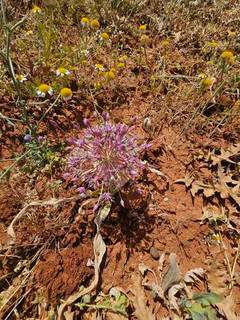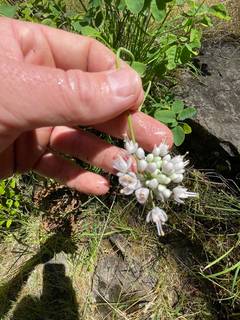
Allium, Genus, ×, Hybrid, 'Gladiator', Cultivar,
- Genus
- Hybrid
- Cultivar
gladiator allium
Garden hybrid; parentage {Allium aflatunense} × {A. macleanii}
Overview
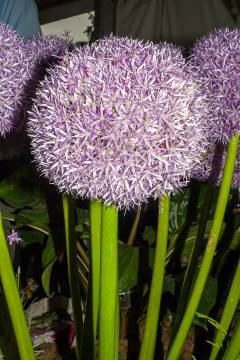
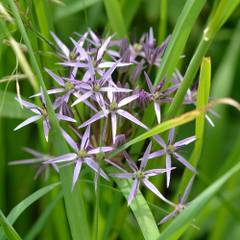
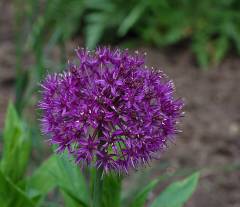
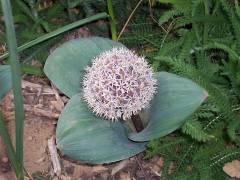
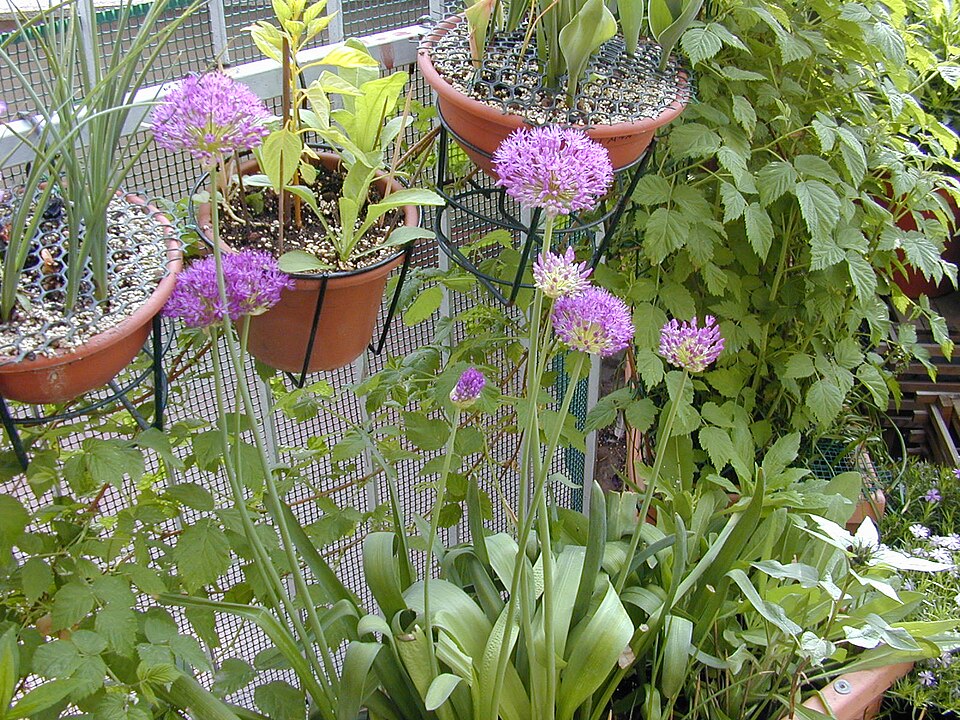
Allium × 'Gladiator' is a tall ornamental allium hybrid that produces dense, spherical umbels 5–6 inches (13–15 cm) in diameter on sturdy stems 36–48 inches (90–120 cm) tall. It is a cross between A. aflatunense and A. macleanii, combining the flower size of the former with the stem strength of the latter. Individual star-shaped florets are lilac-purple with a silvery metallic sheen that catches light. Blue-green, broad, strap-shaped basal leaves emerge in early spring and die back as the flower stems reach full height, leaving bare stalks topped by the purple globes in late May through June. The dried seed heads hold their round form through summer. Bulbs are large, 2–3 inches (5–8 cm) in diameter, and planted 5–6 inches (13–15 cm) deep in fall. The bare lower stems require interplanting with companion perennials to fill the visual gap. In wet or heavy clay soils, bulb rot during summer dormancy is the primary risk. Bulbs are sterile and do not produce seed; they multiply slowly by offset division over several years. All parts are toxic to dogs and cats.
Native Range
Allium × 'Gladiator' is a garden hybrid resulting from a cross between A. aflatunense and A. macleanii. Both parent species are native to mountainous regions of central Asia, including Iran, Afghanistan, and surrounding countries.Suggested Uses
Planted in groups of 5–7 in mixed perennial borders as a vertical accent. The silvery-lilac flower color pairs with catmint, salvia, and ornamental grasses. Cut stems last 10–14 days in water. Dried seed heads are used in floral arrangements. Container culture requires deep pots of 7 gallons (26 liters) or more.How to Identify
Appearance
Size & Dimensions
Height3' - 4'
Width/Spread8" - 10"
Colors
Bloom Information
Flowering occurs from late May through June. Each umbel opens over 2–3 weeks with florets blooming from the outside inward. The silvery sheen on the lilac-purple florets is most visible in direct light. Dried seed heads persist on stems through summer. No reblooming occurs.
Detailed Descriptions
Flower Description
Lilac-purple with a silvery sheenFoliage Description
Blue-green, broad, strap-shapedGrowing Conditions
Sun Requirements
Requires 6-10 hours of direct sunlight daily
• Full Sun: 6+ hours of direct sunlight
• Partial Shade: 3-6 hours of direct sunlight
• Full Shade: Less than 3 hours of direct sunlight
Care & Maintenance
Care Guide
Plant bulbs 5–6 inches (13–15 cm) deep and 8–10 inches (20–25 cm) apart in fall. Full sun and well-drained soil are essential; wet summer conditions rot the dormant bulbs. Water during active spring growth, then stop after foliage yellows. No fertilization is typically needed. Allow foliage to die back naturally. Interplant with perennials 18–24 inches (45–60 cm) tall to conceal bare lower stems. Bulbs are sterile and do not produce seed, eliminating volunteer seedling management.Pruning
Allow foliage to die back naturally; do not cut green leaves. Remove dead foliage at ground level when fully brown. Dried seed heads may be left for interest or removed in midsummer. No other pruning is required.Pruning Schedule
Prune: July
summer
Container Growing
Suitable for container growing
Minimum container size: 7 gallons