Agathis, Genus, robusta, Species,
- Genus & species
Queensland kauri
Eastern Queensland, Australia, and Papua New Guinea
Overview
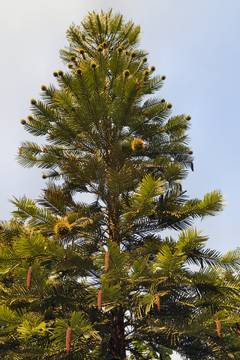
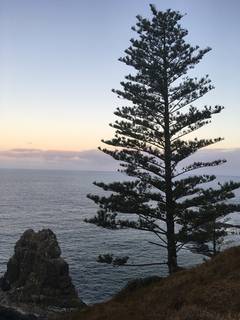
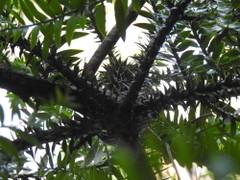
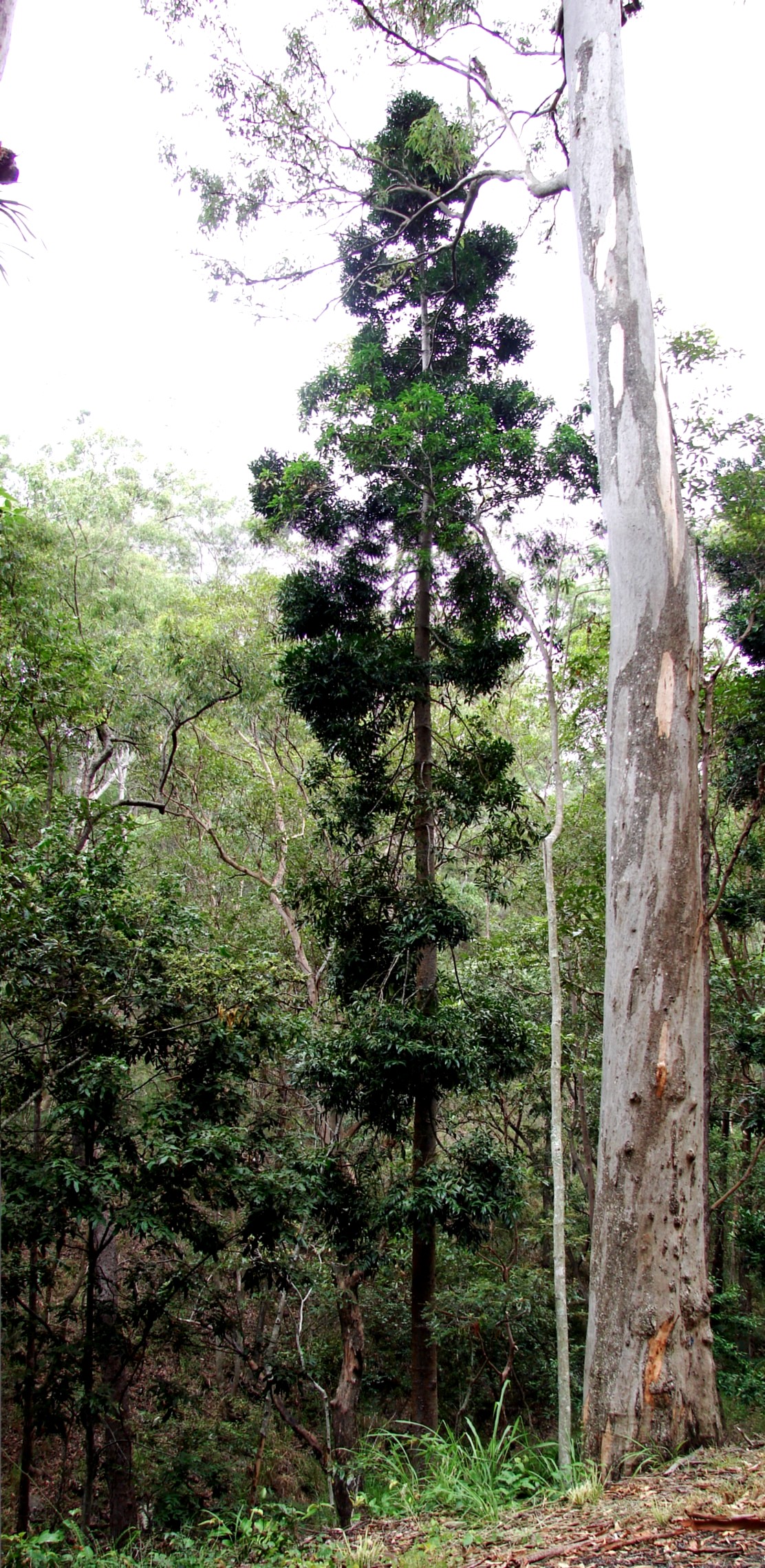
Agathis robusta is an evergreen coniferous tree in the araucaria family (Araucariaceae), reaching 60–130 feet (18–40 m) in height with a spread of 25–50 feet (7.6–15 m). The trunk is straight and cylindrical, with smooth gray-brown to reddish bark that flakes in rounded scales and exudes clear to white resin where wounded. Young trees form a narrow pyramidal crown, and older trees develop a broad, flat-topped crown with horizontal branches. Leaves are opposite or nearly opposite, leathery, elliptic to oblong, 3–5 inches (7–12 cm) long and 1–2 inches (2.5–5 cm) wide, dark green above and paler beneath, with many parallel veins and no midrib. Plants are monoecious, and the globose seed cones are 3–5 inches (8–12 cm) across and break apart on the tree to release winged seeds. Growth is 12–24 inches (30–60 cm) per year in warm, humid sites and slows in cooler climates. Young plants are damaged by frost below 28°F (−2°C), and the species is suited to USDA zones 9–11. Large size and falling cones and branchlets limit use near buildings and paths.
Native Range
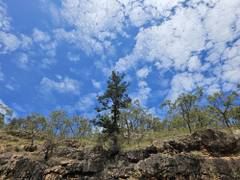
Agathis robusta is native to eastern Queensland, Australia, from Cape York Peninsula south to Fraser Island, and to southern Papua New Guinea. It grows in tropical and subtropical rainforest, including coastal lowland forest and upland forest on the Atherton Tableland.Suggested Uses
Used as a large park, avenue, and estate specimen in subtropical and warm-temperate regions, spaced 30–40 feet (9–12 m) from buildings and other trees. Young plants are grown in containers of 5–15 gallons (19–57 L) for conservatory display. Timber has been harvested from natural stands for joinery.How to Identify
Appearance
Size & Dimensions
Height60' - 130'
Width/Spread25' - 50'
Bloom Information
Plants are conifers and produce cones in place of flowers. Pollen cones and seed cones develop on the same tree, and wind carries the pollen. Seed cones are globose, 3–5 inches (8–12 cm) across, and break apart on the tree to release winged seeds.
Detailed Descriptions
Foliage Description
Dark greenGrowing Conditions
Sun Requirements
Requires 6-10 hours of direct sunlight daily
• Full Sun: 6+ hours of direct sunlight
• Partial Shade: 3-6 hours of direct sunlight
• Full Shade: Less than 3 hours of direct sunlight
Care & Maintenance
Care Guide
Grows in full sun to part shade in deep, moist, well-drained loam or sandy soil with a pH of 5.5–7.0. Hardy in USDA zones 9–11, and young plants are damaged at 28°F (−2°C). Young trees receive 1–2 inches (25–50 mm) of water per week for the first 3 years, and established trees tolerate dry spells of several weeks but grow fastest with consistent moisture. A mulch layer 2–3 inches (5–8 cm) deep reduces moisture loss around young trees. Trees lose branches in storms, and growth slows in clay or compacted soil.Pruning
Pruning is limited to removing dead, damaged, or crossing branches in late winter. Lower branches shed naturally as the trunk grows, and removal of live limbs leaves wounds that bleed resin. The central leader is retained, and trees with a damaged leader develop multiple stems.Pruning Schedule
Prune: February–March
winter