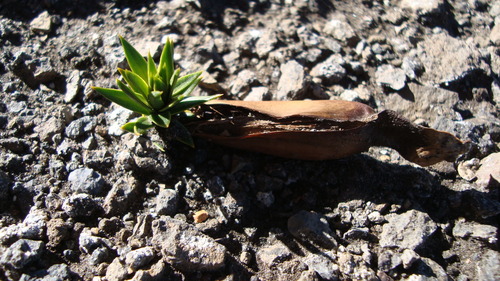
Araucaria, Genus, spp., Multiple species,
- Genus
- Multiple species
araucarias
Southern Hemisphere: South America, eastern Australia, New Caledonia, and Norfolk Island
Overview
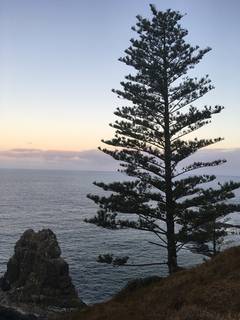
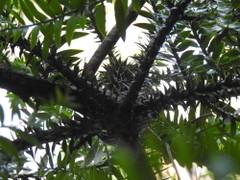
Araucaria is a genus of about 20 species of evergreen coniferous trees in the family Araucariaceae, native to the Southern Hemisphere. Species occur in South America, eastern Australia, New Caledonia, and Norfolk Island, where they form some of the tallest trees in their native forests. Across the genus, mature trees range from about 50 to 180 feet (15 to 55 m) tall, with a single straight trunk and tiers of horizontal branches arranged in regular whorls, giving a symmetrical, candelabra-like outline. The leaves are stiff and leathery, either narrow and awl-shaped or broad and overlapping depending on the species, and range from green to gray-green; in several species, including A. araucana, the leaves end in sharp points. Most species are dioecious, with male and female cones borne on separate trees. The female cones are large and rounded, 4 to 12 inches (10 to 30 cm) across, and break apart at maturity to release large seeds, which are edible in A. araucana and A. bidwillii. Growth is slow, and trees may take twenty years or more to produce cones. Several species are frost-sensitive and intolerant of dry, exposed, or polluted urban sites, where growth is stunted.
Native Range
Araucaria occurs across the Southern Hemisphere, with species native to Chile and Argentina in South America, eastern Australia, the island of New Caledonia, and Norfolk Island. New Caledonia holds the greatest concentration, with thirteen species found nowhere else.Suggested Uses
Araucaria is used as a specimen and skyline tree in large gardens, parks, and coastal landscapes in frost-free and mild regions. A. heterophylla is grown as a container and indoor plant while young. The sharp foliage and large size of several species limit their use near paths and small gardens.How to Identify
Appearance
Size & Dimensions
Height50' - 180'
Width/Spread20' - 40'
Colors
Foliage Colors
Fall Foliage Colors
Bloom Information
Araucaria does not flower. Pollen is shed from male cones in spring, and the large female cones ripen over one to three years before breaking apart to release seed. Cone production typically begins only after twenty years of growth.
Detailed Descriptions
Foliage Description
green to gray-greenGrowing Conditions
Sun Requirements
Requires 6-12 hours of direct sunlight daily
• Full Sun: 6+ hours of direct sunlight
• Partial Shade: 3-6 hours of direct sunlight
• Full Shade: Less than 3 hours of direct sunlight
Water & Climate
Water Needs
Drought Tolerance
Drought tolerant when established
Care & Maintenance
Care Guide
Araucaria grows in full sun in deep, well-drained, slightly acidic soil with steady moisture during establishment. Once established, several species tolerate drought, though Norfolk Island pine and other tender species need protection from frost. The genus grows slowly and develops a wide root system, making mature trees difficult to transplant. Salt-laden coastal wind is tolerated by A. heterophylla but not by all species. Poorly drained or compacted urban soils stunt growth and cause needle browning. Young plants of A. heterophylla are grown indoors in containers in cool, bright rooms.Pruning
Araucaria needs no routine pruning and naturally holds its symmetrical, whorled form. Removing the leading shoot permanently disfigures the crown, as the tree cannot replace a lost leader. Dead lower branches can be cut back to the trunk.Container Growing
Suitable for container growing
Minimum container size: 5 gallons