Araucaria araucana, Monkey Puzzle Tree
Coniferous Trees

Araucaria araucana

Monkey Puzzle Tree

Araucariaceae

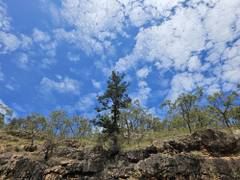
Volcanic slopes and mountain ranges of south-central Chile and adjacent Argentina, 2,300–5,900 ft elevation

At a Glance

TypeTree
HabitUpright
FoliageEvergreen
Height50-80 feet (15-24 m)
Width20-30 feet (6-9 m)
Maturity50 years

Growing Zones

USDA Hardiness Zones

7 - 9
Zone 7
Zone 8
Zone 9
These zones indicate the coldest temperatures this plant can typically survive.
Frost Tolerancehardy

Key Features

Deer Resistant
Drought Tolerant
Maintenancevery low

Overview

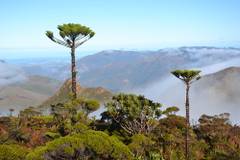
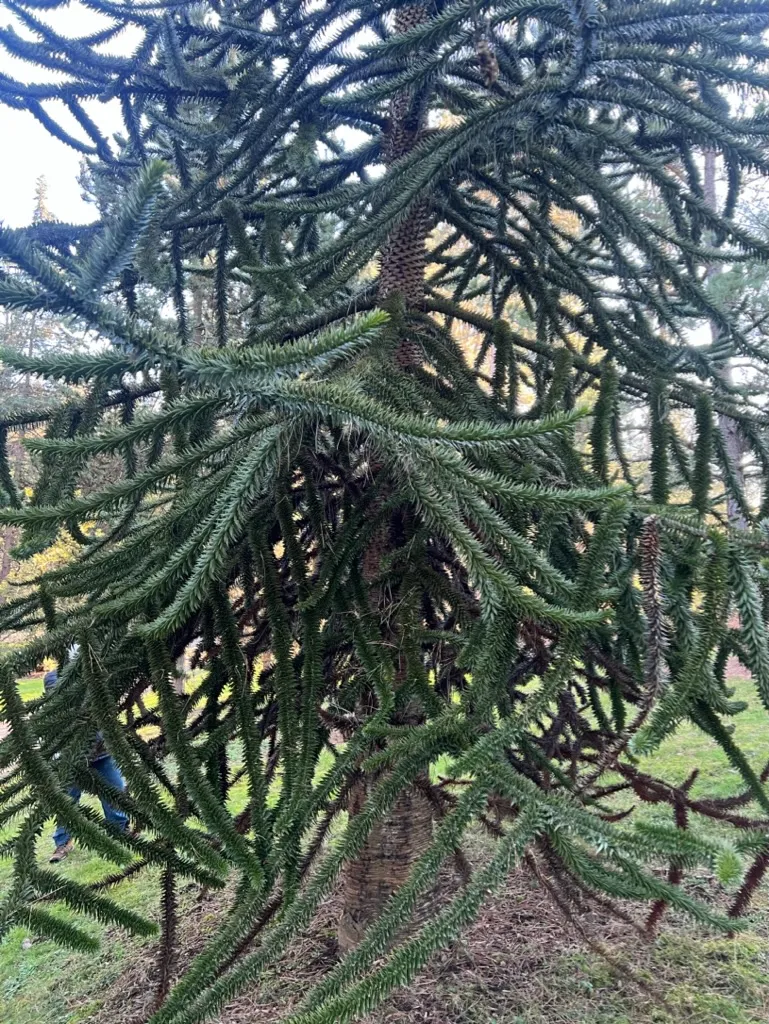
Araucaria araucana is a very large, long-lived, evergreen coniferous tree in the ancient family Araucariaceae — a family with fossil records extending to the Jurassic period — native to the volcanic slopes and mountain ranges of south-central Chile and adjacent Argentina at 2,300–5,900 feet (700–1,800 m) elevation. The specific epithet araucana refers to the Araucania region of Chile, home of the Mapuche people who depended on the large edible seeds as a staple food. Trees grow 50–80 feet (15–24 m) tall in cultivation, to 130 feet (40 m) in the wild, developing a strikingly distinctive silhouette: pyramidal and symmetrical in youth, evolving in maturity to a flat-topped, umbrella-like crown on a tall bare trunk with a few horizontal branch whorls. The foliage is unlike any other cultivated conifer: stiff, broadly triangular, sharp-spined, scale-like leaves 1–2 inches (2.5–5 cm) long overlap in a dense spiral completely clothing every branch and the upper trunk. DIOECIOUS: female trees bear large, barrel-shaped, pineapple-like cones 4–8 inches (10–20 cm) that take 2–3 years to mature and contain 100–200 large, edible seeds (piñones) 1–1.5 inches (2.5–4 cm) long. Threatened in the wild due to logging and habitat loss. Non-toxic; seeds edible.

Native Range

Native to volcanic slopes and mountain ranges of south-central Chile and adjacent Argentina at 2,300–5,900 feet (700–1,800 m) elevation.

Suggested Uses

Araucaria araucana is planted as a dramatic specimen tree in large Pacific Northwest and mild-climate garden settings where its extraordinary prehistoric silhouette and unique armored foliage can be fully appreciated. The Pacific Northwest — particularly the west side of the Cascades — is one of the best regions in the world outside its native range for cultivation. Of exceptional educational value: the Jurassic-era Araucariaceae family, DIOECIOUS reproduction, the large edible seeds (piñones) and their importance to the Mapuche people, threatened wild status, and the wholly unique foliage architecture make this one of the most botanically significant trees in any collection.

How to Identify

Araucaria araucana is immediately identified — no other cultivated conifer resembles it. Araucana = 'from Araucania (Chile).' ENTIRELY UNIQUE FOLIAGE: stiff, broadly triangular, SHARP-SPINED, scale-like leaves 1–2 inches completely covering branches and upper trunk in a dense overlapping spiral. Mature form: flat-topped UMBRELLA-LIKE CROWN on tall bare trunk with horizontal branch whorls — silhouette unmistakable from a distance. DIOECIOUS: female trees bear large BARREL-SHAPED PINEAPPLE-LIKE CONES 4–8 inches with 100–200 edible seeds (piñones). Threatened in wild.

Appearance

Size & Dimensions

Height50' - 80'
Width/Spread20' - 30'

Reaches mature size in approximately 50 years

Colors

Flower Colors

brown

Foliage Colors

green

Fall Foliage Colors

no change

Bloom Information

Bloom Period

~4 weeks
J
F
M
A
M
J
J
A
S
O
N
D
Spring
DIOECIOUS — male and female reproductive structures on separate trees. Male pollen cones are cylindrical, 2–4 inches (5–10 cm) long, releasing pollen in late spring (May–June). Female trees bear large, barrel-shaped, pineapple-like cones 4–8 inches (10–20 cm) in diameter that take 2–3 years to mature, ripening in February–March of the third year. Each mature cone contains 100–200 large, edible, chestnut-like seeds (piñones) 1–1.5 inches (2.5–4 cm) long that were a primary food staple for the Mapuche people of Chile.

Detailed Descriptions

Flower Description

DIOECIOUS; female: BARREL-SHAPED PINEAPPLE-LIKE CONES 4–8 inches; 100–200 EDIBLE SEEDS (piñones) 1–1.5 inches; 2–3 years to mature; ripen Feb–Mar; Mapuche staple food; wear gloves — sharp spines

Foliage Description

dark green; STIFF BROADLY TRIANGULAR SHARP-SPINED SCALE-LIKE LEAVES 1–2 inches in dense overlapping spiral completely covering branches and upper trunk — unique among cultivated conifers; araucana = 'from Araucania Chile'; DIOECIOUS; Jurassic-era family; threatens in wild; DATA CORRECTIONS: species null; rewrote curly-brace prose

Growing Conditions

Sun Requirements

Full Sun
Requires 6-12 hours of direct sunlight daily
• Full Sun: 6+ hours of direct sunlight
• Partial Shade: 3-6 hours of direct sunlight
• Full Shade: Less than 3 hours of direct sunlight
Soil Requirements

pH Range5.0 - 7.0(Neutral)
357912
Soil Types
loamsandrocky
Drainage
well drained

Water & Climate

Water Needs

Low

Frost Tolerance

hardy

Time to Maturity

20-50 years

Drought Tolerance

Drought tolerant when established

Care & Maintenance

Care Guide

Araucaria araucana requires full sun in well-drained, acidic to neutral soil with a pH of 5.0–7.0. Tolerates a range of soil types including poor, rocky soils. Moderately drought-tolerant once established. Good air circulation reduces disease risk. Hardy in the Pacific Northwest's mild maritime climate — one of the most successfully cultivated regions outside South America. Allow very ample space for the spreading umbrella crown at maturity. Handle with gloves — the sharp leaf spines can cause injury.

Pruning

No pruning required or recommended — pruning destroys the distinctive natural form. Lower branches are naturally retained for many years; do not remove them on young trees. Wear thick gloves when working near the plant — the sharp spine-tipped leaves can cause significant puncture injuries.

Maintenance Level

very low

⚠️ Toxicity Warning

Non-toxic