Acacia, Genus, verniciflua, Species,
- Genus & species
varnish wattle
Overview
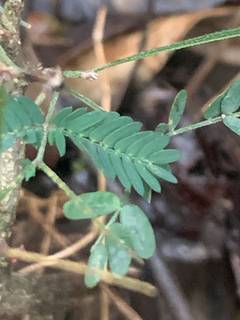
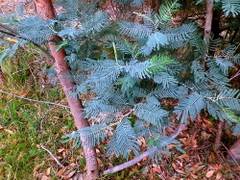
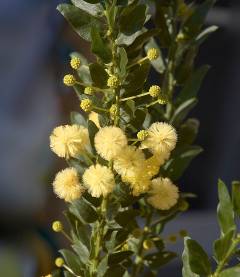
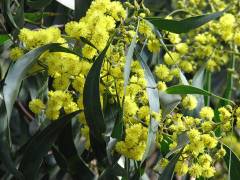
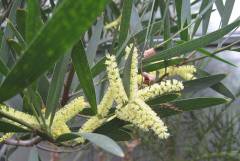
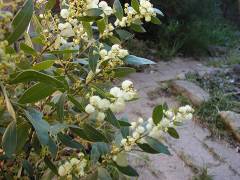
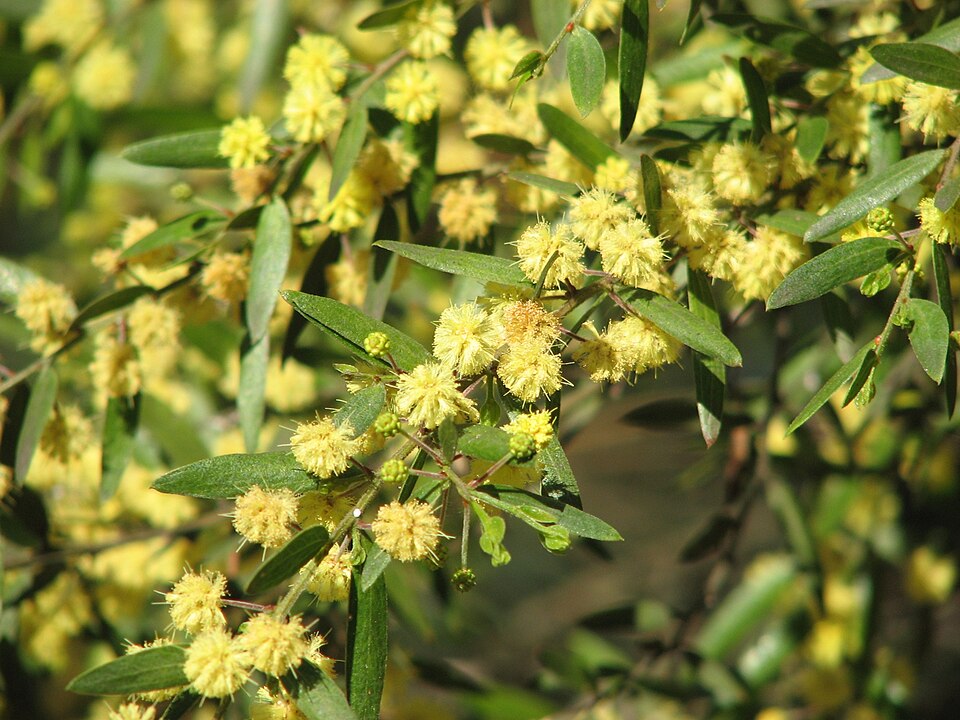
Acacia verniciflua is an evergreen shrub in the family Fabaceae reaching 5-13 feet (1.5-4 m) tall and 5-10 feet (1.5-3 m) wide, with an upright to spreading habit. The narrow phyllodes that function as leaves are 1-4 inches (2.5-10 cm) long, green, and coated with a sticky resin that gives them a varnished, glossy surface and the common name. Bright yellow globular flower heads about 0.3 inch (8 mm) across open singly or in pairs from the phyllode bases in late winter and spring, followed by narrow brown pods. The shrub grows at a moderate rate, reaching full size in 3-4 years, and lives around 10-20 years. It tolerates drought and frost on well-drained soils but is sensitive to waterlogging. Forms vary across its range in phyllode width and plant size.
Native Range
Native to southeastern Australia, across Victoria, New South Wales, and South Australia. Grows in dry sclerophyll forest and woodland on well-drained slopes and rocky ground, often on poorer soils.Suggested Uses
Planted in low-water and native gardens, on dry slopes, and as informal screening, spaced 5-8 feet (1.5-2.4 m) apart. The glossy phyllodes and spring flowers suit native and woodland plantings. Waterlogging-prone or heavy clay sites are unsuited to it.How to Identify
Appearance
Size & Dimensions
Height5' - 13'
Width/Spread5' - 10'
Bloom Information
Detailed Descriptions
Foliage Description
greenGrowing Conditions
Sun Requirements
Requires 6-10 hours of direct sunlight daily
• Full Sun: 6+ hours of direct sunlight
• Partial Shade: 3-6 hours of direct sunlight
• Full Shade: Less than 3 hours of direct sunlight
Care & Maintenance
Care Guide
Grows in full sun to light shade on well-drained sandy, loamy, or rocky soil and tolerates drought and frost once established. Young plants need occasional water through the first summer, after which irrigation is rarely needed. The species fixes nitrogen through root nodules, so added fertiliser is seldom required. Waterlogged or heavy soils cause root rot and shorten the plant's life. Plants live around 10-20 years and are slow to reshoot from bare old wood. Borers occasionally affect ageing stems.Pruning
Light tip pruning after flowering keeps the shrub dense and shapely. Cutting into bare old wood is tolerated poorly, so trimming stays within green growth. Spent flower heads need no removal.Pruning Schedule
Prune: November–December
spring