Acacia, Genus, floribunda, Species,
- Genus & species
weeping acacia
Overview
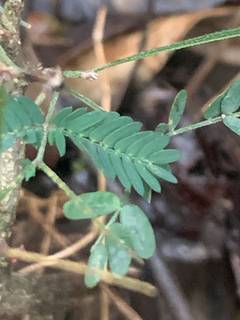
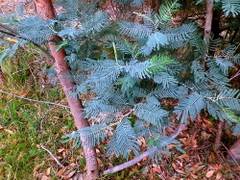
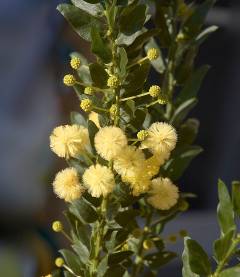
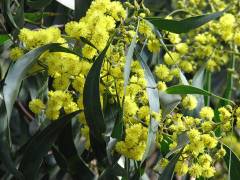
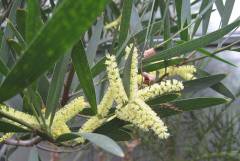
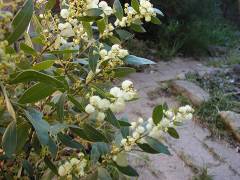
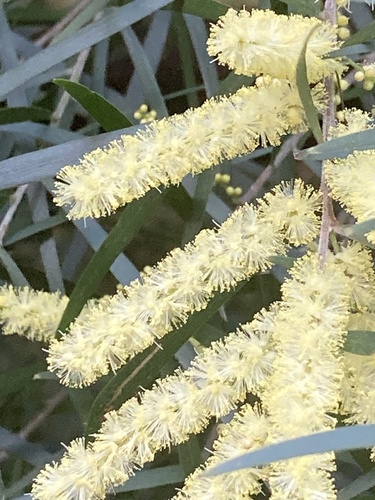
Acacia floribunda is an evergreen shrub to small tree in the Fabaceae reaching 10-25 feet (3-8 m) tall and 10-20 feet (3-6 m) wide, with arching to weeping branches and a dense, bushy crown. Like most Acacia, it bears flattened leaf-like phyllodes rather than true leaves; the phyllodes are narrow, 2-6 inches (5-15 cm) long, with several parallel veins. Pale cream to lemon-yellow flowers are massed in slender cylindrical spikes 1.5-3 inches (4-7 cm) long that cover the branches in late winter and spring. Narrow, slightly constricted seed pods 2-5 inches (5-13 cm) long follow and ripen brown. Growth is fast, and plants reach flowering size within two to three years. The species is short-lived, often 10-15 years, and as a legume it fixes nitrogen. It self-seeds readily and is regarded as an environmental weed outside its native range. Lower branches sweep close to the ground on open-grown plants.
Native Range
Native to eastern Australia, mainly coastal and near-coastal New South Wales and southern Queensland, with scattered occurrences elsewhere. Grows along watercourses, on forest margins, and in open woodland on a range of soils, often in moist sites.Suggested Uses
Planted as a fast screen, windbreak, and revegetation shrub on a range of soils, spaced 8-15 feet (2.4-4.5 m) apart. Used for quick cover and erosion control on banks and disturbed ground. Heavy self-seeding limits its use in small gardens and near bushland.How to Identify
Appearance
Size & Dimensions
Height10' - 25'
Width/Spread10' - 20'
Bloom Information
Detailed Descriptions
Flower Description
Cream to lemon-yellowFoliage Description
GreenGrowing Conditions
Sun Requirements
Requires 6-10 hours of direct sunlight daily
• Full Sun: 6+ hours of direct sunlight
• Partial Shade: 3-6 hours of direct sunlight
• Full Shade: Less than 3 hours of direct sunlight
Care & Maintenance
Care Guide
Grows in full sun to part shade in most well-drained soils, including sandy and clay soils, and tolerates moist sites and short flooding. Water through the first summer to establish; established plants tolerate dry spells and need little extra water. As a legume it grows without added nitrogen, and rich feeding shortens its life. It self-seeds heavily and can spread beyond plantings. The species is short-lived, declining after 10-15 years. Borers and galls can affect stressed plants.Pruning
Prune after flowering to shape the plant and reduce seed set; the species tolerates trimming and reshoots from cut wood. Tip-pruning young plants builds a denser crown. Removing spent flower spikes limits self-seeding.Pruning Schedule
Prune: October–November
spring