Acacia, Genus, maidenii, Species,
- Genus & species
Maiden's wattle
Overview
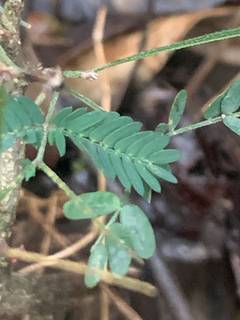
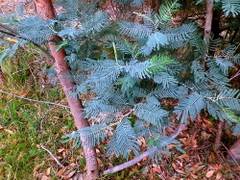
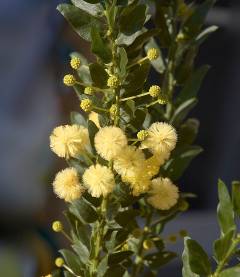
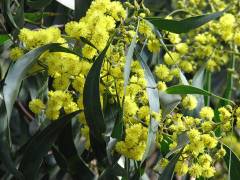
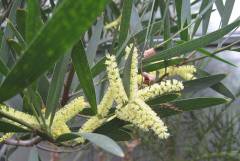
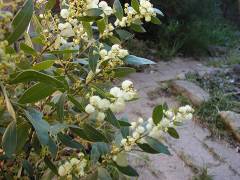
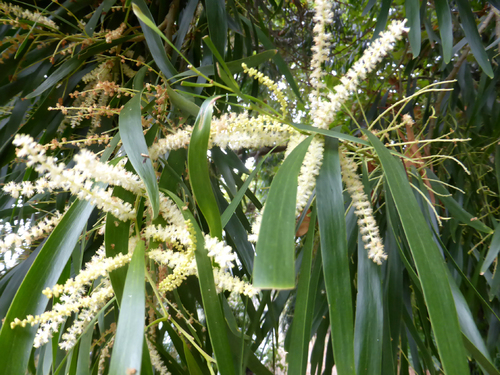
An evergreen tree reaching 30-65 feet (9-20 m) tall and 15-30 feet (4.5-9 m) wide, with a straight trunk and finely fissured gray bark. The leaves are reduced to phyllodes that are narrow, sickle-shaped, 4-8 inches (10-20 cm) long and 0.3-0.8 inch (8-20 mm) wide, dull green, with two to three prominent veins. Pale cream to light yellow flowers are packed into cylindrical spikes 1-3 inches (2.5-7.5 cm) long, borne in pairs in the phyllode axils. Flowering occurs mainly autumn. Fruit a flat, coiled or twisted pod 2-5 inches (5-13 cm) long, brown when ripe, holding black seeds on a fleshy stalk. Growth is fast, often 3-6 feet (1-2 m) per year when young. The tree is short-lived, often 15-30 years, and the wood is brittle.
Native Range
Native to eastern Australia from south-eastern Queensland through New South Wales to eastern Victoria. Grows in wet and dry sclerophyll forest and along forest margins and creek lines on a range of well-drained soils.Suggested Uses
Planted for quick screening, shade, and revegetation in forest-edge and bushland settings at 15-25 foot (4.5-7.5 m) spacing. The fast growth suits nurse plantings that shelter slower-growing trees. The brittle wood and short life limit its use as a long-term shade tree near buildings.How to Identify
Appearance
Size & Dimensions
Height30' - 65'
Width/Spread15' - 30'
Bloom Information
Detailed Descriptions
Flower Description
Pale cream to light yellowFoliage Description
Dull greenGrowing Conditions
Sun Requirements
Requires 5-10 hours of direct sunlight daily
• Full Sun: 6+ hours of direct sunlight
• Partial Shade: 3-6 hours of direct sunlight
• Full Shade: Less than 3 hours of direct sunlight
Care & Maintenance
Care Guide
Water through the first two growing seasons; established trees tolerate drought and grow in most well-drained soils. Grows in full sun to part shade. As a legume, it fixes nitrogen through root nodules and grows in low-fertility ground. Growth is fast, but the wood is brittle and limbs can break in storms. Borers can affect aging trees, and few other pests occur. The tree is short-lived and may need replacement after 15-30 years.Pruning
Prune in late autumn or winter after flowering to shape young trees and remove dead or damaged limbs. Formative pruning when young produces a stronger framework. Heavy pruning of older wood produces weak regrowth. Remove storm-damaged branches as they occur.Pruning Schedule
Prune: June–July
winter