Acacia, Genus, spp., Multiple species,
- Genus
- Multiple species
wattles
Overview
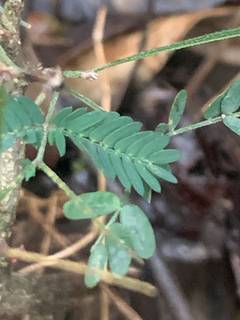
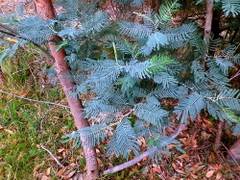
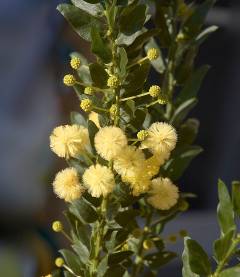
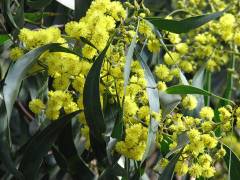
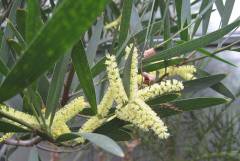
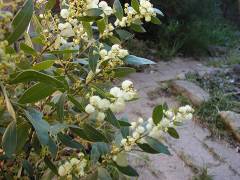
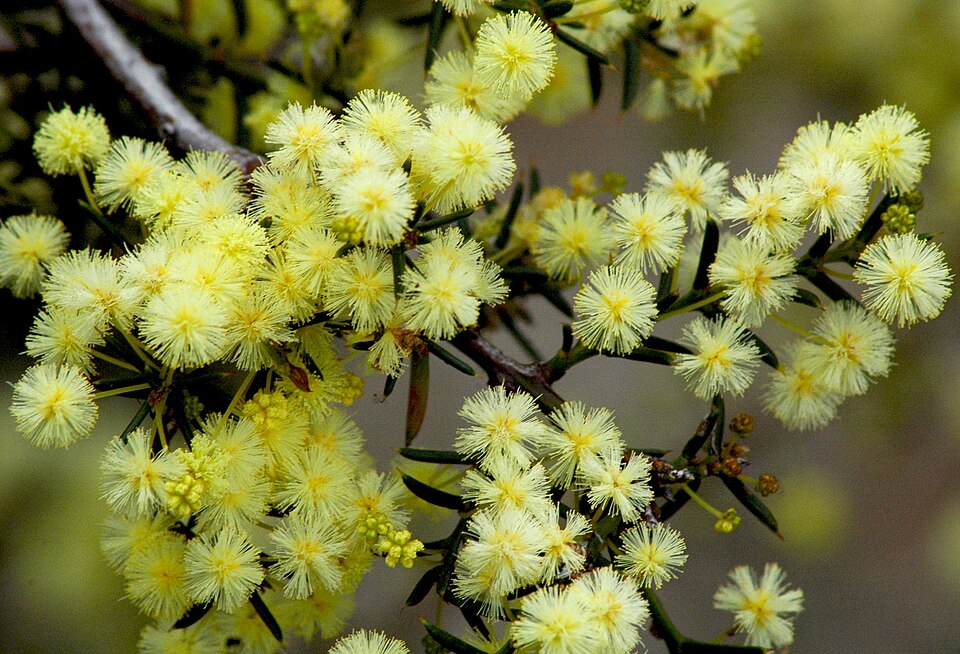
Acacia is a large genus of roughly 1,000 species of evergreen trees and shrubs in the family Fabaceae, the great majority native to Australia, where they are known as wattles. Plants range from low shrubs 3–6 ft (1–1.8 m) tall to trees reaching 30–50 ft (9–15 m). Most mature plants bear phyllodes—flattened, leaf-like leaf stalks 1–8 in (2.5–20 cm) long—rather than true leaves, though seedlings and some species retain finely divided bipinnate foliage. The small flowers, each reduced to a tuft of stamens, are clustered into dense globular heads or cylindrical spikes 0.2–1.5 in (5–38 mm) long, usually bright yellow and sometimes cream. Fruit is a dry legume pod, straight to coiled, 1–6 in (2.5–15 cm) long, holding hard-coated seeds. Like other legumes, Acacia fixes nitrogen through root nodules and many species grow rapidly in poor soils. The genus is adapted to drought and fire, with many species resprouting or germinating heavily after burning. Several wattles have naturalized outside Australia and are listed as invasive in the Mediterranean, South Africa, and California. Foliage of some species contains cyanogenic compounds that are toxic to grazing animals.
Native Range
The genus Acacia in its current circumscription is centered on Australia, where more than 950 species occur across habitats from coastal heath to arid interior. A smaller number of species are native to islands of the Pacific and Indian Oceans and to parts of Asia. Many former African and American acacias are now placed in the separate genera Vachellia and Senegalia.Suggested Uses
Acacia species are grown as fast-growing screens, windbreaks, and street and specimen trees in warm, dry climates. Some species are used for cut flowers, tannin, gum, and erosion control on poor soils. The pollen-rich flower heads attract bees and other insects.How to Identify
Appearance
Size & Dimensions
Height3' - 50'
Width/Spread3' - 30'
Bloom Information
Many Acacia species flower in late winter and spring, though bloom time varies widely across the genus and with hemisphere. In Mediterranean climates, species such as A. dealbata flower from January to March. Flowering is profuse, covering the canopy in yellow for 2 to 6 weeks. Some species flower more than once a year in mild climates.
Detailed Descriptions
Flower Description
yellow to creamFoliage Description
green to grey-greenGrowing Conditions
Sun Requirements
Requires 6-12 hours of direct sunlight daily
• Full Sun: 6+ hours of direct sunlight
• Partial Shade: 3-6 hours of direct sunlight
• Full Shade: Less than 3 hours of direct sunlight