Acacia, Genus, implexa, Species,
- Genus & species
lightwood
Overview
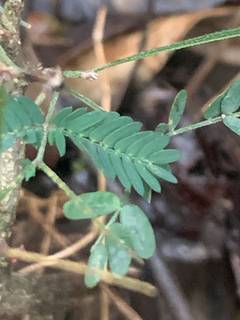
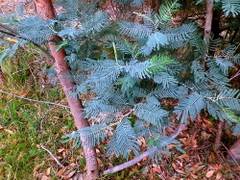
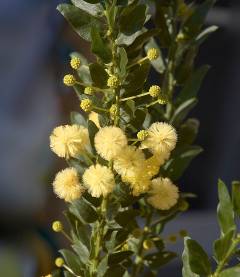
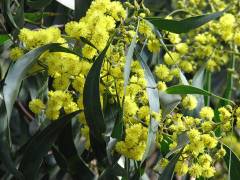
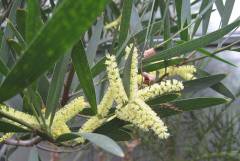
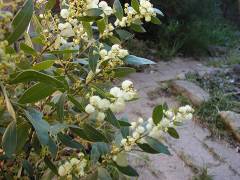
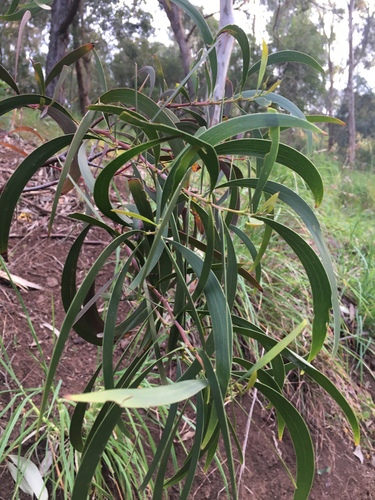
Acacia implexa is an evergreen tree in the pea family reaching 15-50 feet (5-15 m) tall and 13-26 feet (4-8 m) wide, with an upright trunk and a spreading, open crown. Mature plants bear phyllodes rather than true leaves: narrow, sickle-shaped, 3-8 inches (8-20 cm) long and 0.3-1 inch (8-25 mm) wide, dull grey-green, with several curved longitudinal veins. Seedlings carry bipinnate juvenile leaves that are gradually replaced by phyllodes. Pale yellow to cream globular flower heads about 0.2 inch (5 mm) across appear in loose clusters, mainly in summer. The pod is flat, narrow, and tightly twisted or coiled, 3-8 inches (8-20 cm) long, ripening brown. Growth is fast, with young trees gaining 3-5 feet (0.9-1.5 m) a year, and lifespan is typically 15-30 years. Roots fix nitrogen and sucker readily, which can produce stems away from the trunk.
Native Range
Native to eastern Australia, from Queensland through New South Wales and the Australian Capital Territory to Victoria, with scattered occurrences in Tasmania. Grows in open forest, woodland, and grassland on a wide range of soils, often on clay and valley flats, from near sea level to about 3,300 feet (1,000 m).Suggested Uses
Planted for quick shade, shelterbelts, windbreaks, and revegetation on cleared or degraded land, spaced 10-20 feet (3-6 m) apart. Nitrogen fixation and fast early growth suit it to soil improvement and nurse plantings. Suckering and a short lifespan limit its use in small or formal gardens.How to Identify
Appearance
Size & Dimensions
Height15' - 50'
Width/Spread13' - 26'
Bloom Information
Flowers mainly in summer, December to March in its native range, later than the majority of Acacia species, which bloom in late winter and spring. The cream to pale yellow heads open over about 4-6 weeks. Coiled pods ripen the following spring and summer.
Detailed Descriptions
Flower Description
Cream to pale yellowFoliage Description
Grey-greenGrowing Conditions
Sun Requirements
Requires 6-12 hours of direct sunlight daily
• Full Sun: 6+ hours of direct sunlight
• Partial Shade: 3-6 hours of direct sunlight
• Full Shade: Less than 3 hours of direct sunlight
Care & Maintenance
Care Guide
Grows in full sun in most soils, including heavy clay, where drainage is reasonable. Water through the first season; established trees are drought tolerant and withstand periodic waterlogging. Roots fix nitrogen and sucker freely, so stems can appear several feet from the trunk and may need removal in small gardens. Phosphorus-sensitive like many wattles, it grows without added fertilizer. The species is relatively short-lived at 15-30 years and can shed limbs with age. Borers and galls occur but seldom cause serious harm.Pruning
Prune young trees in late winter to form a single trunk and a balanced crown. Suckers and low branches can be removed as they appear to maintain a tree form. Heavy pruning of large limbs can admit borers and decay.Pruning Schedule
Prune: July–August
winter