Image 1 of 13
1 / 13
© Jackie Miles and Max Campbell, some rights reserved (CC-BY-SA) · Wikimedia Commons
Acacia, Genus, terminalis, Species,
- Genus & species
sunshine wattle
Overview
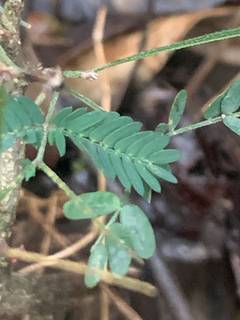
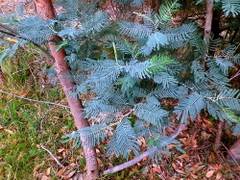
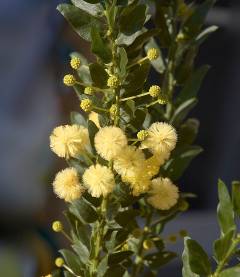
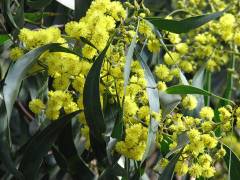
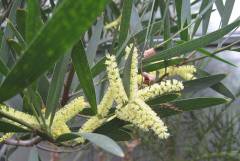
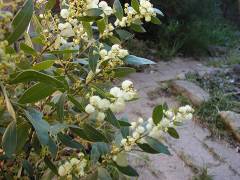
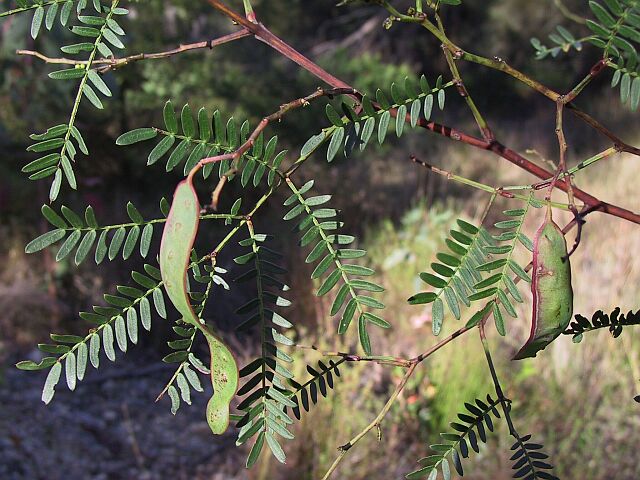
Acacia terminalis is an evergreen shrub to small tree reaching 3-16 feet (1-5 m) tall and 3-10 feet (1-3 m) wide. Unlike most wattles, which bear flattened phyllodes, it carries true bipinnate leaves 1.5-4 inches (4-10 cm) long, divided into many small segments that emerge bronze-red and mature dark green. New stems and leaf stalks are often reddish and finely hairy. Cream to pale yellow globular flower heads, each about 0.3 inch (8 mm) across, are held in branched clusters at the branch tips from autumn into winter. Flat seed pods 2-5 inches (5-13 cm) long follow, ripening brown and splitting to release hard, dark seeds. The species grows in open forest, woodland, and heath on sandy and rocky soils across eastern Australia. It establishes quickly and tolerates dry periods once rooted, though it is short-lived, often declining after 10-15 years. Frost below about 25F (-4C) can damage young growth. Roots fix nitrogen through soil bacteria, allowing growth on low-fertility ground but making the plant sensitive to phosphorus-rich fertilizers.
Native Range
Acacia terminalis is native to south-eastern Australia, occurring in New South Wales, Victoria, Tasmania, and south-eastern Queensland. It grows in coastal and tableland heath, dry sclerophyll forest, and woodland, typically on sandy or rocky low-nutrient soils.Suggested Uses
Used in native and habitat gardens, on embankments, and as an informal screen or filler in mixed shrub plantings. Suited to coastal and low-nutrient sites where many exotic shrubs struggle, and grown to attract nectar-feeding insects and seed-eating birds. Spaced 5-8 feet (1.5-2.4 m) apart in group plantings.How to Identify
Appearance
Size & Dimensions
Height3' - 16'5"
Width/Spread3' - 9'10"
Bloom Information
Flowering runs from autumn through winter, mainly April to July, with some plants opening earlier in mild seasons. The globular heads are cream to pale yellow and lightly scented. Flowering is heaviest on plants in open sun, and bees and other insects visit the blooms.
Detailed Descriptions
Flower Description
cream to pale yellowFoliage Description
dark green, bronze-red when youngGrowing Conditions
Sun Requirements
Requires 6-10 hours of direct sunlight daily
• Full Sun: 6+ hours of direct sunlight
• Partial Shade: 3-6 hours of direct sunlight
• Full Shade: Less than 3 hours of direct sunlight
Care & Maintenance
Care Guide
Grows in full sun to light shade on freely draining sandy, loamy, or rocky soils across a pH range from moderately acid to neutral. Regular water through the first year aids establishment, after which plants withstand extended dry spells. Phosphorus-rich fertilizers damage the nitrogen-fixing roots typical of the genus, so feeding is limited to a light spring application of low-phosphorus native fertilizer. Frost below about 25F (-4C) burns soft growth, and a sheltered position reduces damage to young plants in cold districts. Plants are short-lived, often declining after 10-15 years, and self-sown seedlings commonly replace them.Pruning
Light tip pruning after flowering keeps the shrub compact and encourages branching. Removing spent flower heads and cutting back leggy stems by up to one third is tolerated, though hard cutting into bare old wood often fails to reshoot. Pruning is usually done in late winter or early spring.Pruning Schedule
Prune: August–September
winterearly spring