Acacia, Genus, stenophylla, Species,
- Genus & species
shoestring acacia
Overview
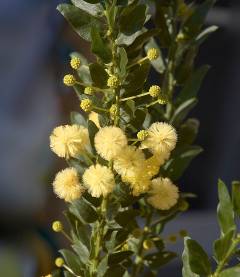
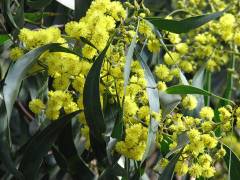
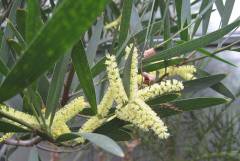
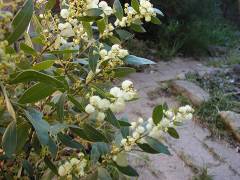
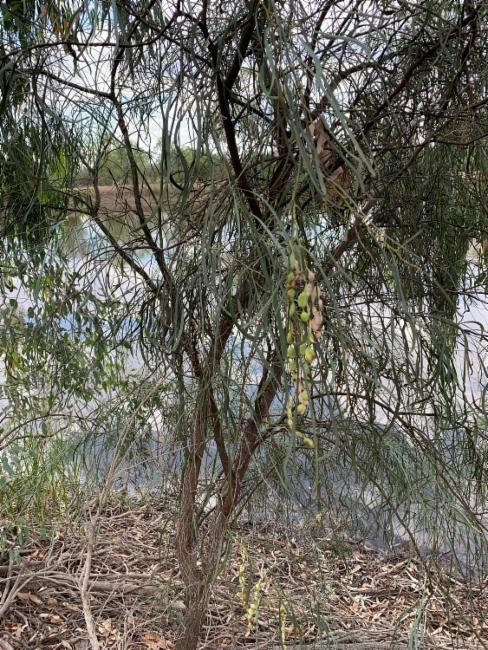
Acacia stenophylla is a small, evergreen tree reaching 15-30 feet (4.5-9 m) tall with a narrow, weeping crown and a single or few-stemmed trunk. In place of true leaves it bears phyllodes (flattened leaf stalks): very long, narrow, and pendulous, 8-16 inches (20-40 cm) long and under 0.25 inch (6 mm) wide, hanging in curtains that give the tree its draped outline. Cream to pale yellow globular flower heads appear in clusters mainly from autumn to spring, and sometimes after rain at other times. Flowers are followed by seed pods deeply constricted between the seeds, resembling a string of beads. Bark is gray and furrowed with age. The tree tolerates drought, periodic flooding, and saline or alkaline soils. It can be short-lived, often 20-30 years, and drops phyllodes and pods that litter beneath the canopy.
Native Range
Native to inland Australia, where it is widespread along seasonal watercourses, floodplains, and clay flats across the arid and semi-arid interior of most mainland states.Suggested Uses
Grown as a fast-growing shade and street tree in warm, dry climates, spaced 15-20 feet (4.5-6 m) apart, and used for windbreaks, screening, and erosion control along watercourses. Tolerance of saline and alkaline soils suits it to difficult inland and coastal-margin sites. The litter of phyllodes and pods makes it less suited to planting directly over paving and pools.How to Identify
Appearance
Size & Dimensions
Height15' - 30'
Width/Spread10' - 20'
Colors
Bloom Information
Flowers mainly from autumn through winter into early spring, with cream to pale yellow ball-shaped heads. Flowering can also follow significant rain at other times of year. Each flush lasts several weeks.
Detailed Descriptions
Flower Description
Cream to pale yellowFoliage Description
Gray-greenGrowing Conditions
Sun Requirements
Requires 6-12 hours of direct sunlight daily
• Full Sun: 6+ hours of direct sunlight
• Partial Shade: 3-6 hours of direct sunlight
• Full Shade: Less than 3 hours of direct sunlight
Care & Maintenance
Care Guide
Grows in full sun in a wide range of soils, including heavy clay, saline, and alkaline ground, and tolerates both drought and periodic waterlogging once established. Young trees need occasional water to establish, after which little irrigation is required. The weeping phyllodes and shallow roots make young trees prone to leaning, so staking supports them while they establish. It is frost-sensitive when young but tolerates light frost with age, suited to USDA zones 9-11. Phyllodes, flowers, and pods drop steadily and litter paving and pools beneath the canopy. As a legume, it fixes nitrogen and grows quickly in warm climates.Pruning
Prune to a single leader and remove low or crossing branches while young to develop a clear trunk and weeping crown. Established trees need little pruning beyond removing deadwood. Pruning is done in the warm season to limit the risk of fungal dieback.Pruning Schedule
Prune: June–July
summer