Acacia, Genus, saligna, Species,
- Genus & species
golden wreath wattle
Overview
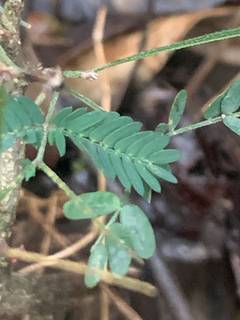
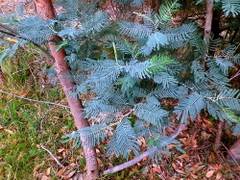
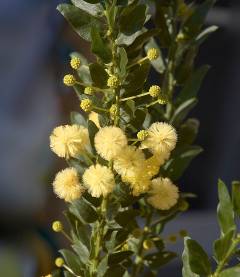
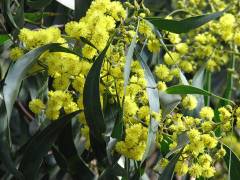
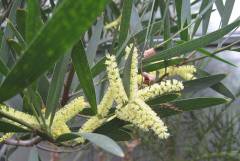
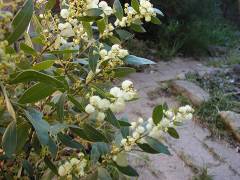
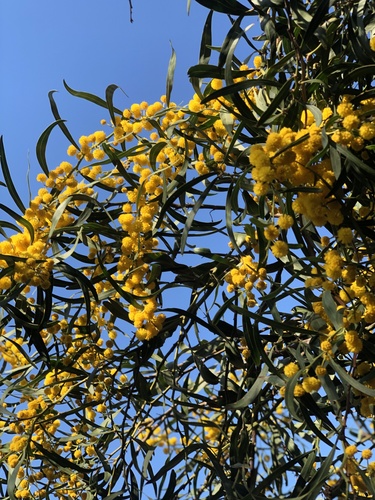
Acacia saligna is an evergreen shrub to small tree in the Fabaceae family reaching 10-20 feet (3-6 m) tall, with a spreading, often weeping crown and smooth grey bark. The phyllodes, which are flattened leaf-like stems that replace true leaves, are narrow and pendulous, 4-10 inches (10-25 cm) long and blue-green. Golden globular flower heads about 0.4 inch (1 cm) across are grouped in clusters along the stems in spring. Flat seed pods 3-5 inches (8-12 cm) long follow and split to release hard seed that remains viable in the soil for years. Growth is rapid, reaching full size in 3-5 years, but the tree is short-lived, often declining after 10-20 years. The roots sucker and the heavy seed bank allows dense regeneration. Acacia saligna is an environmental weed in southern Africa, the Mediterranean, and parts of southern Australia outside its native range, where it forms thickets that displace native vegetation.
Native Range
Native to southwestern Western Australia, where it grows along watercourses, on sand plains, and in winter-wet flats. Widely planted and now naturalized in southern Australia, South Africa, the Mediterranean basin, and other dry-summer regions.Suggested Uses
Planted for quick screening, windbreaks, and erosion control on poor and saline soils, spaced 8-15 feet (2.4-4.5 m) apart. The spring flowers draw bees. The suckering habit, heavy seeding, and weed status outside its native range limit its use near bushland and waterways.How to Identify
Appearance
Size & Dimensions
Height10' - 20'
Width/Spread10' - 20'
Bloom Information
Detailed Descriptions
Foliage Description
blue-greenGrowing Conditions
Sun Requirements
Requires 6-12 hours of direct sunlight daily
• Full Sun: 6+ hours of direct sunlight
• Partial Shade: 3-6 hours of direct sunlight
• Full Shade: Less than 3 hours of direct sunlight
Care & Maintenance
Care Guide
Grows in full sun on a wide range of soils, including sand and clay, and tolerates drought, salinity, and winter waterlogging. Water while establishing, then little once mature. As a legume it fixes nitrogen through root nodules and needs no added fertilizer. The tree is short-lived, often declining after 10-20 years, and suckers from the roots while building a long-lived soil seed bank. Borers and gall-forming insects can shorten the life of stressed trees.Pruning
Light pruning after flowering shapes the crown and removes spent flower heads. Cutting back hard often brings on root suckers and basal regrowth. Removing seed pods before they split reduces the build-up of seed in the soil.Pruning Schedule
Prune: October–November
late spring