Image 1 of 10
1 / 10
© Photographs by JarrahTree...commons.wikimedia.org, some rights reserved (CC-BY) · Wikimedia Commons
Acacia, Genus, pulchella, Species,
- Genus & species
prickly moses
Overview
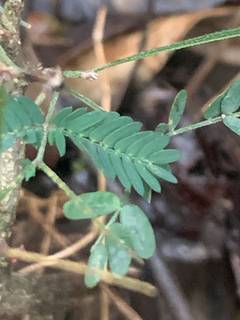
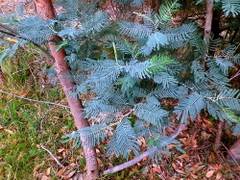
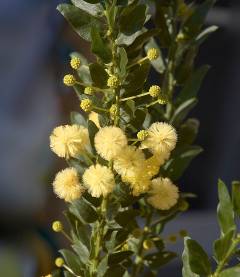
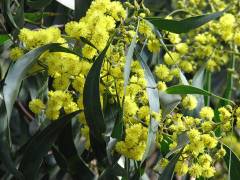
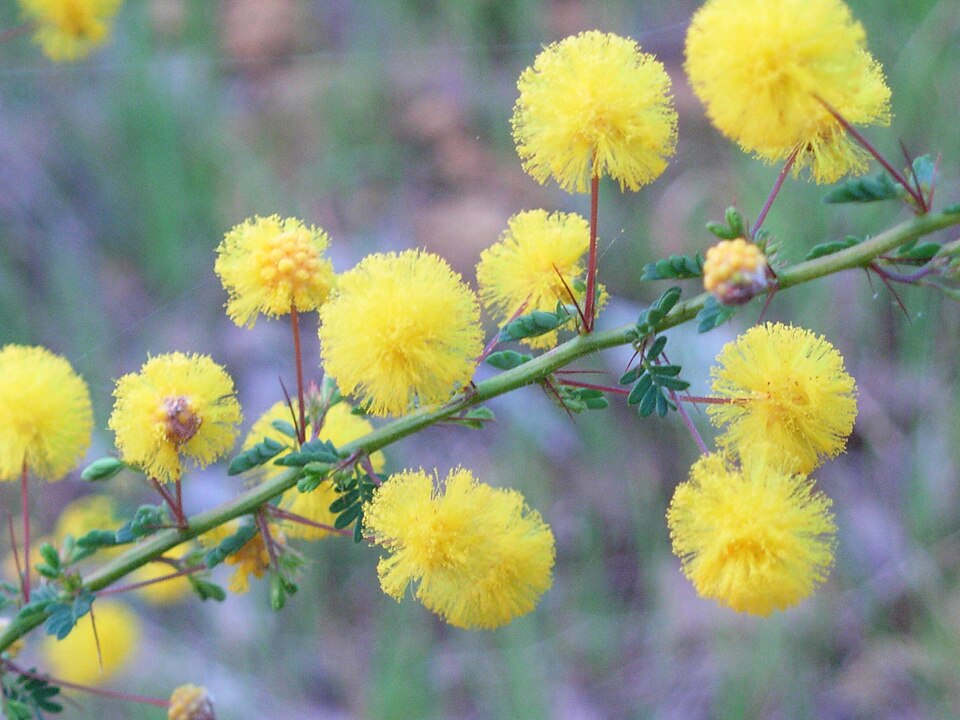
Acacia pulchella is a spiny shrub growing 12-80 inches (30-200 cm) tall, with a spreading to rounded habit and slender branches bearing paired spines up to 0.4 inch (10 mm) long at the leaf bases. Unlike many acacias, it keeps true bipinnate leaves rather than flattened phyllodes; each leaf is divided into 2-6 pairs of segments carrying small, deep green leaflets, giving a feathery texture. Globular flower heads 0.2-0.4 inch (5-10 mm) across are bright yellow and held singly or in small clusters in the leaf axils. Flowering occurs in late winter and spring. Flat, oblong seed pods 0.8-1.6 inches (2-4 cm) long follow, ripening brown and splitting to release hard seeds. As a legume, the plant fixes nitrogen through root nodules. Growth is fast but plants are short-lived, often persisting 5-8 years. Seed germinates strongly after fire or heat, and dense stands regenerate on disturbed and burnt ground. Foliage is held year-round. The spines make mature plants prickly to handle.
Native Range
Native to south-western Western Australia, from Geraldton south to Esperance. Grows in jarrah forest, woodland, heath, and granite outcrops on sandy, gravelly, and lateritic soils, often as an understorey shrub and on disturbed ground.Suggested Uses
Grown in native gardens, on embankments, and in revegetation and bush regeneration, spaced 3-6 feet (1-1.8 m) apart. The spiny habit suits barrier and refuge plantings for small birds. Used as a short-lived nurse plant to give quick cover and nitrogen while longer-lived species establish.How to Identify
Appearance
Size & Dimensions
Height1' - 6'8"
Width/Spread2' - 5'
Bloom Information
Detailed Descriptions
Foliage Description
deep greenGrowing Conditions
Sun Requirements
Requires 5-9 hours of direct sunlight daily
• Full Sun: 6+ hours of direct sunlight
• Partial Shade: 3-6 hours of direct sunlight
• Full Shade: Less than 3 hours of direct sunlight
Care & Maintenance
Care Guide
Grows in full sun to part shade on free-draining sandy, gravelly, or lateritic soils and tolerates drought and short frosts once established. Watering through the first summer aids establishment, after which little supplementary water is needed. As a legume it fixes its own nitrogen; phosphate fertilisers can damage the roots. Seed germinates after fire or heat treatment, reflecting the plant's fire-adapted habitat. Plants are short-lived, persisting 5-8 years, and are often used as nurse plants while slower species establish. Few pests trouble it.Pruning
Light pruning after flowering keeps the plant compact and slows the development of leggy growth. The spines make trimming slow. Hard pruning into bare old wood is unreliable for reshooting, so pruning is kept to younger stems.Pruning Schedule
Prune: October–November
spring