Acacia, Genus, podalyriifolia, Species,
- Genus & species
Queensland silver wattle
Overview
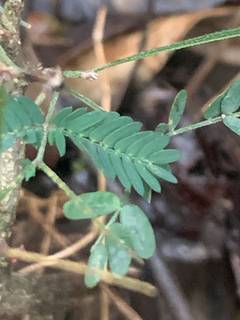
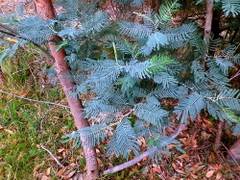
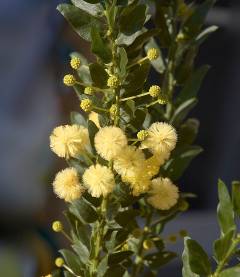
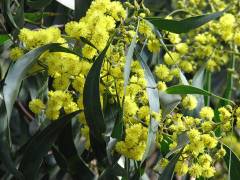
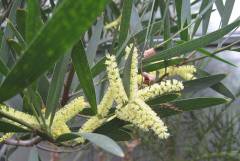
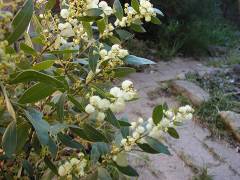
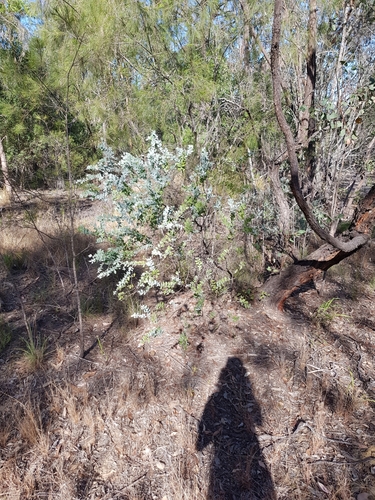
Acacia podalyriifolia is a fast-growing large shrub to small tree reaching 10-20 feet (3-6 m) tall and 8-13 feet (2.5-4 m) wide, with an open, spreading crown. In place of true leaves it bears silver-grey phyllodes that are oval to broadly elliptic, 0.8-1.6 inches (2-4 cm) long, covered in dense short hairs that give a soft grey appearance year-round. Bright yellow globular flower heads are carried in branched sprays through late winter and early spring, each head about 0.3 inch (8 mm) across. Flat, blue-grey seed pods 2-4 inches (5-10 cm) long follow and split to release hard seeds. Growth is rapid, with plants flowering within 2-3 years of planting. The species is typically short-lived, declining after 10-15 years. It self-seeds readily and has naturalised outside its native range in parts of Australia and overseas, where it can spread into bushland. Soft young growth is damaged by hard frost.
Native Range
Native to Queensland in eastern Australia, where it grows in open eucalypt forest and on rocky hillsides in well-drained soils. Now naturalised in other Australian states and in several countries with mild climates.Suggested Uses
Planted as a fast screening or windbreak shrub and as a winter-flowering specimen in native gardens, spaced 8-13 feet (2.5-4 m) apart. Used for quick cover while slower plants establish. Self-seeding and a short lifespan limit use in low-maintenance or bushland-adjacent settings, where seedlings can spread.How to Identify
Appearance
Size & Dimensions
Height10' - 20'
Width/Spread8' - 13'
Bloom Information
Detailed Descriptions
Foliage Description
silver-greyGrowing Conditions
Sun Requirements
Requires 6-10 hours of direct sunlight daily
• Full Sun: 6+ hours of direct sunlight
• Partial Shade: 3-6 hours of direct sunlight
• Full Shade: Less than 3 hours of direct sunlight
Care & Maintenance
Care Guide
Grows in full sun in well-drained soils, tolerating sandy, gravelly, and clay-loam types. Water through the first one to two summers; established plants are drought tolerant. Tolerates light frost, though hard frost damages soft young growth. Like many wattles, it is short-lived, declining after 10-15 years. Borers, scale, and gall-forming insects can affect stressed plants. Prune after flowering to maintain shape and slow legginess.Pruning
Prune lightly after flowering to shape the crown and reduce height, cutting into green growth rather than bare wood. Tip prune young plants to build a denser framework. Hard pruning into old wood often fails to reshoot.Pruning Schedule
Prune: September–October
early spring