Acacia, Genus, oxycedrus, Species,
- Genus & species
spike wattle
Overview
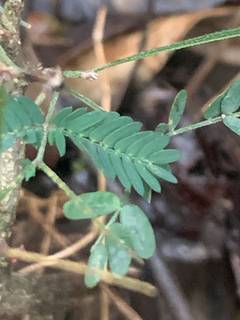
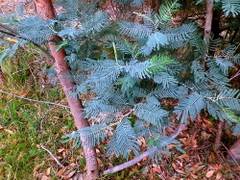
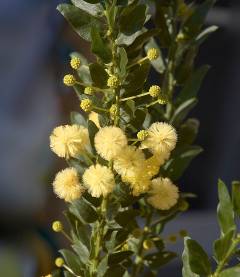
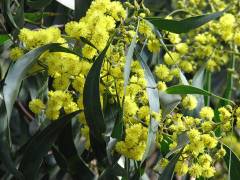
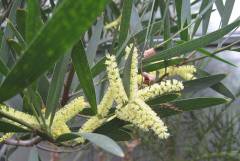
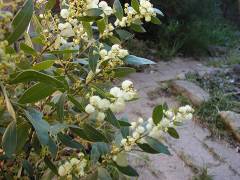
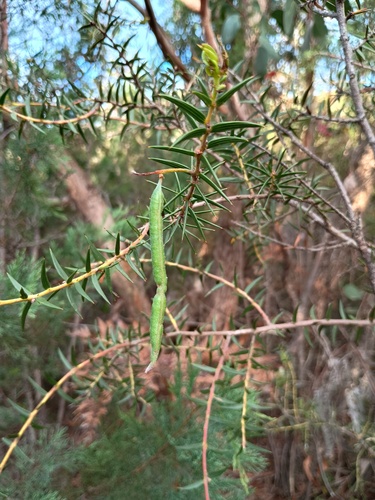
Acacia oxycedrus is a dense, prickly evergreen shrub reaching 3-10 feet (1-3 m) tall and 3-8 feet (1-2.5 m) wide, with rigid, sharply pointed phyllodes in place of true leaves. The phyllodes are stiff, narrow, and 0.4-1.2 inches (1-3 cm) long, arranged closely along the stems and ending in a sharp spine. Bright yellow flowers are packed into cylindrical spikes 0.8-1.6 inches (2-4 cm) long that appear in late winter and spring. Narrow seed pods 1.5-3 inches (4-8 cm) long follow and split to release hard seeds. Growth is moderate to fast, forming a dense thicket within a few years. The sharp phyllodes make the shrub difficult to handle and allow it to be used as a barrier planting. Plants tolerate poor soils and dry conditions once established. The prickly habit and suckering in some forms can make removal difficult.
Native Range
Native to south-eastern Australia, including Victoria, New South Wales, and South Australia. Grows in heath, dry sclerophyll forest, and coastal scrub in sandy and gravelly well-drained soils.Suggested Uses
Planted as a barrier and screening shrub and for habitat in native and coastal gardens, spaced 4-8 feet (1.2-2.5 m) apart. The dense spiny growth shelters small birds. The sharp phyllodes limit placement beside paths and seating.How to Identify
Appearance
Size & Dimensions
Height3' - 10'
Width/Spread3' - 8'
Bloom Information
Detailed Descriptions
Foliage Description
greenGrowing Conditions
Sun Requirements
Requires 6-10 hours of direct sunlight daily
• Full Sun: 6+ hours of direct sunlight
• Partial Shade: 3-6 hours of direct sunlight
• Full Shade: Less than 3 hours of direct sunlight
Care & Maintenance
Care Guide
Grows in full sun in sandy or gravelly, well-drained soils, tolerating poor and dry sites. Water through the first summer to establish; established plants are drought tolerant. Tolerates light to moderate frost. Like many wattles, it is relatively short-lived, declining after 10-15 years. Few serious pests occur, though borers and galls affect stressed plants. The dense, spiny growth can be trimmed after flowering to shape the shrub.Pruning
Prune after flowering to shape and to maintain a dense barrier, cutting into green growth rather than bare wood. Tip prune young plants to thicken the framework. Hard pruning into old wood often fails to reshoot.Pruning Schedule
Prune: October–November
late spring