Acacia, Genus, mucronata, Species,
- Genus & species
variable sallow wattle
Southeastern Australia (Tasmania, Victoria, New South Wales)
Overview
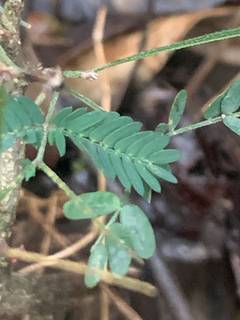
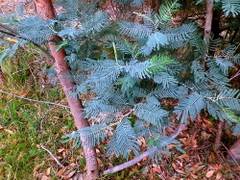
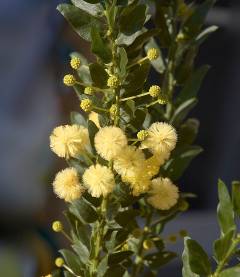
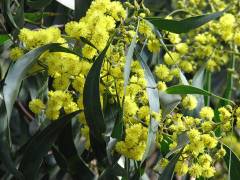
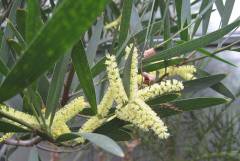
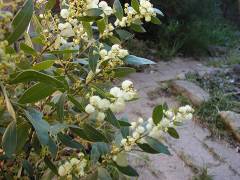
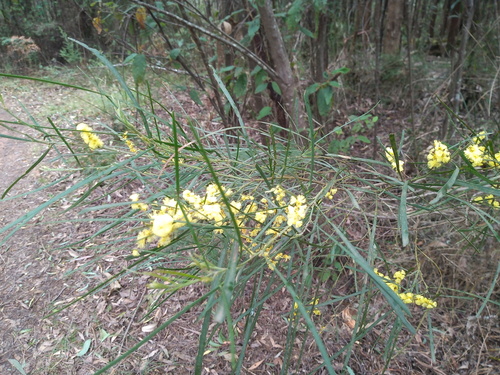
Acacia mucronata is an evergreen shrub to small tree, variable in form, reaching 6-26 feet (2-8 m) tall and 6-15 feet (2-4.5 m) wide depending on the population and site. The narrow phyllodes are highly variable, 1.5-6 inches (4-15 cm) long and linear to lance-shaped, each tipped with a short, sharp point, or mucro, that gives the species its name. Pale yellow to cream flowers are packed into cylindrical spikes 0.6-1.5 inches (15-40 mm) long, opening from late winter into spring among the phyllodes. Narrow seed pods follow, twisting as they dry to release seed. The species grows in wet and dry sclerophyll forest, riverbanks, and disturbed ground across Tasmania, Victoria, and southern New South Wales on a range of soils. It establishes quickly as a pioneer after disturbance but is comparatively short-lived, often around 10-20 years. Fast early growth and a dense habit suit it to screening and shelter, though the short lifespan limits its role as a permanent tree.
Native Range
Acacia mucronata is native to southeastern Australia, including Tasmania, Victoria, and southern New South Wales. It grows in wet and dry sclerophyll forest, along riverbanks, and on disturbed ground on sandy, loamy, and gravelly soils.Suggested Uses
Planted as a fast screen, shelter, and windbreak in native and revegetation plantings. Used as a quick-growing nurse plant among slower, longer-lived trees. Spaced 6-10 feet (1.8-3 m) apart for a screen.How to Identify
Appearance
Size & Dimensions
Height6' - 26'
Width/Spread6' - 15'
Bloom Information
Detailed Descriptions
Flower Description
Pale yellow to creamFoliage Description
Green to grey-greenGrowing Conditions
Sun Requirements
Requires 6-10 hours of direct sunlight daily
• Full Sun: 6+ hours of direct sunlight
• Partial Shade: 3-6 hours of direct sunlight
• Full Shade: Less than 3 hours of direct sunlight
Care & Maintenance
Care Guide
Acacia mucronata grows in full sun to part shade in moist, well-drained soils and tolerates both wetter ground and short drought once established. Growth is fast in the early years, so plants reach screening height quickly but need space to spread. Cold hardiness covers light to moderate frost, roughly USDA zones 8-10. As a legume it fixes its own nitrogen and needs no feeding. Plants are short-lived pioneers, so a succession of replacements keeps a screen going over time.Pruning
Formative tip pruning when young builds a denser, bushier framework for screening. Light trimming after flowering keeps plants compact without cutting into bare old wood, which recovers slowly. Dead or storm-damaged limbs can be removed at any time.Pruning Schedule
Prune: October–November
late spring