Acacia, Genus, iteaphylla, Species,
- Genus & species
flinders range wattle
Overview
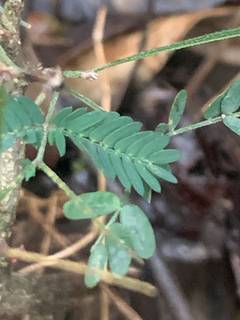
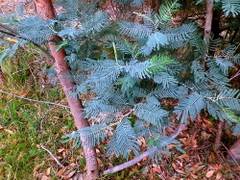
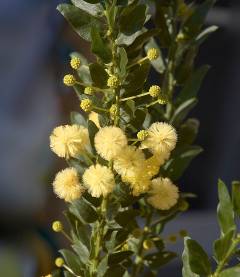
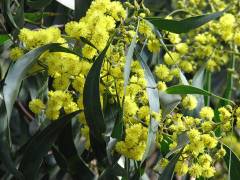
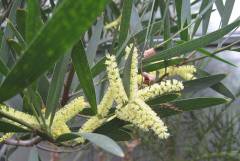
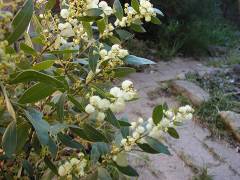
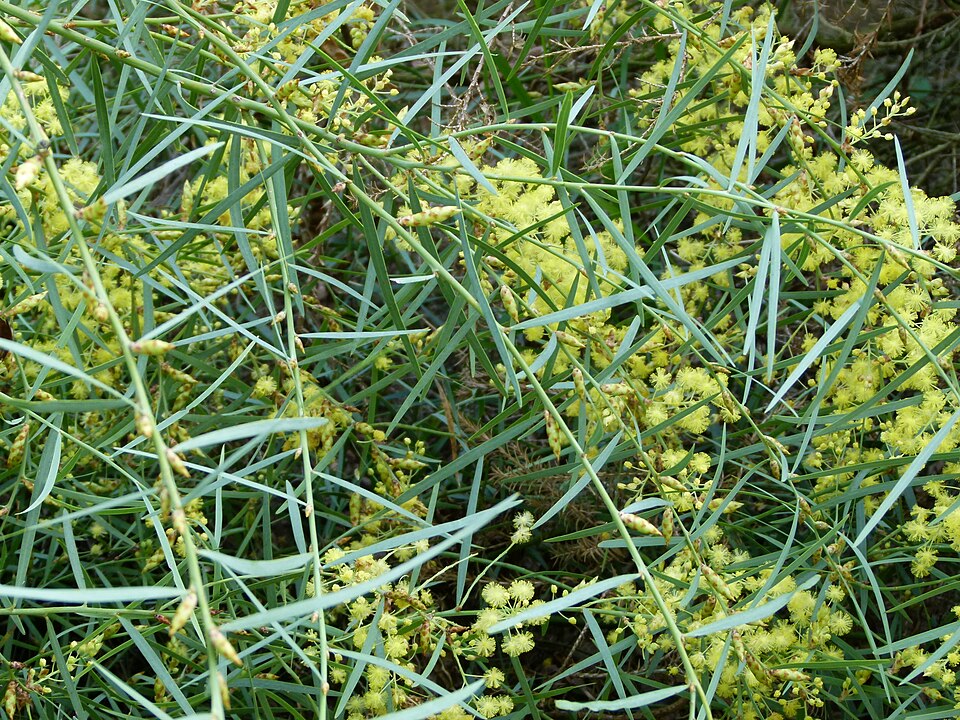
Acacia iteaphylla is an evergreen shrub in the family Fabaceae reaching 8-13 feet (2.5-4 m) tall and 8-16 feet (2.5-5 m) wide, with arching branches and a weeping outline. The grey-green to blue-green phyllodes that act as leaves are narrow, 2-5 inches (5-13 cm) long, with new growth often tinged purple. Pale lemon-yellow globular flower heads about 0.3 inch (8 mm) across appear in short clusters from autumn through winter, followed by flat blue-green seed pods 2-4 inches (5-10 cm) long. The shrub grows fast, reaching full size in 3-4 years, and is relatively short-lived at 10-15 years. It tolerates drought, frost, and a range of soils once established. Outside its natural range it self-seeds freely and has naturalised in parts of southern Australia, where it spreads along roadsides and disturbed ground.
Native Range
Native to the Flinders Ranges and adjacent arid areas of South Australia, where it grows in rocky hills, creek lines, and open woodland. Restricted in the wild to dry inland sites but planted and naturalised more widely.Suggested Uses
Planted as a screen, windbreak, and bank-binding shrub in low-water and native gardens within its natural range, spaced 8-13 feet (2.5-4 m) apart. The arching habit and winter flowers suit informal screening. Self-seeding makes it unsuited to gardens near bushland, where it spreads into native vegetation.How to Identify
Appearance
Size & Dimensions
Height8' - 13'
Width/Spread8' - 16'
Colors
Bloom Information
Detailed Descriptions
Foliage Description
grey-green to blue-greenGrowing Conditions
Sun Requirements
Requires 6-10 hours of direct sunlight daily
• Full Sun: 6+ hours of direct sunlight
• Partial Shade: 3-6 hours of direct sunlight
• Full Shade: Less than 3 hours of direct sunlight
Care & Maintenance
Care Guide
Grows in full sun on well-drained sandy, loamy, or rocky soil and tolerates drought, frost, and alkaline conditions once established. Young plants need occasional water through the first summer, after which irrigation is rarely needed. The species fixes nitrogen through root nodules, so added fertiliser is seldom required. Plants are short-lived and decline after 10-15 years. Self-sown seedlings appear readily around established plants and beyond, and the species is treated as a weed outside its natural range. Borers and galls occasionally affect older stems.Pruning
Light pruning after flowering keeps the shrub dense and removes developing pods to limit self-seeding. Cutting back into bare old wood is tolerated poorly, so trimming stays within green growth. Spent flower clusters need no removal.Pruning Schedule
Prune: August–September
winter