Acacia, Genus, irrorata, Species,
- Genus & species
green wattle
eastern Australia (Queensland, New South Wales, Victoria)
Overview
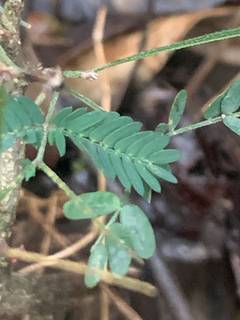
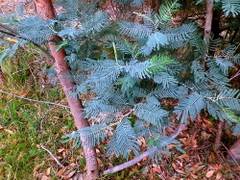
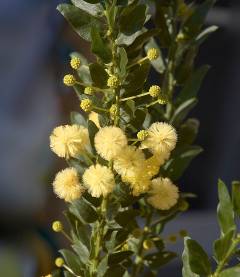
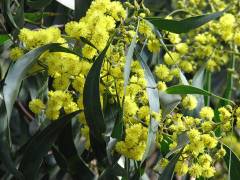
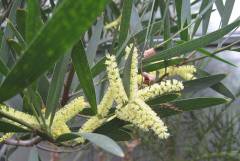
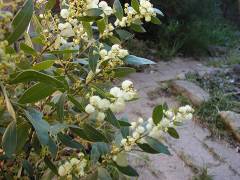
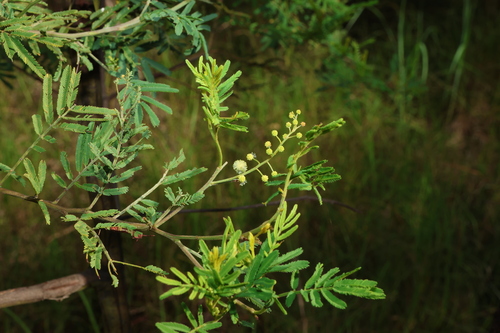
Acacia irrorata is an evergreen tree in the family Fabaceae, growing 15–50 feet (4.5–15 m) tall and 10–25 feet (3–7.5 m) wide. Unlike many wattles that bear flattened phyllodes, this species keeps bipinnate, fern-like leaves throughout its life, each leaf divided into many small leaflets 0.1–0.2 inch (2–5 mm) long, mid-green to grey-green. The branchlets are ridged and often finely hairy. Flowers are pale yellow to cream, packed into small globular heads about 0.2 inch (4–5 mm) across, carried in loose sprays through late spring and summer. Flat brown seed pods 2–5 inches (5–13 cm) long follow and hold several hard seeds. The tree is native to eastern Australia and grows along forest margins, in regrowth, and on disturbed ground. It grows quickly and acts as a pioneer, but it is short-lived, often declining after 15–20 years. It seeds heavily and can spread into surrounding ground, and the brittle wood is prone to breaking in wind.
Native Range
Acacia irrorata is native to eastern Australia, from Queensland through New South Wales to eastern Victoria. It grows in open forest, along watercourses, on forest margins, and on cleared or disturbed land.Suggested Uses
Planted for fast screening, shelter, and revegetation on disturbed or cleared sites. Used as a short-lived nurse tree to shelter slower-growing species while they establish. Grown in native and habitat gardens where its flowers feed insects and seed-eating birds.How to Identify
Appearance
Size & Dimensions
Height15' - 50'
Width/Spread10' - 25'
Bloom Information
Flowering occurs through late spring and summer, roughly November to February in the native range. The pale yellow to cream globular heads are held in branched sprays. Flowering is followed by flat brown seed pods that ripen over the following months.
Detailed Descriptions
Flower Description
pale yellow to creamFoliage Description
mid-green to grey-greenGrowing Conditions
Sun Requirements
Requires 5-9 hours of direct sunlight daily
• Full Sun: 6+ hours of direct sunlight
• Partial Shade: 3-6 hours of direct sunlight
• Full Shade: Less than 3 hours of direct sunlight
Care & Maintenance
Care Guide
Grow Acacia irrorata in full sun to part shade in most well-drained soils, including clay and sandy loams. It tolerates short dry periods once established and fixes nitrogen through root nodules. Water young trees through their first dry season to settle the roots. Growth is rapid, and the tree reaches flowering size within a few years. It is frost-hardy to light frosts once established, while young plants are damaged by hard frost. Pruning of young plants brings on a stronger single trunk.Pruning
Prune Acacia irrorata while young to shape a single trunk and take out low or crossing branches. Acacias respond poorly to heavy cutting of old wood, so major cuts are kept to a minimum. Remove dead or storm-damaged wood as it appears.Pruning Schedule
Prune: June–July
winter