Image 1 of 3
Plant Reference
1 / 3
Abelia, Genus, grandiflora, Species, 'Kaleidoscope', Cultivar,
- Genus & species
- Cultivar
kaleidoscope glossy abelia
Hybrid of parents from eastern and central China
Overview
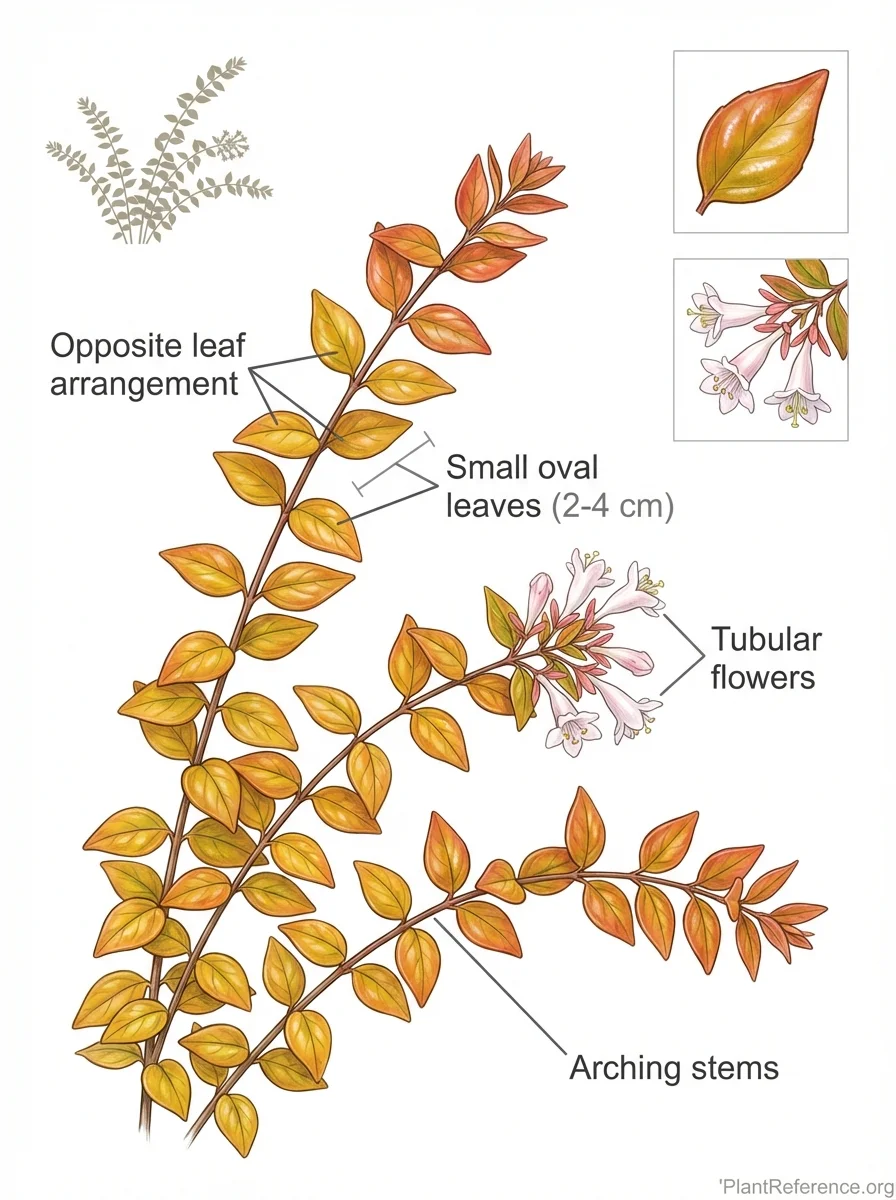
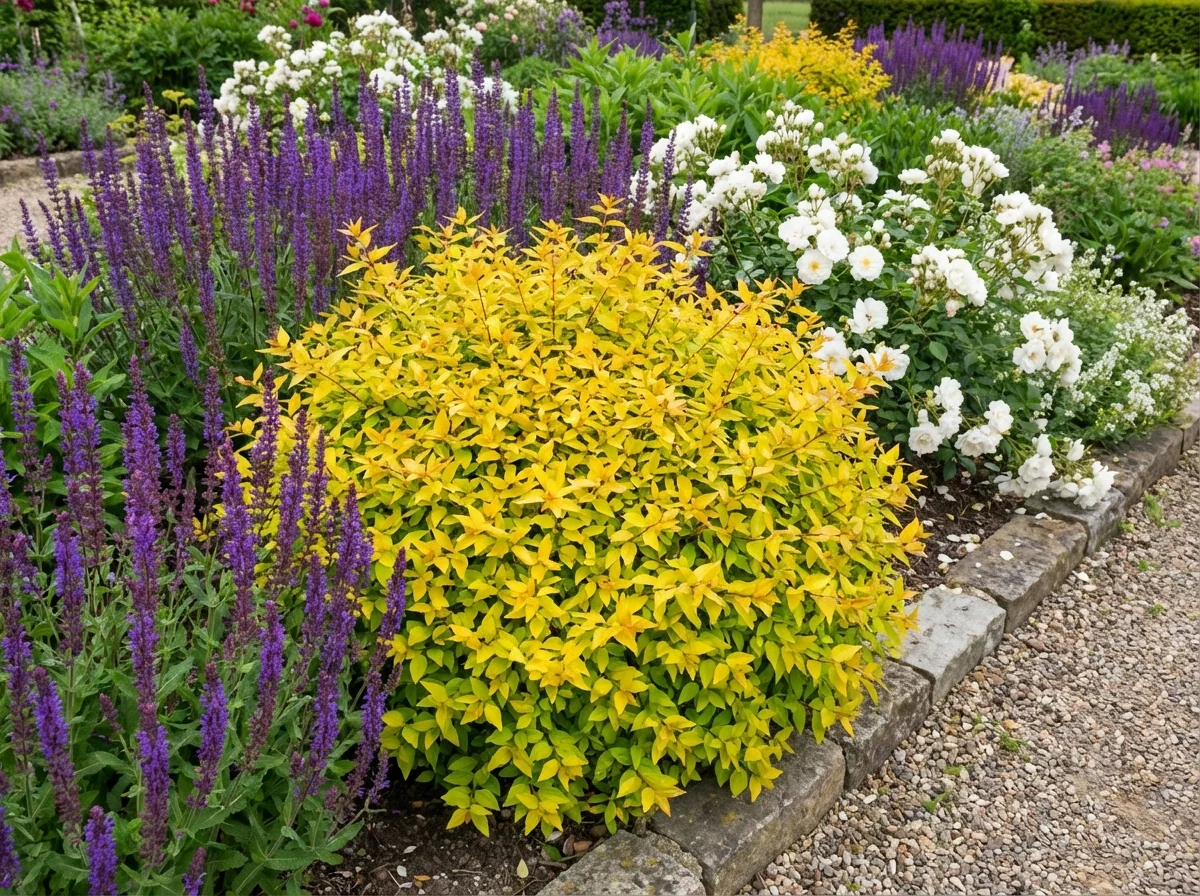
Abelia × grandiflora 'Kaleidoscope' is a compact, semi-evergreen, mounding shrub reaching 2.5-3 feet (75-90 cm) tall and 3-4 feet (90-120 cm) wide at maturity. Leaves are opposite, ovate, and 0.5-1 inch (1.3-2.5 cm) long on arching stems, with a glossy upper surface. Foliage emerges golden-yellow in spring, transitions to lime-green and gold through summer, then shifts to orange-red and burgundy by fall; the cold-season color persists through winter in zones 7-9 where the plant remains semi-evergreen. From June through September, tubular flowers 0.5 inch (1.3 cm) long, white with a pale pink blush, are borne in small clusters at the stem tips. Bronze-tinted sepals persist on the plant after the petals drop and continue the floral coloration through fall. The species A. × grandiflora typically reaches 5-6 feet (150-180 cm) wide; this cultivar is half that size. Plants spread slowly by root suckering and may send up outward-spreading stems that need removal in formal plantings. Lower stems die back in zone 6 winters and the plant regrows from the crown in spring, producing a reduced display that year.
Native Range
Abelia × grandiflora is a garden hybrid between Abelia chinensis and Abelia uniflora, both native to mountainous regions of eastern and central China where the parent species grow in woodland margins, rocky slopes, and valley thickets at 1,300-6,600 feet (400-2,000 m) elevation. The cultivar 'Kaleidoscope' was developed in cultivation and does not occur in wild populations.Suggested Uses
Planted as a low informal hedge at 2.5-3 foot (75-90 cm) spacing, as a specimen in mixed shrub borders, or in foundation plantings where mature height stays under 3 feet (90 cm). Grown in containers of 7-10 gallons (26-38 L) or larger; container plants require more frequent watering and typically do not survive winters below zone 7 without protection.How to Identify
Appearance
Size & Dimensions
Height2'6" - 3'
Width/Spread3' - 4'
Colors
Bloom Information
Tubular white flowers with a pale pink blush open June through September in zones 6-9, with peak bloom July through August; total flowering period averages 12-14 weeks. In zones 8-9 bloom may begin in late May. Bronze-tinted sepals persist on the plant after petals drop and continue the display into October as cooler temperatures prolong sepal color.
Detailed Descriptions
Flower Description
white with pale pink blush; tubular, 0.5 inch (1.3 cm); bronze-tinted sepals persist after petals dropFoliage Description
golden-yellow in spring; lime-green and gold in summer; orange-red and burgundy in fall and winterGrowing Conditions
Sun Requirements
Requires 4-8 hours of direct sunlight daily
• Full Sun: 6+ hours of direct sunlight
• Partial Shade: 3-6 hours of direct sunlight
• Full Shade: Less than 3 hours of direct sunlight
Care & Maintenance
Care Guide
Plant in full sun to part shade in well-drained soil with a pH of 6.0-7.5; tolerated soil types include loam, clay, and sand. Water weekly during the first growing season to establish roots. Established plants tolerate dry intervals of 2-3 weeks, but foliage color intensity diminishes and growth slows under extended drought. Apply a balanced slow-release fertilizer (10-10-10) once in early spring; excess nitrogen shifts foliage toward green and reduces variegation. In zone 6, mulch the root zone to 3-4 inches (7.5-10 cm) in late fall to buffer against hard freezes below 0°F (-18°C) that can kill the lower stems. Powdery mildew occurs in humid poorly ventilated sites; plants spaced at 3 feet (90 cm) or more show reduced incidence.Pruning
Pruning is done in late winter to early spring (February-March) before new growth begins, with winter-killed stems cut at ground level. Up to one-third of the oldest stems can be removed at the base annually to sustain vigor. Light tip-pruning in October after the main bloom shapes the plant, while heavy pruning at that time removes flower buds forming on current-season wood. Fall pruning is avoided in zone 6 because it reduces cold hardiness of the remaining stems.Pruning Schedule
J
F
M
A
M
J
J
A
S
O
N
D
late winterearly spring
Container Growing
Suitable for container growing
Minimum container size: 10 gallons
Toxicity
Non-toxicBotanical Flashcard