Image 1 of 6
1 / 6
Plant Reference
Abelia, Genus, ×, Hybrid, grandiflora, Species, 'Kaleidoscope', Cultivar,
- Genus & species
- Hybrid
- Cultivar
kaleidoscope abelia
Hybrid of garden origin (A. chinensis × A. uniflora); parent species from China
Overview
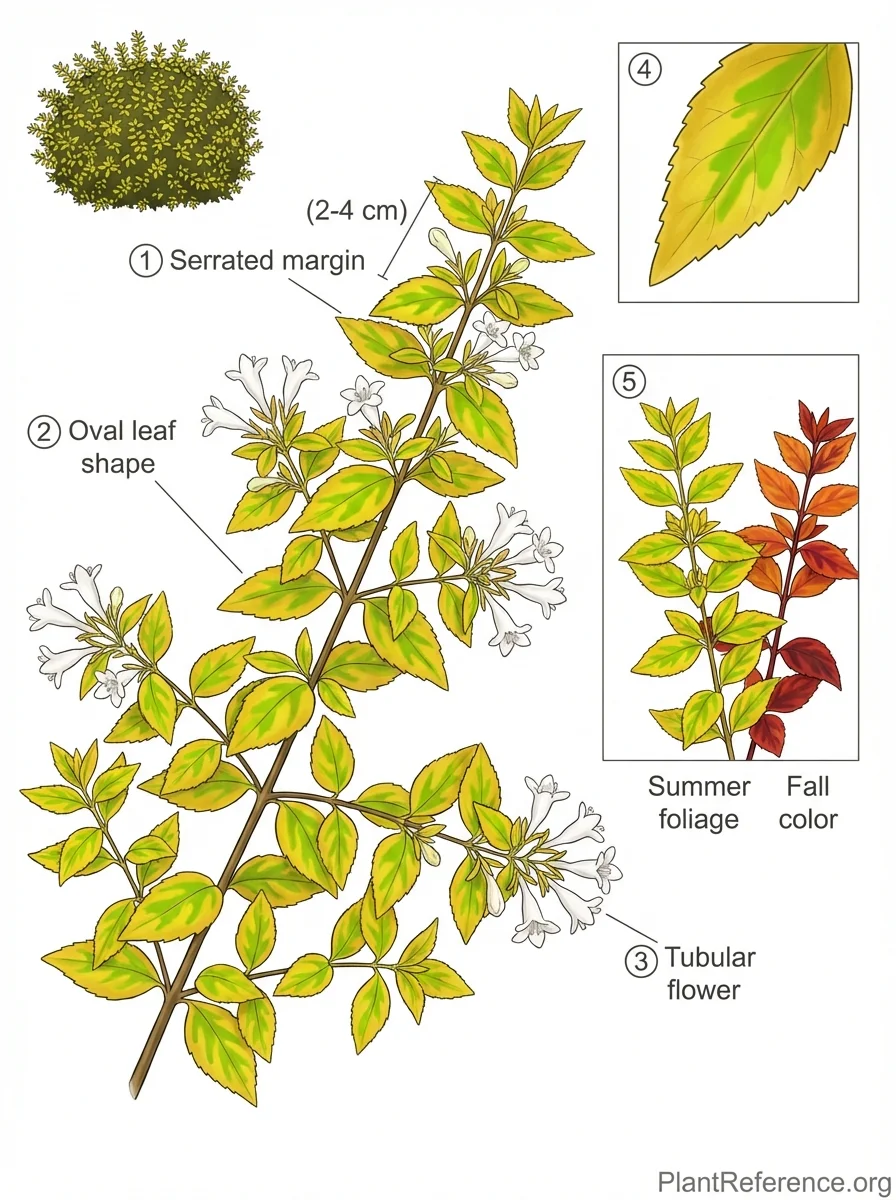
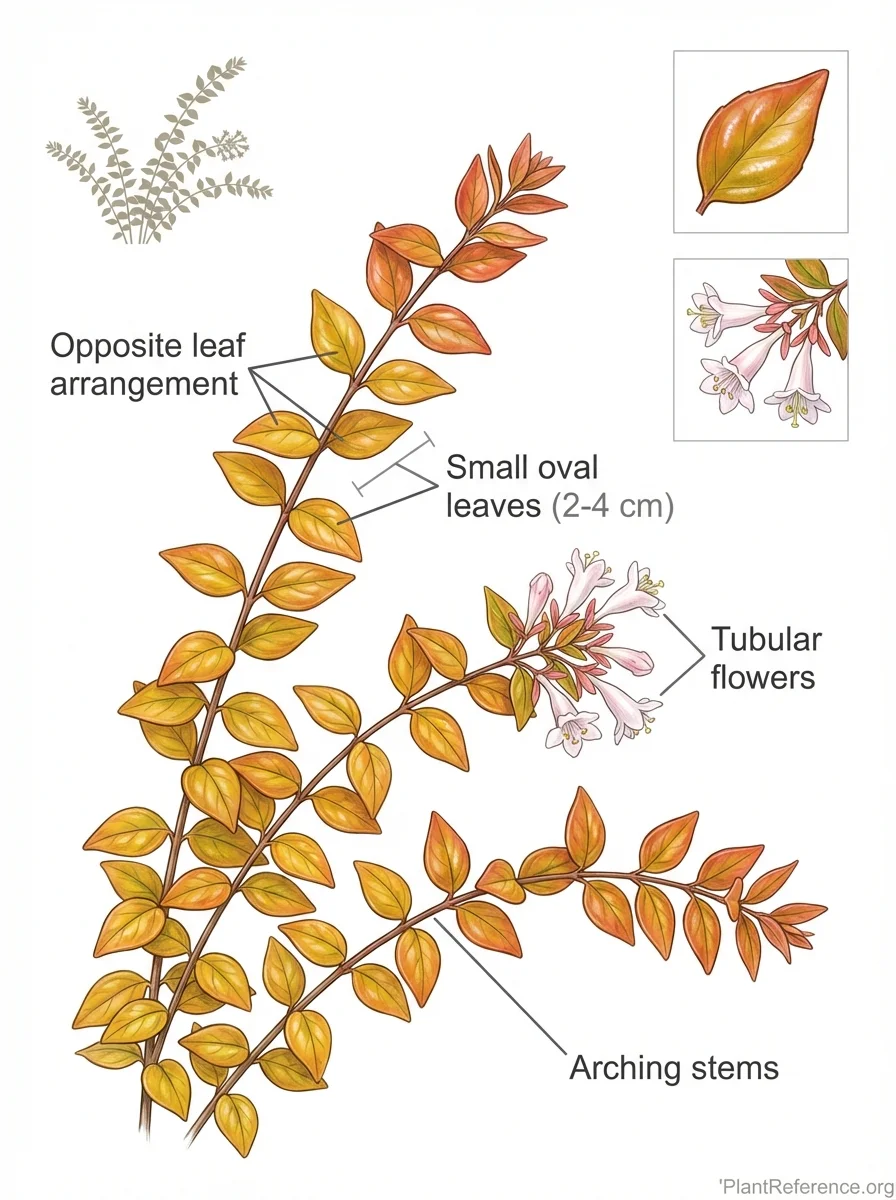
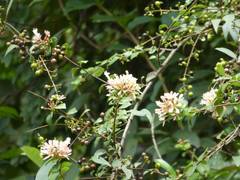
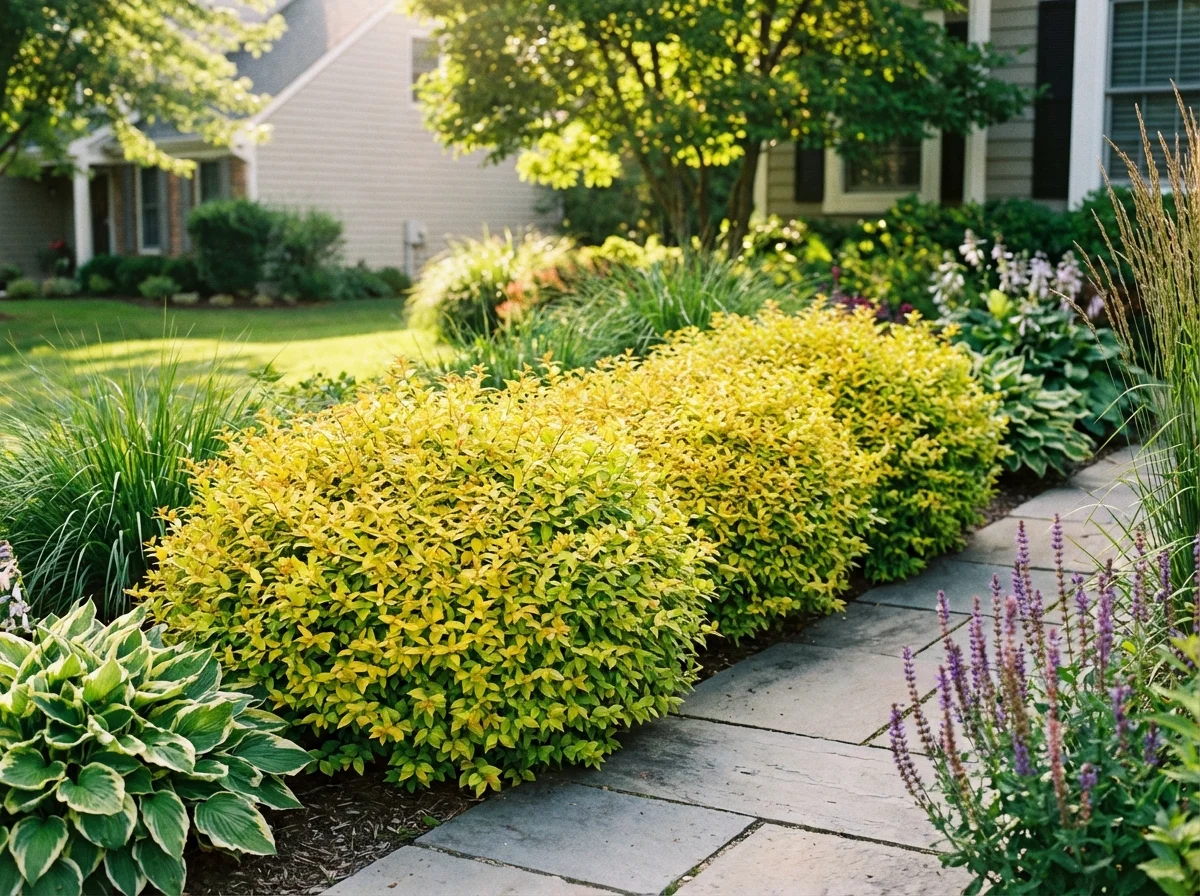
Abelia × grandiflora 'Kaleidoscope' is Kaleidoscope abelia, a compact semi-evergreen shrub growing 24–36 inches (60–90 cm) tall and wide. The foliage cycles through multiple colors across the seasons: bright golden-yellow new growth with lime-green centers in spring; lime-green leaves with gold margins in summer; orange-red to fiery red in fall and winter. The multi-season color transition is the cultivar feature — the name 'Kaleidoscope' references this. White to pale pink tubular fragrant flowers 0.5 inch (12 mm) from midsummer through fall (July–October), lasting 10–12 weeks. Hummingbird- and butterfly-visited. Persistent reddish sepals remain after the petals drop — a secondary fall feature. In the honeysuckle family (Caprifoliaceae). A compact dwarf sport of A. × grandiflora — the species type grows 72–96 inches (180–240 cm). Semi-evergreen: retains orange-red to burgundy foliage in zones 8–9; deciduous in zones 6–7. Full sun develops the most vivid foliage colors; shade mutes the gold and red tones. Drought-tolerant once established. Non-toxic. Deer-resistant. Part sun to full sun. Zones 6–9. Growth rate is moderate.
Native Range
Hybrid of garden origin — A. chinensis × A. uniflora, both native to China. 'Kaleidoscope' is a compact dwarf sport.Suggested Uses
Grown in borders, as edging, and in containers in zones 6–9. The multi-season foliage color cycle is the cultivar feature. Compact at 24–36 inches (60–90 cm). Hummingbird- and butterfly-visited. Non-toxic. Deer-resistant.How to Identify
Appearance
Size & Dimensions
Height2' - 3'
Width/Spread2' - 3'
Bloom Information
Detailed Descriptions
Flower Description
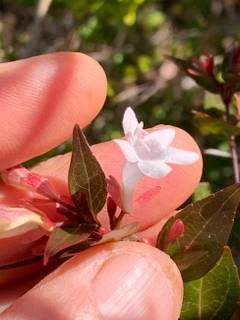
White to pale pink, tubular, 0.5 inch (12 mm), fragrantFoliage Description
Multi-colored: new growth emerges bright golden-yellow with lime-green centers; matures to lime-green with gold margins; turns orange-red to fiery red in fall and winter; leaves 0.5-1 inch (12-25 mm)Growing Conditions
Sun Requirements
Requires 4-8 hours of direct sunlight daily
• Full Sun: 6+ hours of direct sunlight
• Partial Shade: 3-6 hours of direct sunlight
• Full Shade: Less than 3 hours of direct sunlight
Care & Maintenance
Care Guide
Part sun to full sun — full sun for vivid foliage colors. Drought-tolerant once established. Semi-evergreen (deciduous in zones 6–7). Compact form — dwarf sport of the species type. Non-toxic. Deer-resistant. Hummingbird-visited. Zones 6–9.Pruning
Prune in early spring (March) — cut back by one-third to refresh the compact mounding form. Flowers on new wood. Tolerates hard renovation pruning. Remove winter-damaged stems in spring.Pruning Schedule
Prune: March
early spring
Container Growing
Suitable for container growing
Minimum container size: 5 gallons
Toxicity
Non-toxicBotanical Flashcard