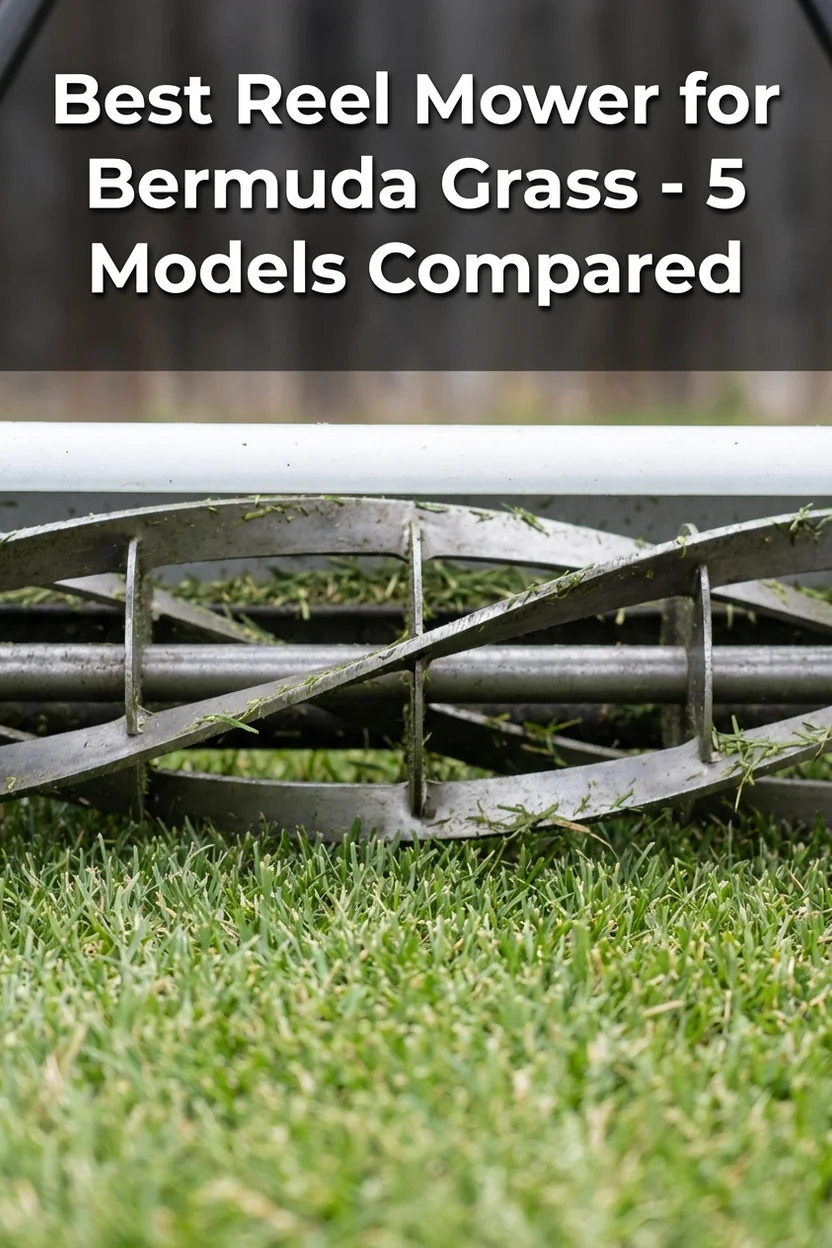
Best Reel Mower for Bermuda Grass: 5 Models Tested and Compared
Pets & Toxicity
Recorded toxicity for plants linked in this guide. An unknown status is not a safety assessment.
No linked plant is recorded as toxicDetailsHide
— Image © Plant Reference 2026
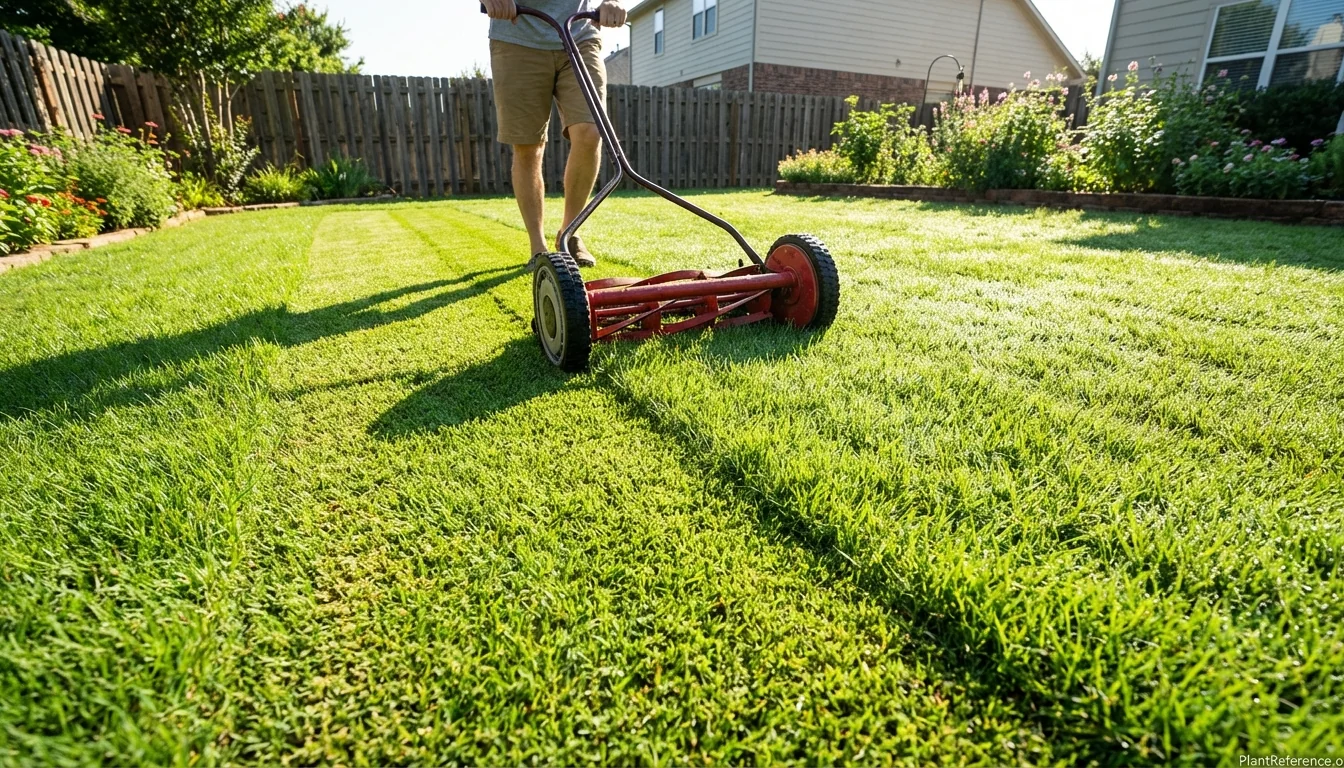
If you are maintaining a 🌿Cynodon dactylon (sy-NO-don DAK-tih-lon) bermudagrass lawn at the low cutting heights that produce dense, carpet-like turf, a rotary mower is the wrong tool. Rotary blades spin horizontally and tear grass rather than cutting it — acceptable at 3+ inches on fescue, but destructive at the 1-2 inch (2.5-5 cm) height where bermuda performs best. Reel mowers use a scissor-action cutting mechanism that produces the clean, sharp cut bermuda needs to stay healthy and look professional.
Why Bermuda Needs a Reel Mower
The Scissor Cut vs the Tear
A rotary mower spins a single blade at high speed, relying on impact force to sever grass. At mowing heights above 2.5 inches (6 cm), this produces a reasonably clean cut. Below 2 inches, rotary mowers scalp unevenly, miss blades that lie flat (which bermuda does), and tear leaf tips instead of slicing them. Torn tips turn brown within 24 hours, giving the lawn a dull, stressed appearance.
A reel mower traps each grass blade between a spinning helical reel and a fixed bedknife, cutting with a true scissor action. This produces a clean, sharp cut at any height — even down to 0.5 inches (1.3 cm) on golf greens. The clean cut heals faster, loses less moisture, and resists disease entry points better than torn tissue. Lawn Mowing Height Guide: The One-Third Rule and Seasonal Timing
Bermuda's Low Mowing Requirement
🌿Cynodon dactylon Bermudagrass performs best mowed at 0.5-2 inches (1.3-5 cm) depending on variety. Common bermuda does well at 1.5-2 inches. Hybrid bermudas like 'TifTuf,' 'Tahoma 31,' and 'Celebration' look their best at 0.75-1.5 inches. At these heights, a reel mower is not optional — it is the only tool that delivers acceptable results. When to Fertilize Bermuda Grass: Monthly Schedule by Zone

What to Look For in a Bermuda Reel Mower
Cutting Height Range
The mower must reach your target height. For bermuda, look for a minimum cutting height of 1 inch or lower and a maximum of at least 2.5 inches (for the occasional higher cut during stress periods). Some budget reel mowers bottom out at 1.5 inches — too high for hybrid bermuda varieties.
Number of Blades
More blades on the reel = more cuts per linear foot = a finer, more uniform finish. Budget reel mowers have 4-5 blades and work well for bermuda maintained at 1.5-2 inches. Premium mowers with 7-10 blades produce a smoother cut at heights below 1 inch — essential for lawn enthusiasts aiming for a putting-green look.
Cutting Width
Wider cutting decks cover more ground per pass but are heavier to push. 14-inch width suits small lawns under 2,000 sq ft. 18-20 inch width is the sweet spot for most home bermuda lawns. Above 20 inches, consider a powered model — the extra width becomes fatiguing to push manually on a bermuda lawn that needs mowing every 3-4 days in summer.
Feature | Budget ($80-150) | Mid-Range ($150-300) | Premium ($300-600+) |
|---|---|---|---|
Blade count | 4-5 | 5-7 | 7-10 |
Min cutting height | 1-1.5 in | 0.5-1 in | 0.25-1 in |
Cutting width | 14-16 in | 16-18 in | 18-20 in |
Weight | 20-30 lbs | 25-35 lbs | 35-60 lbs |
Best for | Occasional bermuda mowing | Regular home bermuda lawns | Lawn enthusiasts, hybrid bermuda |
The 5 Best Reel Mowers for Bermuda Grass
1. Fiskars StaySharp Max — Best Overall Manual Reel Mower
The StaySharp Max is the reel mower I recommend most frequently for home bermuda lawns. Its 18-inch cutting width covers ground efficiently, the InertiaDrive reel requires 60% less pushing effort than conventional reel mowers (Fiskars' claim, and in my experience it holds up), and the StaySharp cutting system maintains blade sharpness significantly longer than competitors — many users report 3-5 years before needing professional reel grinding.
Cutting height adjusts from 1-4 inches (2.5-10 cm) in increments, which covers the full bermuda range for common varieties. The 1-inch minimum is adequate for common bermuda but too high for hybrid varieties maintained below 1 inch. At roughly $250-350, it is a serious investment for a push mower, but the build quality and cutting performance justify it.
Best for: Common bermuda lawns 1,000-5,000 sq ft maintained at 1-2 inches.
2. Scotts Classic 20-Inch Reel Mower — Best Budget Option
At $100-130, the Scotts Classic delivers solid reel-mowing performance for homeowners transitioning from rotary to reel without a large upfront investment. The 20-inch cutting width is the widest in the budget category, covering more ground per pass than 14-inch competitors.
The 5-blade reel produces a clean cut at bermuda heights of 1-3 inches. Height adjustment is simple but the increments are coarser than premium models. The main trade-off is pushing effort — without the advanced reel drives of the Fiskars, this mower requires more muscle on thick bermuda turf. Expect to sharpen or have the reel ground every 1-2 seasons.
Best for: Budget-conscious homeowners with smaller bermuda lawns under 3,000 sq ft.
3. Earthwise 16-Inch 7-Blade Reel Mower — Best for Low-Cut Hybrid Bermuda
The Earthwise 7-blade reel stands out for hybrid bermuda owners who need to mow below 1 inch. The 7-blade configuration produces a finer cut per revolution than 5-blade models, resulting in a smoother, more uniform surface at low heights — closer to what you see on a golf course fairway.
Cutting height adjusts from 0.5-2.5 inches (1.3-6 cm), covering the full range for even the most aggressively maintained hybrid bermuda. The 16-inch width is narrower than the Fiskars or Scotts, so it requires more passes on larger lawns. At $100-150, it offers excellent value for the blade count and height range.
Best for: Hybrid bermuda ('TifTuf,' 'Tahoma 31') maintained at 0.75-1.5 inches on lawns under 3,000 sq ft.

4. American Lawn Mower 1204-14 — Best Compact for Tight Spaces
At 14 inches wide and under 20 lbs, this is the most maneuverable reel mower available. The compact size makes it ideal for small bermuda lawns, narrow strips between the driveway and sidewalk, and tight spaces around flower beds where larger mowers cannot fit.
The 4-blade reel is the minimum for bermuda — it cuts cleanly at 1.5-2 inches but lacks the blade density for sub-1-inch heights. Height range is 0.5-1.75 inches. At $70-100, it is the most affordable reel mower on this list and a solid entry point for homeowners testing whether reel mowing is right for their bermuda.
Best for: Small bermuda lawns under 1,500 sq ft, narrow side yards, supplemental mower for detail work.
5. Swardman Edwin 2.0 — Best Powered Reel Mower
For homeowners with bermuda lawns over 3,000 sq ft who mow every 2-3 days during peak summer, a manual reel mower becomes a workout. The Swardman Edwin is a self-propelled reel mower with a Honda GX engine that does the pushing for you.
The 10-blade reel with adjustable bedknife produces golf-green quality cuts from 0.15-2 inches (4-50 mm). The cutting cartridge system allows swapping between reel mowing, verticutting, and scarifying — three tools in one frame. The price is steep ($1,500-2,500), but it replaces a reel mower, a verticutter, and a dethatcher.
Best for: Large bermuda lawns, lawn enthusiasts pursuing putting-green quality, homeowners who verticut regularly.

Manual vs Powered: Which Do You Need
Choose Manual If:
Your bermuda lawn is under 3,000 sq ft, you do not mind the physical exercise of pushing, and you mow regularly enough that the grass never gets ahead of you. Manual reel mowers struggle with overgrown bermuda — if you skip a week during June and the grass doubles in height, a manual mower will jam and require multiple passes. Cool-Season vs Warm-Season Grass: Which Type Fits Your Lawn?
Choose Powered If:
Your bermuda lawn exceeds 3,000 sq ft, you mow every 2-3 days during peak growth (May-August), or you maintain hybrid bermuda below 1 inch where precision and consistency matter. The self-propelled drive eliminates fatigue, and the additional blade count on powered models produces a noticeably finer cut. Lawn Care Schedule by Month: Your Complete Cool-Season Grass Calendar
The Mowing Frequency Factor
Bermuda during peak summer growth can put on 0.5 inches of new growth per day. If you are mowing at 1.5 inches and following the one-third rule (never remove more than one-third of the blade height), you need to mow when it reaches 2 inches — which in June-July means every 2-3 days. That mowing frequency is manageable with a manual reel on a small lawn but exhausting on a larger property. Lawn Mowing Height Guide: The One-Third Rule and Seasonal Timing

Reel Mower Maintenance Basics
Blade Sharpening
Reel mower blades dull over time — you will notice the cut quality declining as blades begin to push grass over instead of slicing it. Most manual reel mowers need the reel and bedknife ground every 1-2 seasons (annually for heavy use on bermuda). A reel-grinding service typically costs $50-100. Some models offer a backlapping kit ($15-25) that lets you sharpen at home by reversing the reel direction with a compound applied to the blades.
Bedknife Adjustment
The reel and bedknife must be in close contact — but not touching. If you hear metal-on-metal grinding, the bedknife is too tight and will wear both components prematurely. If grass blades fold over instead of cutting, the gap is too wide. Most mowers have adjustment screws on each side of the bedknife. Test by holding a piece of newspaper against the reel and spinning it by hand — the paper should cut cleanly across the full width.
After Every Mow
Brush clippings off the reel and bedknife after each use. Bermuda clippings are sticky and accumulate on the cutting surfaces, reducing cut quality over the next mow. A stiff bristle brush and a quick wipe keeps the mechanism clean. Transition Zone Lawn Care: Growing Grass in America's Toughest Climate Belt

Frequently Asked Questions

Reading about plants and recognising them are different skills. These three build the second.
- Daily PlantIdentify the day’s mystery plant from a close-up photograph.
- Keyed OutWork a dichotomous key, lead by lead, to name a hidden specimen.
- Name That PlantName a specimen from botanical clues dealt hardest first.
Free to play, no account needed
Tagged with
James is a lawn care professional in Dallas who runs a small residential maintenance company. He started mowing lawns as a teenager and worked his way up to running crews for a large landscaping firm before going out on his own. James specializes in warm-season turf grasses—Bermuda, St. Augustine, and Zoysia—and knows how to keep a lawn alive through Texas summers without wasting water. He's also experienced with the transition zone challenges that Dallas faces, where warm-season and cool-season grasses overlap. James takes a practical, science-informed approach to lawn care and pushes back on the idea that a good lawn requires heavy chemical inputs.