Best Lawn Sprinkler for Even Coverage: 5 Types Compared
— Image © Plant Reference 2026
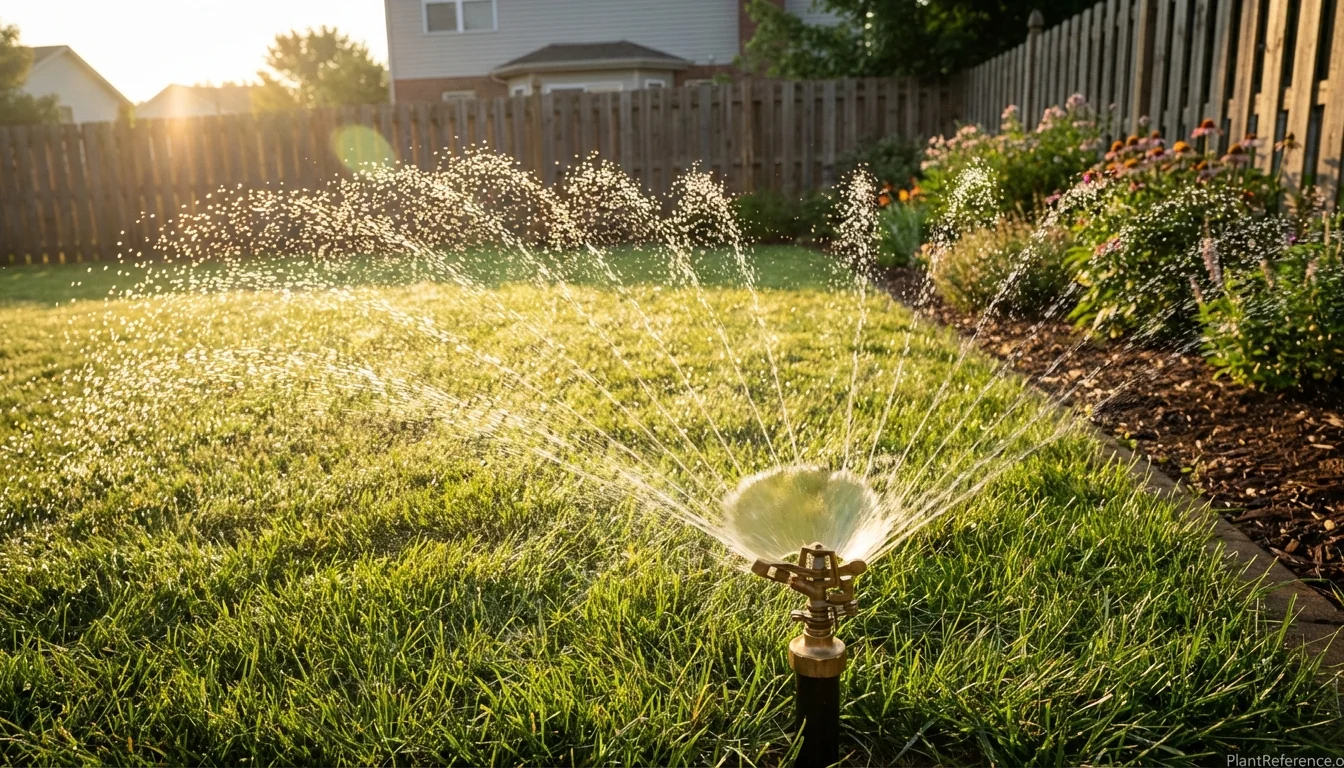
The sprinkler you use matters less than how evenly it distributes water. I have seen $15 impact sprinklers outperform $200 in-ground systems because the impact sprinkler was positioned correctly and the in-ground heads were spaced too far apart. Uneven coverage is the hidden cause behind many lawn problems — one zone gets 2 inches per week while the adjacent zone gets 0.5 inches, creating a patchwork of overwatered disease-prone turf next to drought-stressed brown spots on the same lawn.
Why Even Coverage Matters More Than Sprinkler Price
A sprinkler that delivers 1 inch of water to the center of its pattern but only 0.25 inches at the edges creates a lawn with two different watering schedules happening simultaneously. The center is overwatered — promoting fungal disease, shallow roots, and nutsedge. The edges are underwatered — showing drought stress, thinning, and crabgrass invasion. How to Water Your Lawn the Right Way: Depth, Timing, and Drought
The technical term is distribution uniformity (DU) — a measurement of how consistently water falls across the entire coverage area. A perfect DU is 1.0 (every point receives identical water). Most home sprinklers achieve 0.5-0.7. Above 0.7 is good. Below 0.5 means you are wasting water on some areas to adequately water others.
The 5 Sprinkler Types Compared
1. Gear-Driven Rotary — Best Overall for Even Coverage
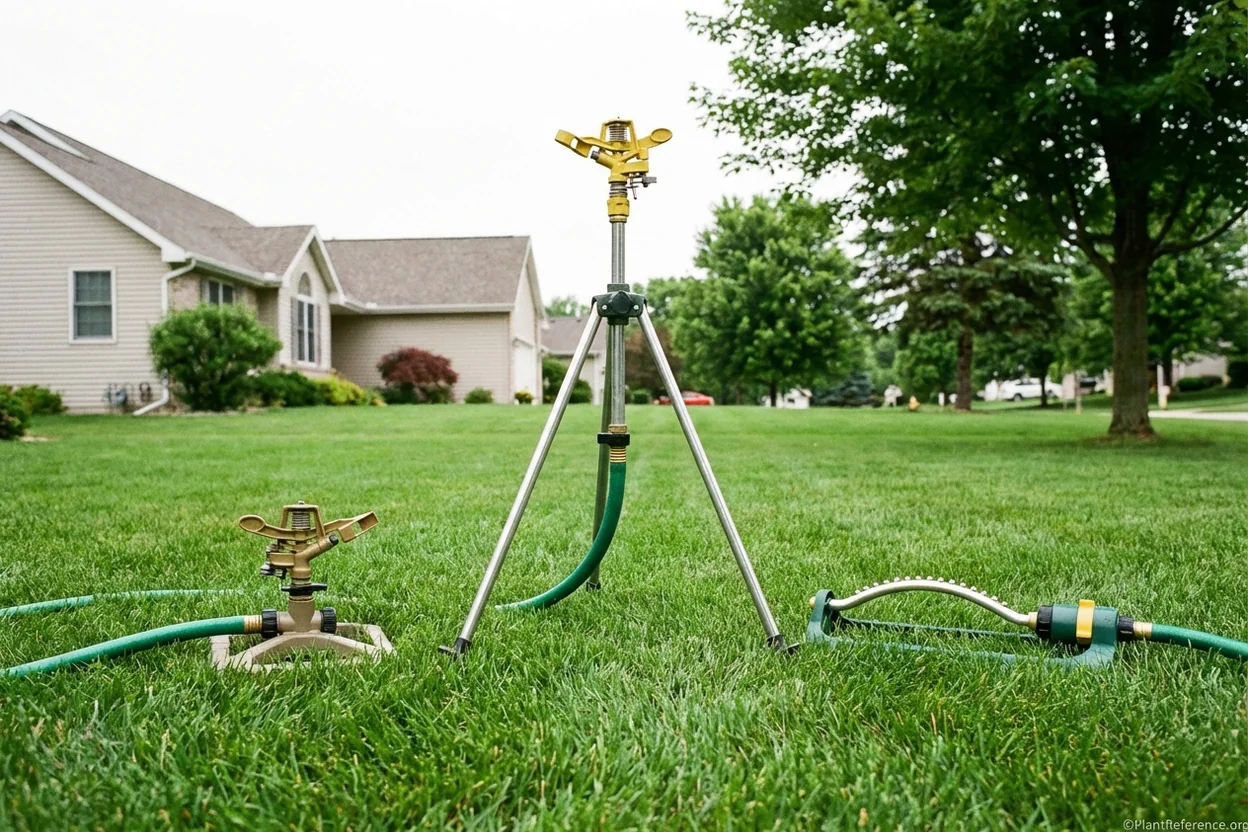
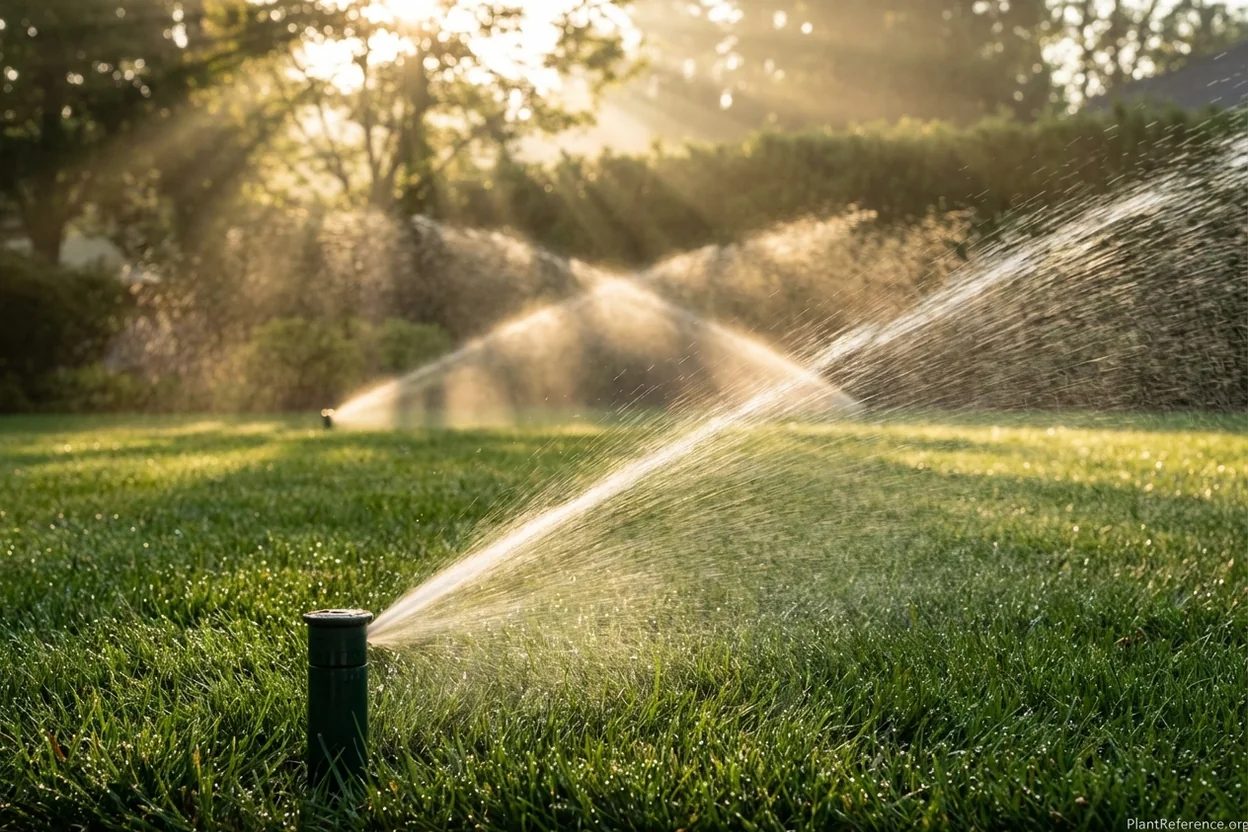
Gear-driven rotary sprinklers use an internal gear mechanism to rotate a single stream or multiple streams in a smooth, consistent arc. They distribute water in a graduated pattern — heavier near the head, lighter at the edges — designed to overlap with adjacent heads for uniform coverage.
Why they win on uniformity: The gear mechanism produces a predictable, repeatable pattern that does not change with water pressure variations. Wind resistance is moderate — the larger water droplets penetrate wind better than the fine mist from oscillating models. Coverage radius ranges from 15-45 feet (5-14 m) depending on the model and pressure.
Best brands: Hunter PGP, Rain Bird 5000 series, and Orbit Voyager II are proven performers. For above-ground use on a hose, the Melnor XT Turbo is a solid gear-driven option at $15-25.
Best for: Lawns 2,000-10,000 sq ft; homeowners who want the closest thing to professional in-ground performance from a hose-end sprinkler. Lawn Care Schedule by Month: Your Complete Cool-Season Grass Calendar
2. Impact (Impulse) — Best for Large Areas and Windy Conditions
The classic impact sprinkler — the one that makes the "tch-tch-tch-tch" sound — has been the professional standard for decades. A spring-loaded arm deflects the water stream, creating the characteristic pulsing rotation. Impact sprinklers throw large, heavy water droplets that resist wind drift better than any other sprinkler type.
Coverage uniformity is good but depends heavily on correct head spacing. The large droplet size means excellent penetration on clay soils and in windy conditions, but the pulsing delivery can create slight inconsistencies in the pattern. Coverage radius reaches 20-80 feet (6-24 m) — the longest throw of any sprinkler type.
Best for: Large lawns over 5,000 sq ft; windy properties; clay soils that need heavy droplet impact to penetrate. Transition Zone Lawn Care: Growing Grass in America's Toughest Climate Belt
3. Oscillating — Most Popular but Least Uniform
Oscillating sprinklers use a curved tube with holes that sweeps back and forth, creating a rectangular spray pattern. They are the most widely purchased home sprinkler because they are inexpensive ($10-30), easy to use, and cover a recognizable rectangular area that fits most lawn shapes.
The uniformity problem: Oscillating sprinklers inherently deliver more water at the center of the sweep (where the tube moves slowest as it reverses direction) and less at the edges (where it moves fastest). The resulting pattern is heavy in the middle and light at the ends — a DU of 0.4-0.6 at best. They also produce fine water droplets that are highly susceptible to wind drift.
When they work: Small, sheltered lawns under 2,000 sq ft with low wind exposure. For larger or windier properties, upgrade to a gear-driven or impact model. Brown Patches in Your Lawn: Causes, Diagnosis, and Treatment
Sprinkler Type | Coverage Uniformity | Wind Resistance | Best Coverage Area | Price Range |
|---|---|---|---|---|
Gear-driven rotary | High (DU 0.65-0.80) | Good | 2,000-10,000 sq ft | $15-40 (hose-end) |
Impact/impulse | Good (DU 0.60-0.75) | Excellent | 5,000-20,000 sq ft | $10-35 |
Oscillating | Fair (DU 0.40-0.60) | Poor | Under 2,000 sq ft | $10-30 |
Stationary/pattern | Variable | Poor | Under 1,000 sq ft | $5-15 |
In-ground pop-up | Excellent (DU 0.70-0.85) | Good | Any size | $500-3,000+ installed |
4. Stationary/Pattern — Best for Small Targeted Areas
Stationary sprinklers sit in one position and spray a fixed pattern — circle, half-circle, square, or strip. They have no moving parts, making them the most reliable and cheapest option available ($5-15). Coverage is limited to a small radius (10-20 feet / 3-6 m).
Uniformity varies wildly by design. Some produce excellent coverage within their small radius; others create a heavy donut pattern with a dry center. The tuna can test is essential with stationary sprinklers — never assume even coverage.
Best for: Narrow strips between the sidewalk and street, small garden areas, and targeted coverage of specific dry spots where a larger sprinkler would overspray. What Type of Grass Do I Have? Identify Your Lawn in 5 Steps
5. In-Ground Pop-Up — Best Uniformity but Highest Cost
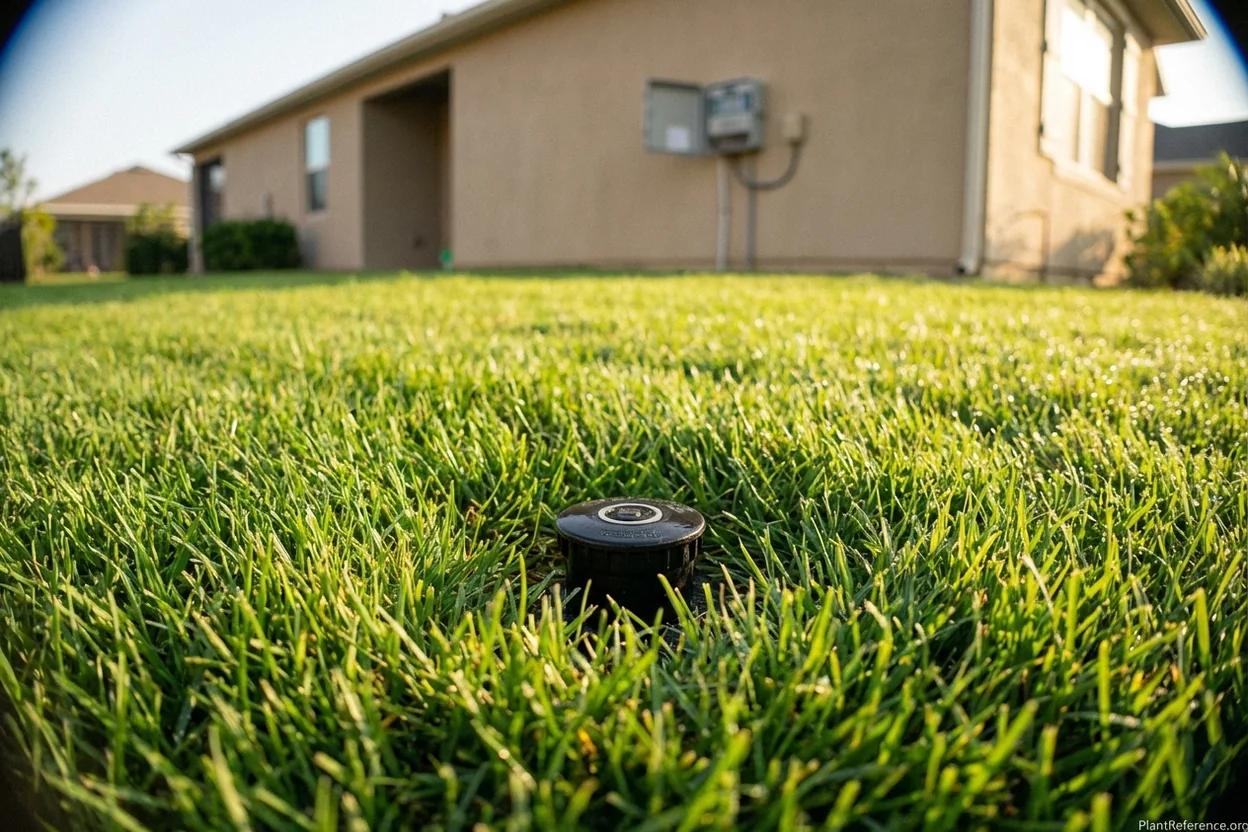
Professionally installed in-ground systems with pop-up heads deliver the highest distribution uniformity because each head is positioned at a calculated spacing based on its throw radius. The standard design rule is head-to-head coverage — each sprinkler head throws water far enough to reach the adjacent head, ensuring complete overlap with no gaps.
The upfront cost is significant ($500-3,000+ for a typical residential installation), but properly designed in-ground systems use 20-30% less water than above-ground sprinklers because every drop lands where it is intended. They also water automatically on a timer, eliminating the forgetting-to-move-the-sprinkler problem.
Best for: Homeowners committed to long-term lawn health who water more than 6 months per year. The water savings alone can offset installation cost within 3-5 years in high-water-cost areas.
How to Test Your Sprinkler's Uniformity
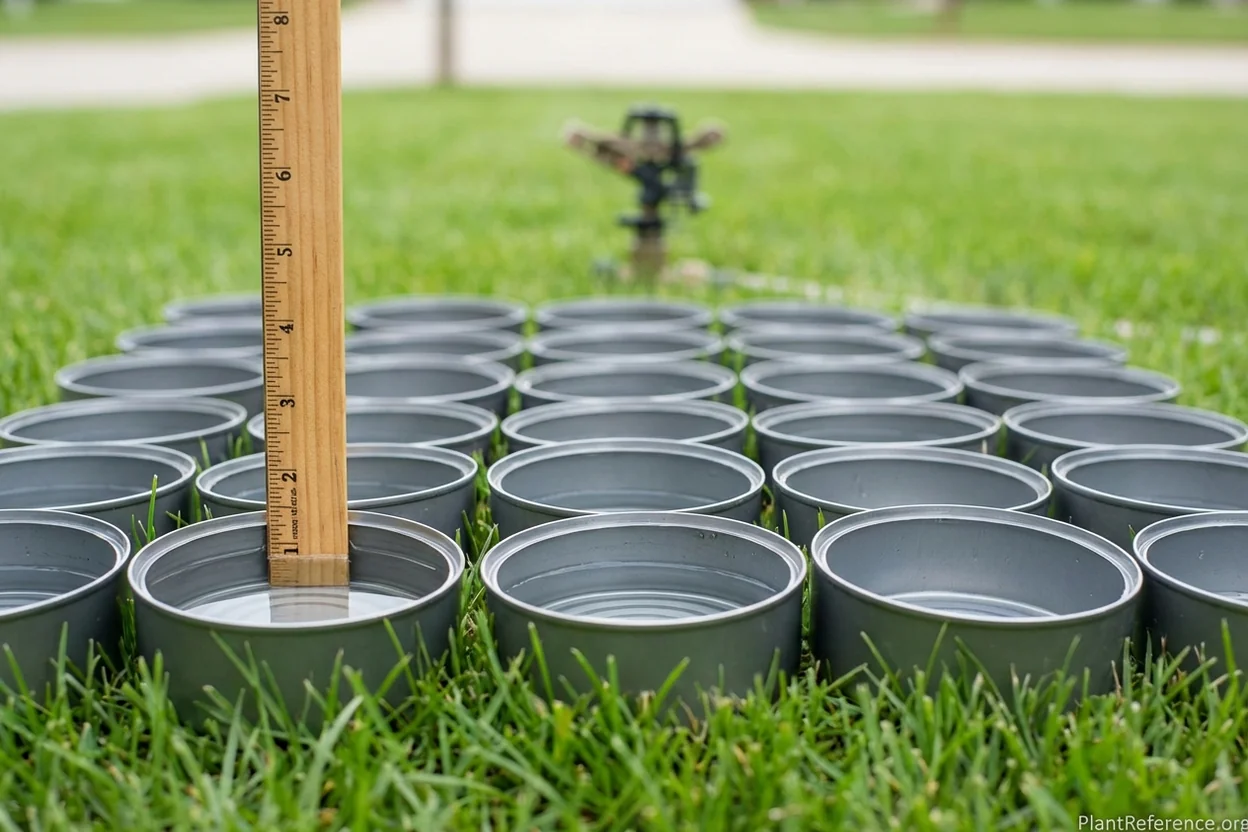
The Tuna Can Audit
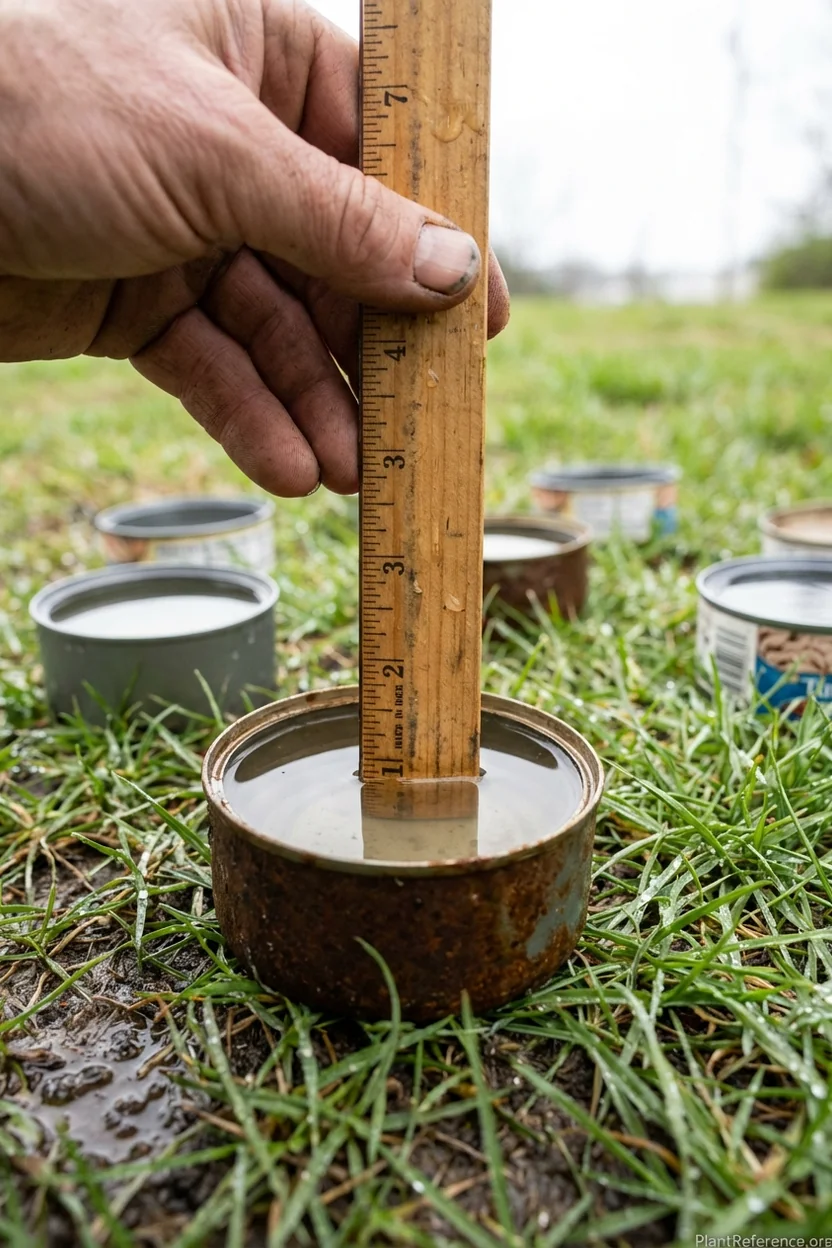
Place 6-10 empty tuna cans (or any identical flat containers) in a grid pattern across the sprinkler's coverage area. Include cans at the center, edges, and corners of the spray pattern. Run the sprinkler for 30 minutes. Measure the water depth in each can with a ruler.
What the results tell you:
If all cans are within 25% of each other (for example, all between 0.6-1.0 inches), your sprinkler has good uniformity. If some cans have twice the water of others (1.0 inches vs 0.5 inches), the coverage is uneven and you need to adjust head position, overlap, or switch sprinkler types.
Also note how many minutes of runtime delivers your target 0.5-0.75 inches per session. This number becomes your watering schedule — run the sprinkler for exactly this many minutes per zone, 2-3 times per week. Lawn Fertilization Schedule: When and What to Feed by Grass Type
Sprinkler Placement for Maximum Coverage
Overlap Is Essential
No sprinkler produces perfectly even coverage to its maximum radius. Water output always decreases toward the edges. The solution is overlapping coverage zones — position sprinklers so that the edge of one pattern overlaps with the edge of the adjacent pattern. For most above-ground sprinklers, this means placing them at 50-60% of their maximum throw distance apart.
Wind Adjustments
Wind degrades sprinkler uniformity more than any other factor. On windy days, fine-droplet sprinklers (oscillating) lose up to 40% of water to evaporation and drift. Reduce the impact by watering during the 6-8 AM window when wind is typically lowest, or switch to large-droplet sprinklers (impact, gear-driven) that cut through wind. Lawn Mowing Height Guide: The One-Third Rule and Seasonal Timing
Slopes and Odd Shapes
Slopes shed water before it soaks in. Use cycle-and-soak watering on slopes: run 10 minutes, pause 30 minutes, run again. For irregular lawn shapes, use multiple sprinkler positions rather than trying to cover everything from one spot — two well-placed sprinklers with good overlap beat one sprinkler stretched to its maximum radius.
When to Upgrade to In-Ground
Consider an in-ground system if you water your lawn more than 6 months per year, your property exceeds 5,000 sq ft, or you consistently forget to move hose-end sprinklers (resulting in overwatered spots and missed zones). The initial cost ($500-3,000 installed) is offset by water savings of 20-30% from precise coverage and automated scheduling. Cool-Season vs Warm-Season Grass: Which Type Fits Your Lawn?
A properly designed in-ground system also eliminates the physical hassle of dragging hoses and repositioning sprinklers — a significant quality-of-life improvement for homeowners who water 3+ times per week during summer.
Frequently Asked Questions
Reading about plants and recognising them are different skills. These three build the second.
- Daily PlantIdentify the day’s mystery plant from a close-up photograph.
- Keyed OutWork a dichotomous key, lead by lead, to name a hidden specimen.
- Name That PlantName a specimen from botanical clues dealt hardest first.
Free to play, no account needed
Tagged with
James is a lawn care professional in Dallas who runs a small residential maintenance company. He started mowing lawns as a teenager and worked his way up to running crews for a large landscaping firm before going out on his own. James specializes in warm-season turf grasses—Bermuda, St. Augustine, and Zoysia—and knows how to keep a lawn alive through Texas summers without wasting water. He's also experienced with the transition zone challenges that Dallas faces, where warm-season and cool-season grasses overlap. James takes a practical, science-informed approach to lawn care and pushes back on the idea that a good lawn requires heavy chemical inputs.