Woodwardia, Genus, fimbriata, Species,
- Genus & species
giant chain fern
Overview
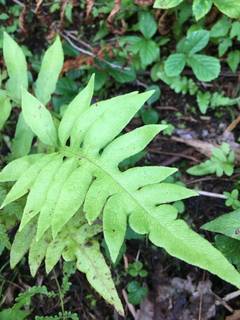
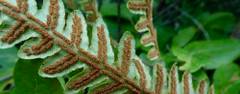
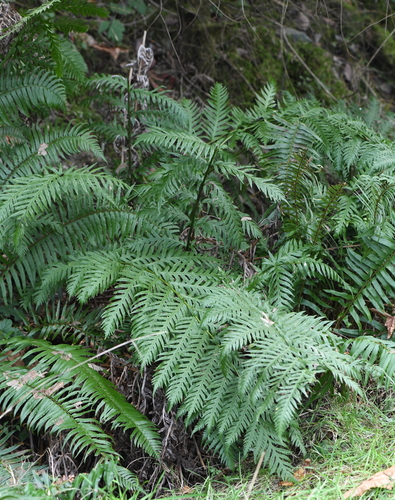
Woodwardia fimbriata is an evergreen fern reaching 5-9 feet (1.5-2.7 m) tall and 4-6 feet (1.2-1.8 m) wide at maturity. Fronds are bipinnate, leathery, and lance-shaped, growing from a thick, semi-woody rhizome that creeps slowly along the soil surface. Each frond is 4-9 feet (1.2-2.7 m) long and 12-18 inches (30-45 cm) wide, supported by a stout, dark stipe with brown scales at the base. Pinnae are deeply lobed with serrated margins and emerge bronze-green, maturing to deep glossy green. Sori are arranged in chain-like rows along the midribs of fertile pinnae, typically appearing on undersides from June through September. Growth rate is moderate; an established plant produces 6-12 new fronds per year and reaches mature size in 5-8 years. Fronds remain evergreen in zones 8-10 but may yellow and decline in zones 6-7 with prolonged temperatures below 20°F (-7°C). Older fronds bend toward the ground in late winter and die back to the rhizome before new fronds unfurl in spring. The plant forms expanding clumps rather than dense colonies and lacks the underground runners found in some other ferns.
Native Range
Native to western North America from southern British Columbia south to Baja California, with disjunct populations in Arizona and Nevada. Found along streambanks, in seepage areas, redwood forests, and shaded canyon walls below 7,000 feet (2,100 m). Most abundant in coastal forests of Oregon and northern California where summer fog supplements rainfall.Suggested Uses
Commonly planted in shade gardens, woodland borders, and along stream margins in zones 7-10, with spacing of 5-6 feet (1.5-1.8 m) between crowns. Mass plantings are used as a backdrop in fern collections or beneath open-canopy trees such as bigleaf maple or coast redwood. Container culture is possible in pots of 15-20 gallons (57-75 L) with consistent moisture, though plants remain smaller than in-ground specimens.How to Identify
Appearance
Size & Dimensions
Height5' - 9'
Width/Spread4' - 6'
Bloom Information
Ferns do not flower. Spore-bearing sori develop on the undersides of fertile pinnae from June through September in coastal populations and slightly later, July through October, in inland sites. Spores ripen and disperse 4-6 weeks after sori darken. New fronds emerge as fiddleheads from late February through May, depending on elevation and climate.
Detailed Descriptions
Foliage Description
deep glossy green, emerging bronze-greenGrowing Conditions
Sun Requirements
Tolerates up to 4 hours of direct sunlight daily
• Full Sun: 6+ hours of direct sunlight
• Partial Shade: 3-6 hours of direct sunlight
• Full Shade: Less than 3 hours of direct sunlight
Care & Maintenance
Care Guide
Grows in deep shade to dappled light in consistently moist, well-drained soil rich in organic matter. Water deeply once or twice weekly during establishment in the first two seasons; mature plants tolerate brief dry spells but fronds yellow and die back if soils dry below 20% moisture for more than 10 days. Mulch with 2-3 inches (5-7.5 cm) of bark or leaf litter annually in fall to maintain soil moisture. Aphids occasionally cluster on emerging fiddleheads in spring; populations rarely require treatment in shaded sites. Plants tolerate light frost but fronds blacken at temperatures below 15°F (-9°C); damaged fronds are cut back to the rhizome in late winter. Divide established clumps every 8-10 years in late winter when crowns become congested.Pruning
Cut all fronds to within 2-3 inches (5-7.5 cm) of the rhizome in late February or early March before new fiddleheads emerge, removing winter-damaged tissue. Older fronds that flop or yellow during the growing season are removed at the base; new fronds will not regenerate from cut points along the stipe. Cutting fiddleheads or expanding fronds halts that frond's development entirely, as they cannot branch from cut points.Pruning Schedule
Prune: February–March
winterearly spring
Container Growing
Suitable for container growing
Minimum container size: 15 gallons