Image 1 of 17
1 / 17
Plant Reference
Vinca, Genus, minor, Species,
- Genus & species
common periwinkle
Central and southern Europe — Portugal east to Turkey and the Caucasus; shaded woodland understories, forest margins, and scrubland at low to mid elevations
Overview
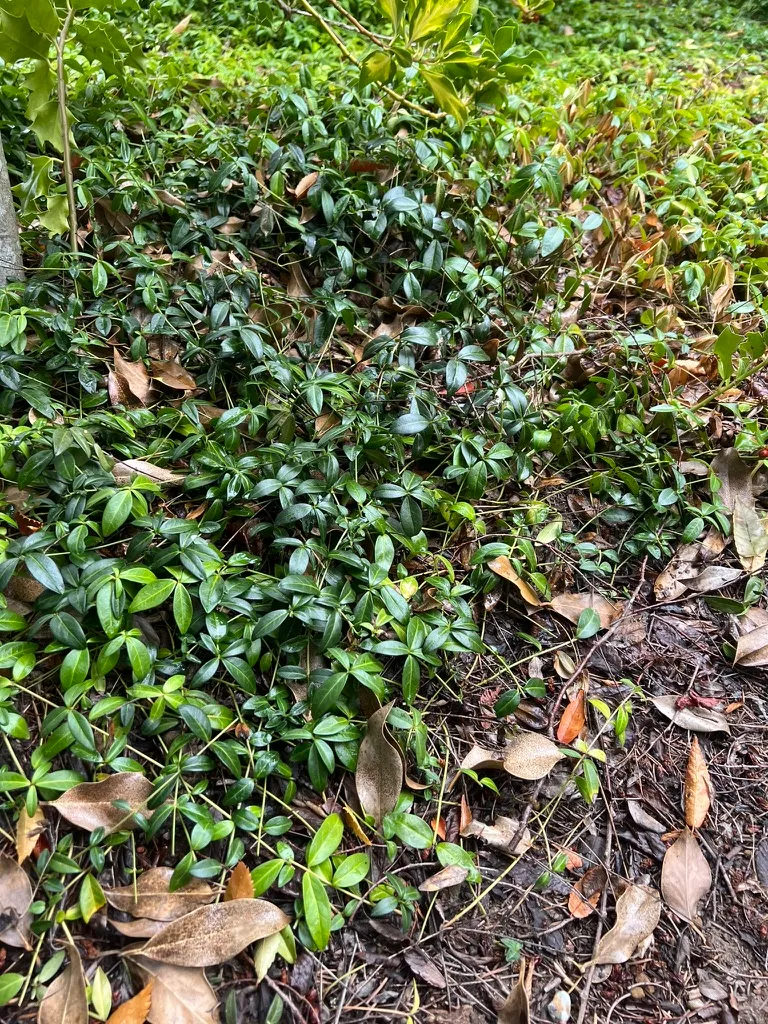
Vinca minor (common periwinkle, lesser periwinkle, myrtle) is a low trailing evergreen perennial groundcover with wiry stems reaching 3–6 inches (8–15 cm) tall and spreading 2–4 feet (60–120 cm) per plant by rooting at every node where stems contact soil. Foliage consists of glossy dark green elliptical to lance-shaped leaves 0.5–1.5 inches (1–4 cm) long with smooth surface and slightly revolute margins. Solitary tubular-flared blue-violet 5-petaled flowers 0.75–1 inch (2–2.5 cm) appear in leaf axils March–May for about 8 weeks, with sporadic repeat bloom into summer; cultivars carry white, purple, or reddish-purple flowers. The species belongs to Apocynaceae, the dogbane family. V. minor spreads less aggressively than V. major and is regulated in fewer jurisdictions, but can naturalize in woodland and disturbed areas beyond planted bounds — the potential for naturalization in adjacent natural areas is the principal ecological limitation. All plant parts contain vincamine and related alkaloids and are toxic to people and pets if ingested. Drought-tolerant once established. Deer-resistant. Hardy in zones 4–9.
Native Range
Native to central and southern Europe from Portugal east to Turkey and the Caucasus, in shaded woodland understories, forest margins, and scrubland at low to mid elevations.Suggested Uses
Used as a groundcover under trees, on shaded slopes for erosion control, as a lawn substitute in shaded areas with light foot traffic, and in containers of at least 3 gallons (11 L), spaced 12–18 inches (30–45 cm). The evergreen mat supplies year-round cover in zones 4–9 where in-ground spread can be contained away from natural woodland.How to Identify
Appearance
Size & Dimensions
Height3" - 6"
Width/Spread2' - 4'
Bloom Information
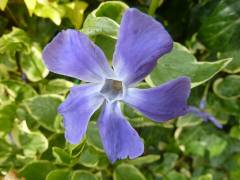
Spring (March–May) over about 8 weeks, with sporadic repeat bloom into summer and occasional fall flowers. Solitary tubular-flared blue-violet 5-petaled flowers 0.75–1 inch (2–2.5 cm) sit in leaf axils. Individual flowers last 3–5 days. In zones 4–5 bloom begins in April. Bee-visited. Cultivars carry white, purple, or reddish-purple flowers in the same form.
Detailed Descriptions
Flower Description
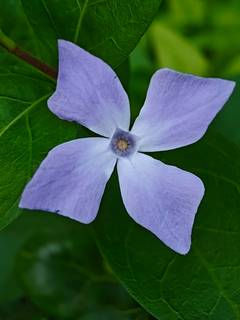
Blue-violet (species); 5-petaled; tubular-flared; 0.75-1 inch (2-2.5 cm); solitary in leaf axils; March-May with sporadic repeat into summer; cultivars carry white, purple, or reddish-purple flowers in the same formFoliage Description
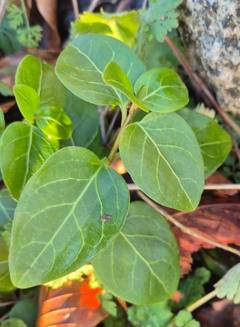
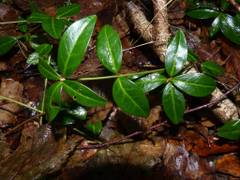
Glossy dark green; elliptical to lance-shaped; 0.5-1.5 inches (1-4 cm); smooth surface; slightly revolute margins; opposite on wiry trailing stems that root at the nodes; evergreen year-roundGrowing Conditions
Sun Requirements
Requires 2-6 hours of direct sunlight daily
• Full Sun: 6+ hours of direct sunlight
• Partial Shade: 3-6 hours of direct sunlight
• Full Shade: Less than 3 hours of direct sunlight
Care & Maintenance
Care Guide
Grows in part shade to full shade with 2–6 hours of direct light. Tolerates a wide range of soils at pH 6.0–8.0; soil drainage average to moderate. Drought-tolerant once established (about 2 growing seasons). Spacing of 12–18 inches (30–45 cm) achieves full coverage in 2–3 seasons. V. minor can naturalize in woodland and disturbed areas beyond the planted bed; in-ground siting near natural woodland is the principal restriction. All plant parts contain vincamine alkaloids and are toxic to people and pets if ingested. Deer-resistant. Suitable for zones 4–9.Pruning
Shear or mow plants to 2–3 inches (5–8 cm) in late winter to early spring (February–March) every 2–3 years to rejuvenate the planting and limit bare patches at the center. Stems extending beyond the planting bed can be cut back at any point in the growing season. Hard renovation cuts to ground level in early spring produce regrowth within 3–4 weeks.Pruning Schedule
Prune: February–March
early spring
Container Growing
Suitable for container growing
Minimum container size: 3 gallons