Vinca, Genus, major, Species,
- Genus & species
greater periwinkle
Western Mediterranean, southern Europe, North Africa
Overview
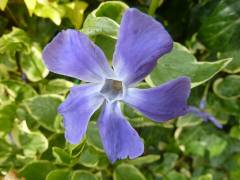
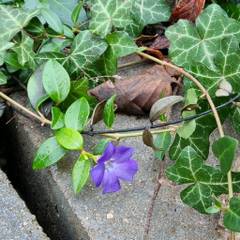
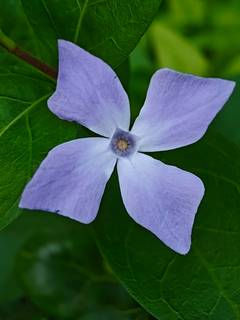
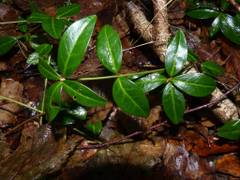
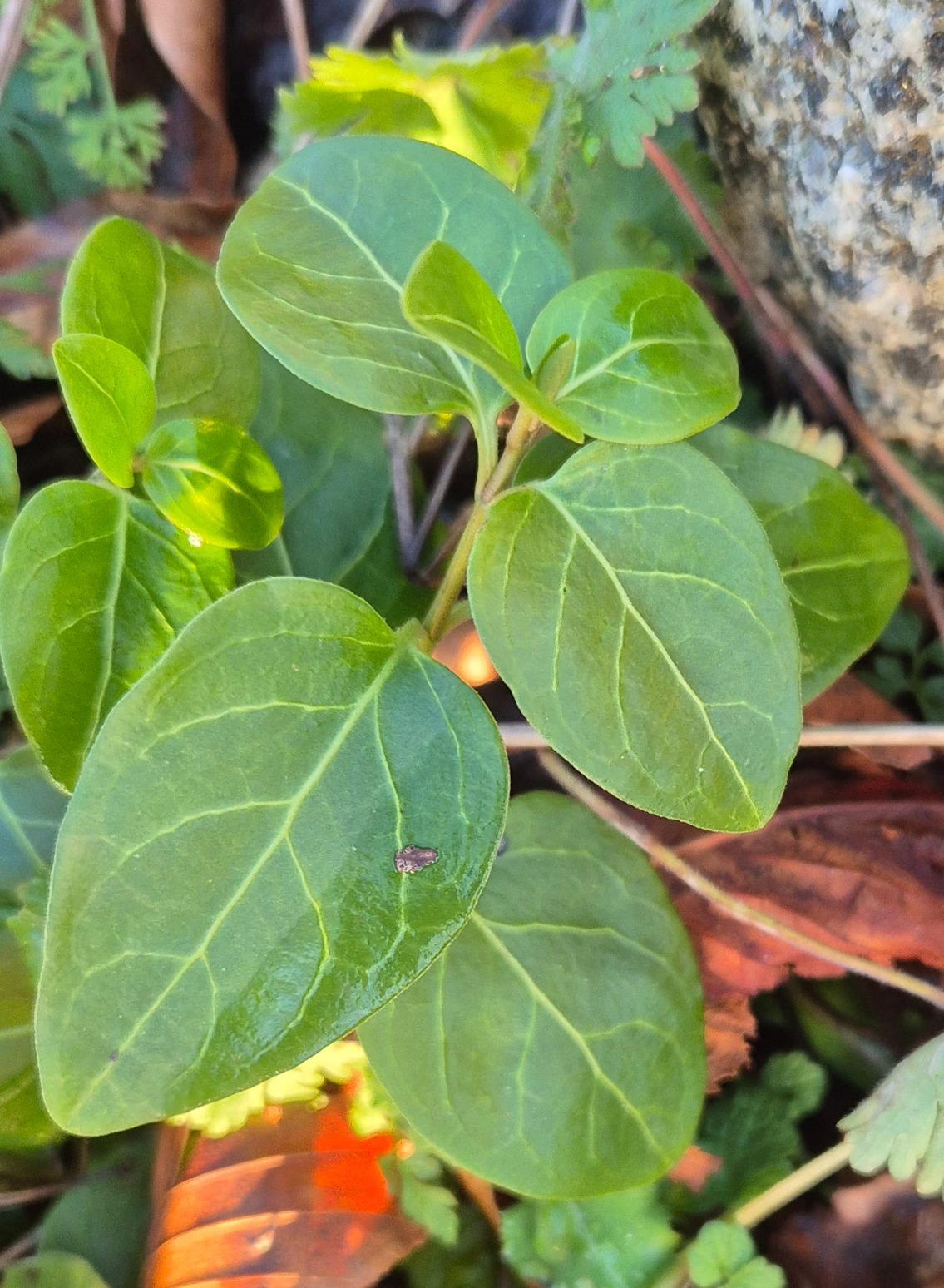
Vinca major is a trailing evergreen perennial growing 6-18 inches (15-45 cm) tall and spreading by arching stems that root at the tips, forming colonies 2-5 feet (60-150 cm) across or wider. The glossy dark green leaves are oval to heart-shaped, 1-3 inches (2.5-7 cm) long, with finely hairy margins. Blue-violet five-lobed flowers 1.5-2 inches (4-5 cm) across open from early spring into summer, with scattered later blooms. The plant grows in part shade to full shade and tolerates dry soil once established, spreading quickly to cover ground and suppress weeds. That vigor also makes it weedy: arching stems layer wherever they touch soil, and V. major is listed as an invasive species in California and parts of the southeastern and Pacific United States. The sap contains alkaloids that are toxic to humans and pets if eaten and can irritate skin. Hardy in USDA zones 7-11, it is grown as a groundcover on banks, in shade, and as a trailing plant in containers and window boxes.
Native Range
Vinca major is native to the western Mediterranean and southern Europe into North Africa, where it grows in woodland edges, hedgerows, and shaded rocky ground. It has naturalized widely in temperate regions, including much of North America.Suggested Uses
Used as an evergreen groundcover for shade, slope and bank stabilization, and underplanting beneath trees and shrubs, spaced 12-18 inches (30-45 cm) apart. The trailing stems are also grown to spill from containers, window boxes, and retaining walls. In regions where it is invasive, clumping shade perennials are substituted.How to Identify
Appearance
Size & Dimensions
Height6" - 1'6"
Width/Spread2' - 5'
Bloom Information
Main flowering runs from early spring into early summer, peaking in April and May, with scattered flowers appearing through the season. The solitary blue-violet flowers are held on upright stalks above the foliage. Bloom is heaviest in part shade and lighter in deep shade.
Detailed Descriptions
Foliage Description
Glossy dark green above, lighter beneathGrowing Conditions
Sun Requirements
Requires 2-6 hours of direct sunlight daily
• Full Sun: 6+ hours of direct sunlight
• Partial Shade: 3-6 hours of direct sunlight
• Full Shade: Less than 3 hours of direct sunlight
Care & Maintenance
Care Guide
Grow in part to full shade in most soils, from moist loam to dry ground under trees. Water new plants until established; afterward the groundcover tolerates drought and competes well with tree roots. It accepts a soil pH of 6.0-7.5 and needs no feeding. Stems root where they touch soil, so the planting spreads outward each year and may need cutting back at its edges. Shearing in late winter removes older growth and encourages dense regrowth. Hardy in USDA zones 7-11, it stays evergreen except in the coldest part of its range.Pruning
Shear or mow the planting in late winter or early spring to clear matted old stems before new growth begins. Trim runners through the season to hold the colony within bounds. Stems cut or pulled from the edges limit its spread into lawns and borders.Pruning Schedule
Prune: February–March
winterearly spring
Container Growing
Suitable for container growing
Minimum container size: 2 gallons