Veronica, Genus, speciosa, Species,
- Genus & species
New Zealand hebe
New Zealand (coastal North and South Islands)
Overview
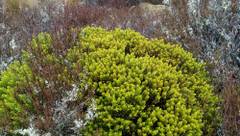
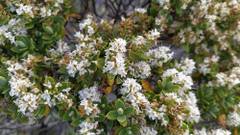
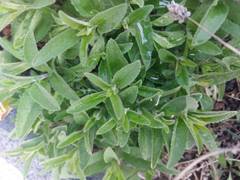
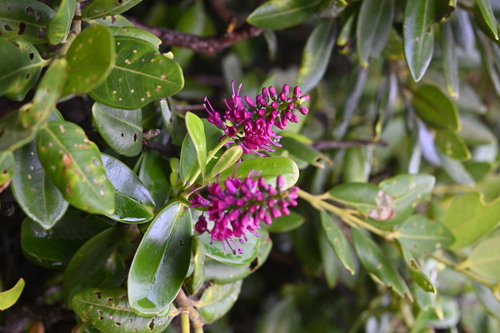
Veronica speciosa, long known as Hebe speciosa, is a rounded evergreen shrub reaching 2-5 feet (0.6-1.5 m) tall and as wide. The thick, glossy, paddle-shaped leaves are 2-4 inches (5-10 cm) long, dark green with reddish margins, and set in opposite pairs along stout stems. From summer into autumn it carries dense, bottlebrush-like flower spikes 2-4 inches (5-10 cm) long in magenta to reddish-purple, each spike packed with small four-lobed flowers that draw bees and butterflies. The shrub is native to a few coastal cliff sites in New Zealand and tolerates salt spray, wind, and poor, rocky soils. It is frost-tender, hardy only to about 25 F (-4 C), and is damaged or killed by hard freezes, restricting outdoor use to mild and coastal climates. In humid or poorly ventilated conditions the foliage is prone to downy mildew and leaf-spot fungi. Plants are short-lived, often declining after eight to ten years, and grow leggy without trimming. Many garden hybrids derive from this species, grown for the magenta flower colour on a compact frame. It strikes readily from semi-ripe cuttings.
Native Range
Veronica speciosa is endemic to New Zealand, where it grows wild at a small number of coastal cliff and headland sites on the North and South Islands. In the wild it is rare and restricted to exposed, rocky maritime ground.Suggested Uses
Grown as a compact flowering evergreen in coastal gardens, mixed borders, and large containers, spaced 30-36 inches (75-90 cm) apart. Suits seaside hedging, pollinator plantings, and frost-free patio displays. In cold regions it is kept as a container shrub moved under glass for winter.How to Identify
Appearance
Size & Dimensions
Height2' - 5'
Width/Spread2' - 5'
Bloom Information
Flowering runs from summer into autumn, often July to October, and scattered spikes can appear at other times in frost-free climates. Each magenta spike opens over two to three weeks, with the shrub producing a long succession. Bloom is heaviest in full sun near the coast.
Detailed Descriptions
Foliage Description
Dark greenGrowing Conditions
Sun Requirements
Requires 5-10 hours of direct sunlight daily
• Full Sun: 6+ hours of direct sunlight
• Partial Shade: 3-6 hours of direct sunlight
• Full Shade: Less than 3 hours of direct sunlight
Care & Maintenance
Care Guide
Grow in full sun to light shade in free-draining soil; sandy, rocky, and coastal sites suit it and it tolerates salt wind. Water moderately, letting the surface dry between waterings, as wet, heavy soil causes root rot. Shelter plants from hard frost, since growth is damaged below about 25 F (-4 C) and killed by sustained freezes. Trim lightly after the main bloom to keep the shrub dense and delay legginess. Good airflow reduces the downy mildew and leaf spot that affect crowded, humid plantings. Hardy outdoors only in USDA zones 9 through 10, it is grown in containers and overwintered under cover in colder areas.Pruning
Trim lightly after the main flush of flowers to remove spent spikes and shape the dome. Cut back leggy or frost-damaged stems in spring once new growth begins. Leafless old wood regrows slowly, so trimming stays within leafy growth.Pruning Schedule
Prune: March & October
fallearly spring
Container Growing
Suitable for container growing
Minimum container size: 5 gallons