Veronica, Genus, beccabunga, Species,
- Genus & species
brooklime
Europe, temperate Asia, and North Africa
Overview
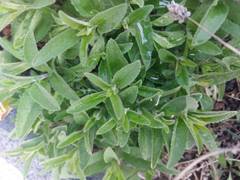
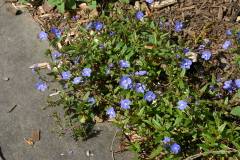
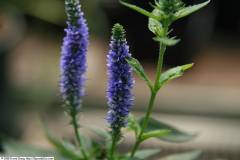
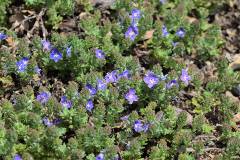
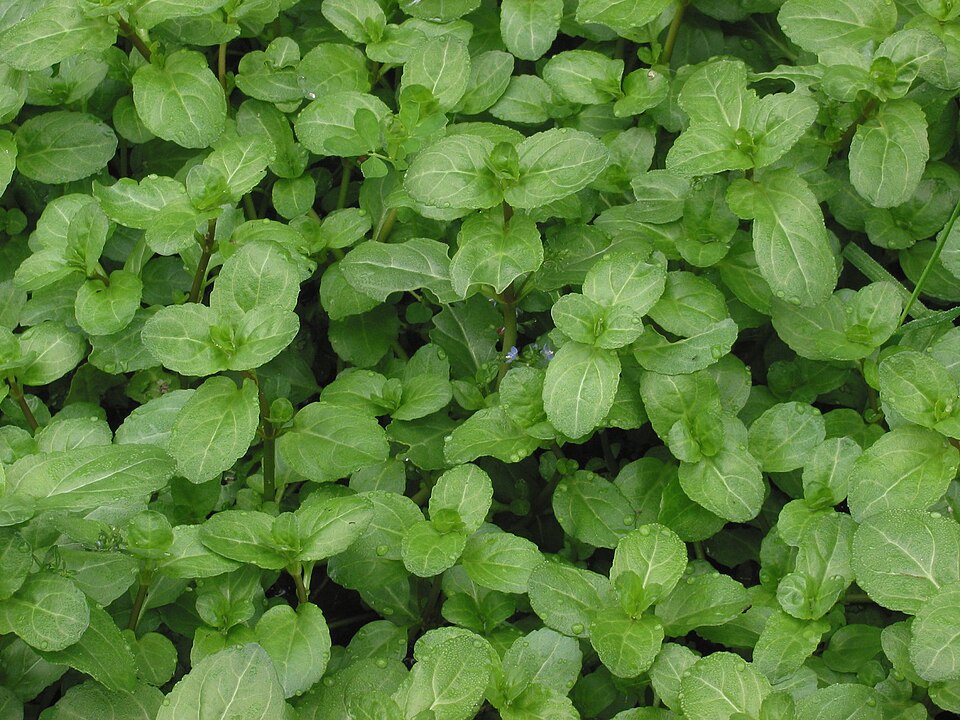
Veronica beccabunga is a low, sprawling aquatic perennial of the plantain family, reaching 8-24 inches (20-60 cm) in stem length with a creeping base that roots at the nodes. The hollow, fleshy stems lie along wet ground or float at the water surface before turning upward at the tips. Leaves are opposite, oval to oblong, 0.8-2.4 inches (2-6 cm) long, thick and somewhat glossy, with shallowly toothed margins. From the leaf axils rise loose racemes of flowers 0.2-0.3 inch (5-8 mm) across, each with four blue petals marked by a paler center and two protruding stamens. Flowering runs from May to September. The plant grows in slow streams, ditches, pond margins, and wet meadows, rooting in mud or shallow standing water a few inches deep. It spreads laterally by rooting stems and can form dense mats that crowd smaller marginal plants. Native across Europe, temperate Asia, and North Africa, it has naturalized in parts of North America. The succulent young shoots have a mild, cress-like flavor and have been eaten raw. Growth slows in deep shade and on sites that dry out in summer, where the stems become thin and sparse.
Native Range
Veronica beccabunga is native to Europe, temperate Asia, and North Africa, occurring throughout the British Isles and across mainland Eurasia. It has naturalized locally in eastern North America.Suggested Uses
Used along pond and stream margins, in bog gardens, and on the shallow shelf of wildlife ponds, where it creates cover for aquatic invertebrates and amphibians. The creeping stems stabilize muddy margins. Young shoots are also grown as an edible cress substitute.How to Identify
Appearance
Size & Dimensions
Height8" - 2'
Width/Spread1' - 3'
Bloom Information
Detailed Descriptions
Flower Description
blue with white centerFoliage Description
mid-green, glossyGrowing Conditions
Sun Requirements
Requires 4-8 hours of direct sunlight daily
• Full Sun: 6+ hours of direct sunlight
• Partial Shade: 3-6 hours of direct sunlight
• Full Shade: Less than 3 hours of direct sunlight
Care & Maintenance
Care Guide
Grows in full sun to part shade in constantly wet soil or shallow water up to 4 inches (10 cm) deep. It tolerates pond margins, bog gardens, and the edges of slow streams, and roots from stem fragments pressed into wet mud. Soil pH from 6.0 to 8.0 is suitable, with no need for added fertility in mineral-rich water. Stems can be cut back when they spread beyond their intended area, as rooting nodes establish new plants quickly. In water that warms and stagnates, growth can thin, while moving water keeps foliage denser. Hardy to USDA zone 5, it dies back to rooted basal stems over winter.Pruning
Spreading stems can be cut back at any point in the growing season to limit lateral spread. Cut stems are removed from the water to stop them rooting elsewhere. No structural pruning is required.Pruning Schedule
summer
Container Growing
Suitable for container growing
Minimum container size: 1 gallons