Verbesina, Genus, spp., Multiple species,
- Genus
- Multiple species
crownbeards
Americas, centered in Mexico and the southern United States
Overview
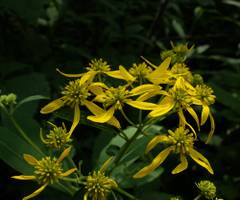
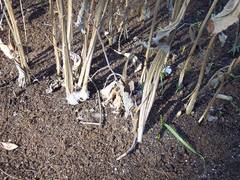
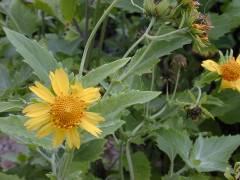
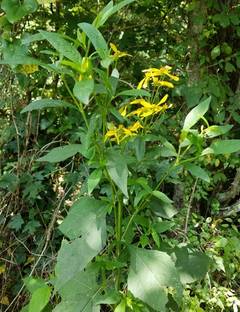
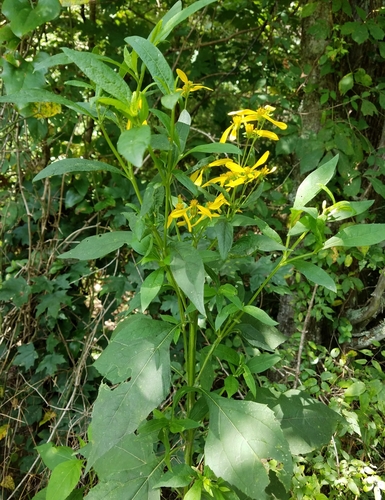
Verbesina is a genus of roughly 300 species in the family Asteraceae, including annual and perennial herbs and some shrubs, native mainly to the warmer parts of the Americas. Many species are tall, upright plants 2-8 ft (0.6-2.4 m) high, with several reaching 10 ft (3 m) in moist ground; stems are often winged with leaf-derived flanges, as in wingstem (V. alternifolia). Leaves are alternate or opposite, lance-shaped to oval, 3-10 inches (8-25 cm) long, rough-textured, and frequently running down the stem as wings. Flower heads are daisy-like, 0.5-2 inches (1.3-5 cm) across, with yellow or white ray florets surrounding a yellow to brownish disc, carried in branched clusters at the stem tips. Most species bloom from late summer into autumn and draw bees, butterflies, and other insects to the open heads. Frostweed (V. virginica) is known for splitting its lower stem in early frosts and extruding thin ribbons of ice. Several species spread freely by seed and can form dense colonies in disturbed and moist ground, crowding lower vegetation. Height, hardiness, and lifespan differ across the genus.
Native Range
Native to the Americas, with the greatest concentration of species in Mexico and the southern United States, extending into Central and South America and the Caribbean.Suggested Uses
Used in native plant gardens, wet meadows, pollinator plantings, and rain gardens, and along pond and stream margins where the soil stays moist. The late-season flowers supply nectar for migrating butterflies and the seed feeds birds into winter. Vigorous, self-seeding species are placed where their spread can be accommodated.How to Identify
Appearance
Size & Dimensions
Height2' - 10'
Width/Spread1' - 3'
Bloom Information
Flowering is concentrated in late summer and autumn (August-October) for most temperate species, with subtropical members blooming over a longer season. The open heads are visited by bees, butterflies, and migrating monarchs drawing nectar before frost. Seed ripens through autumn and feeds finches and other small birds.
Detailed Descriptions
Foliage Description
GreenGrowing Conditions
Sun Requirements
Requires 5-12 hours of direct sunlight daily
• Full Sun: 6+ hours of direct sunlight
• Partial Shade: 3-6 hours of direct sunlight
• Full Shade: Less than 3 hours of direct sunlight