Verbesina, Genus, virginica, Species,
- Genus & species
frostweed
Overview
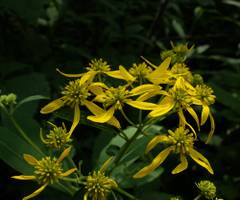
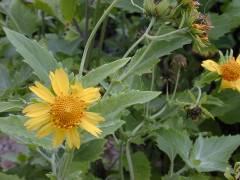
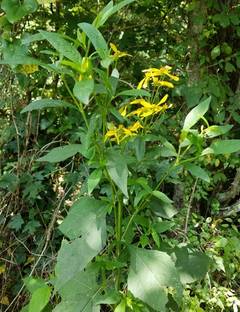
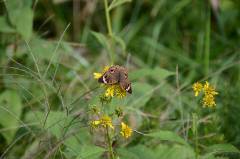
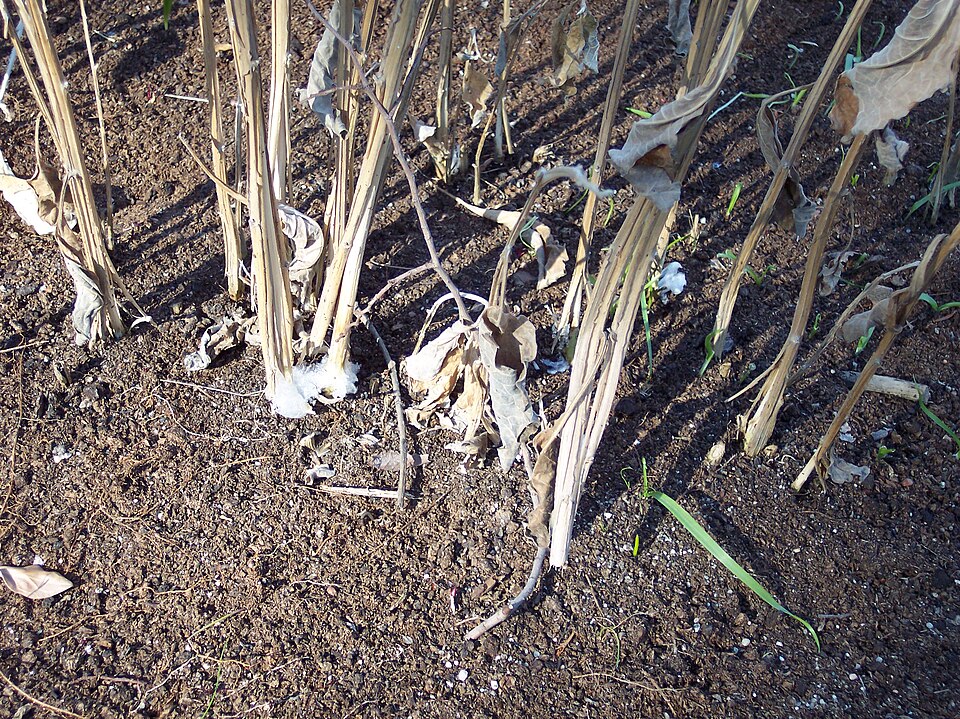
Verbesina virginica, commonly called frostweed or white crownbeard, is a tall North American perennial in the daisy family, reaching 3-6 feet (90-180 cm) on stout stems lined with conspicuous lengthwise wings. The alternate leaves are broadly lance-shaped, grey-green, and rough to the touch, 4-10 inches (10-25 cm) long, tapering down the winged stem. From late summer into autumn the stems are topped by broad, flattened clusters of small white flower heads, each head with a few short ray florets around a white centre. The autumn flowers are a heavy nectar source and draw bees, butterflies, and migrating monarchs. The common name comes from a winter phenomenon: on the first hard freeze, sap expands and splits the lower stem, pushing out thin, curling ribbons of ice known as frost flowers. The plant grows in light woodland, shaded edges, and stream banks on moist soils, spreading by seed and short rhizomes. Its height and slender stems can lean or flop in rich soil or deep shade, and it self-sows freely where conditions suit.
Native Range
Native to the eastern and central United States, from the Mid-Atlantic and Midwest south to Texas and Florida, and into northeastern Mexico. It grows in moist woodlands, thickets, and floodplain edges.Suggested Uses
Planted in native and pollinator gardens, woodland edges, rain gardens, and naturalized shade borders. It is a late-season nectar source and produces a winter ice-ribbon display. Its height suits the back of a border or an informal planting.How to Identify
Appearance
Size & Dimensions
Height3' - 7'
Width/Spread1' - 3'
Bloom Information
Flowering runs from late summer into autumn, roughly September to November, later than most native perennials. The white clusters open over several weeks. Seed ripens through autumn and feeds birds into winter.
Detailed Descriptions
Foliage Description
grey-greenGrowing Conditions
Sun Requirements
Requires 3-7 hours of direct sunlight daily
• Full Sun: 6+ hours of direct sunlight
• Partial Shade: 3-6 hours of direct sunlight
• Full Shade: Less than 3 hours of direct sunlight