Verbena, Genus, officinalis, Species,
- Genus & species
common vervain
Overview
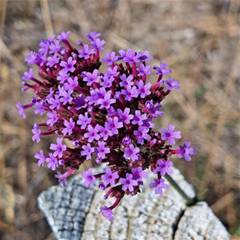
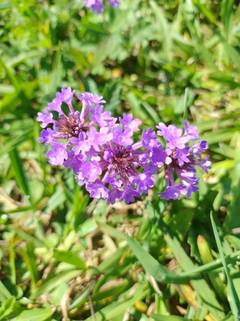
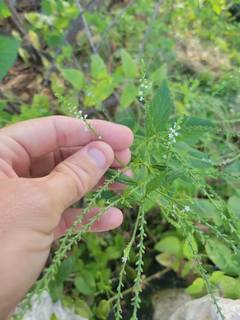
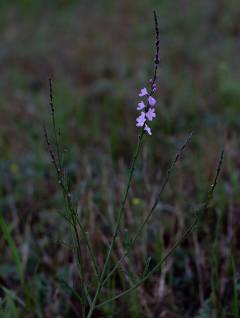
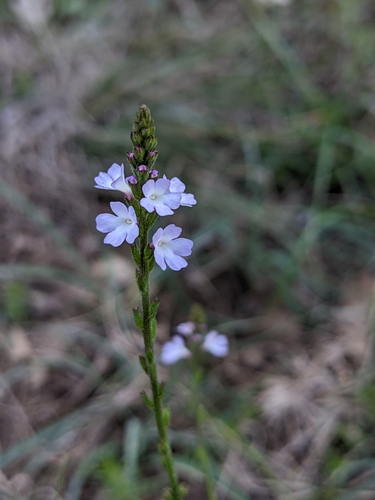
Verbena officinalis, common vervain, is an upright, wiry perennial in the vervain family, growing 12-30 inches (30-75 cm) tall on stiff, square, much-branched stems that feel rough to the touch. The lower leaves are deeply cut and lobed, while the upper leaves are smaller and narrower; all are grey-green and coarsely toothed. The branching stems end in long, thin, almost leafless spikes that carry many tiny pale lilac to mauve flowers, each about 0.1-0.2 inch (3-5 mm) across with five notched lobes. Only a few flowers open at once, working slowly up each slender spike over a long season. After flowering the spikes lengthen and bear small dry nutlets. The plant has a tough, woody rootstock and a sparse, see-through outline that lets it weave among other plants. It grows on dry, sunny, disturbed ground, road verges, waste places, and grassland on poor soils. Native to Europe, North Africa, and Asia and naturalized more widely, it has a long history of use in folk medicine and ritual, though modern evidence for its effects is limited.
Native Range
Native to Europe, North Africa, and much of Asia, and naturalized in North America and elsewhere. It grows on dry, sunny, disturbed ground, including road verges, field edges, waste places, tracks, and thin grassland on poor, well-drained soils.Suggested Uses
Grown in wildlife and pollinator gardens, gravel gardens, and naturalistic or prairie-style plantings, where its airy spikes mingle with other perennials and grasses. It has a long history as a herbal and ritual plant and is sometimes grown in herb gardens.How to Identify
Appearance
Size & Dimensions
Height1' - 2'6"
Width/Spread1' - 1'6"
Colors
Foliage Colors
Bloom Information
Flowers over a long season from early summer to early autumn, mainly June to September, with a few small lilac flowers open at once near the tips of the lengthening spikes. The flowers draw bees and other small insects. Dry nutlets form below the open flowers as the spikes extend.
Detailed Descriptions
Foliage Description
grey-greenGrowing Conditions
Sun Requirements
Requires 6-12 hours of direct sunlight daily
• Full Sun: 6+ hours of direct sunlight
• Partial Shade: 3-6 hours of direct sunlight
• Full Shade: Less than 3 hours of direct sunlight
Care & Maintenance
Care Guide
Grows in full sun in light, free-draining soil and tolerates dry, poor, stony, and chalky ground once established. It withstands drought through a woody taproot and resents heavy, wet soil that rots the crown. It self-seeds where the ground is open, and seedlings are easily moved or removed while small. It needs no feeding and little water in a suitable sunny spot. In rich soil it grows lank and may flop, so lean conditions suit it better.Pruning
Cutting the stems back to the base in late autumn or early spring clears the spent growth before new shoots appear. Removing the flower spikes before seed sets limits self-seeding. No other pruning is needed.Pruning Schedule
Prune: March & November
fallearly spring