Verbascum, Genus, thapsus, Species,
- Genus & species
common mullein
Europe, western Asia, and northern Africa; roadsides, gravel banks, disturbed sites, and dry open ground from sea level to approximately 8,000 feet (2,400 m).
SunFull Sun
Overview
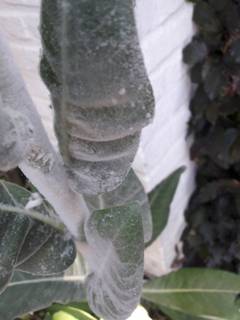
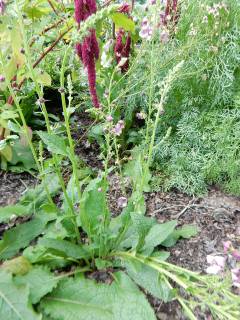
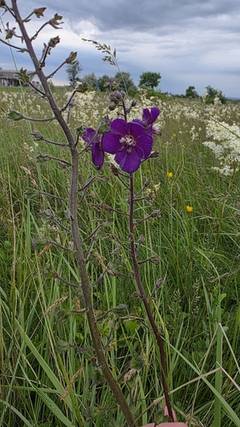
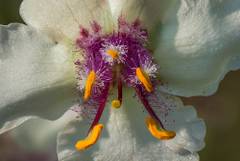
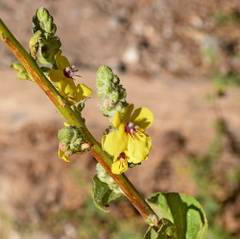
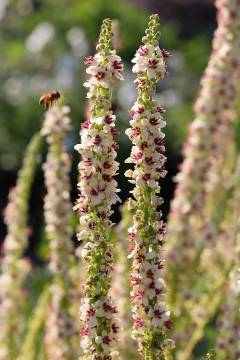
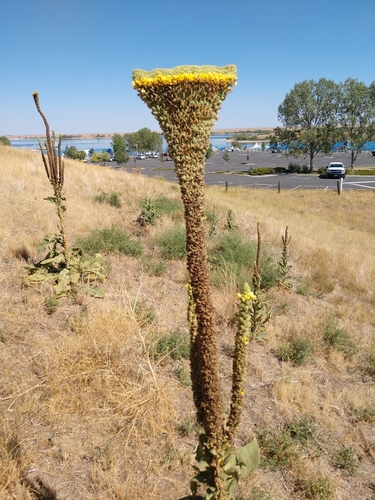
Verbascum thapsus is a stout densely woolly biennial reaching 24-84 inches (60-210 cm) tall and 18-36 inches (45-90 cm) wide. First-year plants form a large basal rosette up to 24 inches (60 cm) across. Rosette leaves are oblong to oblanceolate, 4-16 inches (10-40 cm) long, densely woolly on both surfaces with soft branched (stellate) hairs, gray-green, and the thick woolly texture is the primary field identification feature. Second-year flowering stems are stout, erect, unbranched or occasionally with a few short side branches, densely woolly, with leaf bases (wings) running down the stem in the decurrent pattern typical of the genus. Five-petaled yellow flowers 0.6-0.8 inch (15-20 mm) across open from June through August, sessile and densely packed on a terminal spike 6-24 inches (15-60 cm) long; stamens are all yellow with no purple beards, a key separation from V. blattaria. Fruit is a rounded capsule 0.2-0.3 inch (6-8 mm) containing numerous tiny seeds, and a single plant produces 100,000-240,000 seeds. The soil seed bank remains viable for over a century, placing V. thapsus among the longer-lived weed seed banks documented in temperate weed biology (comparable to Malva neglecta at 100+ years and surpassing Rumex crispus at 50-80 years). The taproot reaches 12-24 inches (30-60 cm) deep. Hardy in USDA zones 3-9 (-40°F / -40°C) and widespread across Pacific Northwest roadsides, gravel banks, and disturbed sites. Non-toxic.
Native Range
Verbascum thapsus is native to Europe, western Asia, and northern Africa, where it grows on roadsides, gravel banks, disturbed sites, and dry open ground from sea level to approximately 8,000 feet (2,400 m). The species has naturalized across all 50 U.S. states and all Canadian provinces and is widespread as a tall roadside biennial across the Pacific Northwest.Suggested Uses
The species is used in plant morphology courses for the stellate (branched) hair trichome structure, which is visible under a dissecting microscope and is characteristic of the genus and of Scrophulariaceae. The decurrent leaf-base structure where the leaf wings run down the stem is a teaching feature for leaf architecture terminology. The two-year biennial rosette-to-bolt life cycle, with the first-year rosette collecting energy reserves for the second-year flowering stalk, is a teaching example of biennial life history in weed biology. The century-plus soil seed bank longevity is a primary teaching example in seed ecology alongside Malva neglecta (100+ years) and Rumex crispus (50-80 years). Foliage and flowers have a long historical record of use in European herbal medicine as leaf and flower infusions, and the dried second-year stalks have been used as demonstration torches in ethnobotany.How to Identify
Appearance
Size & Dimensions
Height2' - 7'
Width/Spread1'6" - 3'
Bloom Information
Sessile yellow five-petaled flowers 0.6-0.8 inch (15-20 mm) across open from June through August on a dense terminal spike 6-24 inches (15-60 cm) long, with a total bloom span of 3-4 weeks. Individual flowers open somewhat randomly along the spike rather than strictly sequentially from base to tip, so a given spike carries open flowers scattered over its length through the bloom period. Flowers are pollinated by bees and other insects. Seeds mature 4-6 weeks after flowering. In the Pacific Northwest, the tall flowering stalks persist through fall and winter as dried brown structures that remain identifiable at a distance.
Detailed Descriptions
Flower Description
Yellow; five-petaled flowers 0.6-0.8 inch (15-20 mm) across sessile and densely packed on a terminal spike 6-24 inches (15-60 cm) long; all-yellow stamensFoliage Description
Gray-green; densely woolly on both surfaces with soft branched (stellate) hairs producing a felt-like texture; first-year basal rosette leaves oblong to oblanceolate 4-16 inches (10-40 cm) long; second-year stem leaves progressively smaller upward, with leaf bases (wings) running down the stem (decurrent)Growing Conditions
Sun Requirements
Requires 6-12 hours of direct sunlight daily
• Full Sun: 6+ hours of direct sunlight
• Partial Shade: 3-6 hours of direct sunlight
• Full Shade: Less than 3 hours of direct sunlight