Verbascum, Genus, 'Southern Charm', Cultivar,
- Genus
- Cultivar
southern charm verbascum
Garden hybrid origin; parent species from Europe, the Mediterranean, and western Asia.
Overview
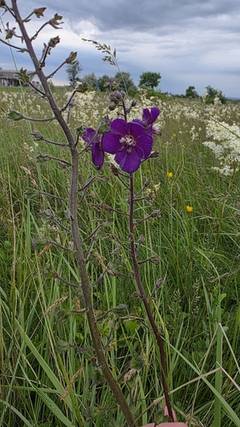
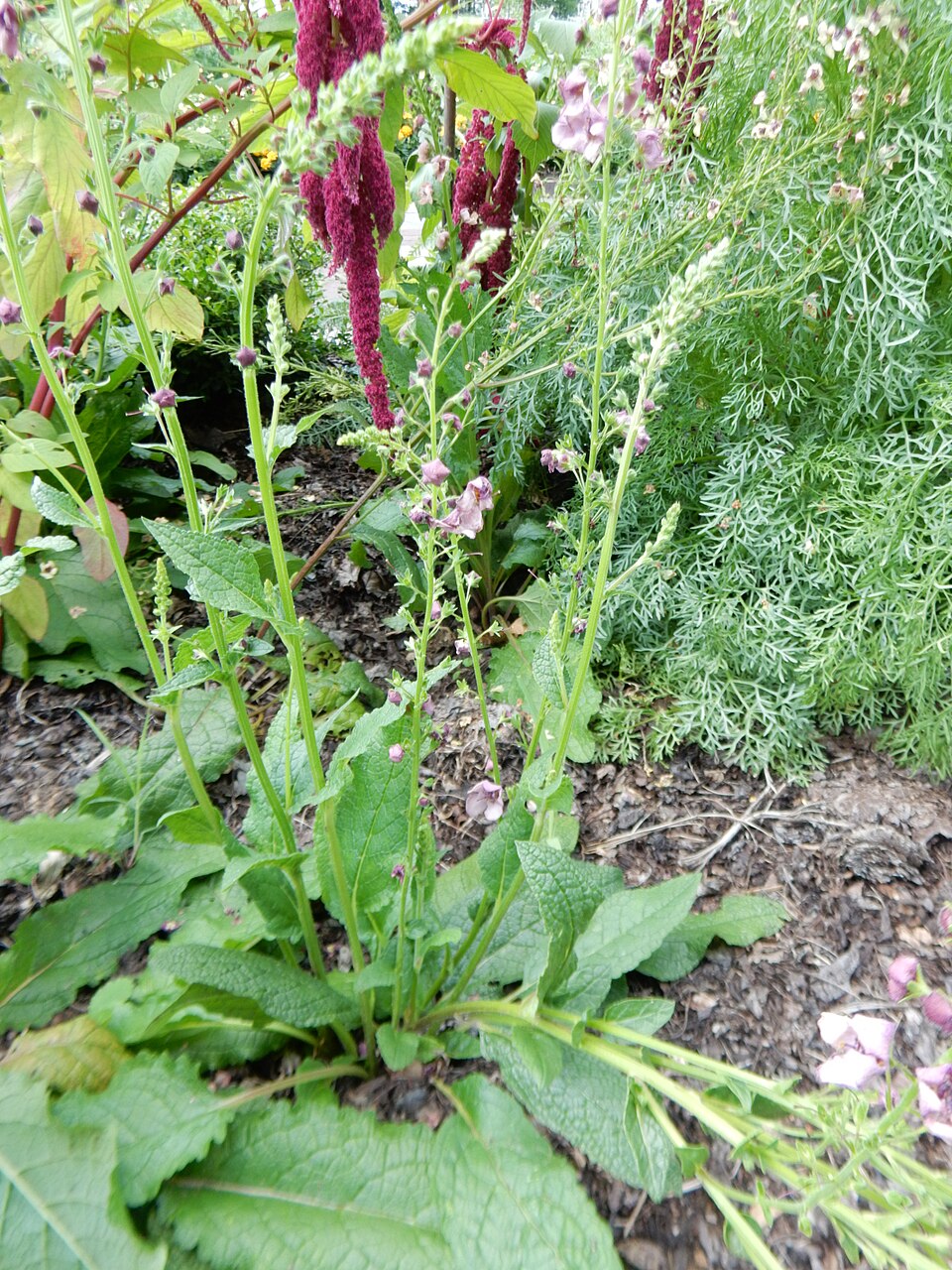
Verbascum 'Southern Charm' is a short-lived herbaceous perennial or biennial of garden hybrid origin (listed under Verbascum × hybridum) reaching 24-36 inches (60-90 cm) tall and 18-24 inches (45-60 cm) wide. Plants form a basal rosette of ovate to elliptic, softly hairy, gray-green leaves 4-8 inches (10-20 cm) long. Slender branching stems bear flat-faced five-petaled flowers 1 inch (2.5 cm) across from June through August; colors on a single plant include apricot, blush-pink, buff-cream, and soft lilac-pink, each flower centered by a small fuzzy purple-stamened eye. Cutting all stems back by two-thirds immediately after the first flush in late July to early August produces a second flush in September-October. Hardy in USDA zones 5-9; plants decline after 2-3 years and modest self-seeding produces replacement plants where soil is open and drainage is sharp. In heavy or wet soils, crown rot limits lifespan to a single season. Pastel colors hold their saturation in cool summer climates such as the Pacific Northwest; in hot-summer regions, colors bleach by August.
Native Range
Verbascum 'Southern Charm' is a hybrid of garden origin (listed under Verbascum × hybridum). The parent Verbascum species are native to dry grasslands, rocky slopes, and disturbed open ground across Europe, the Mediterranean region, and western Asia.Suggested Uses
Planted in cottage gardens, mixed perennial borders, and naturalistic plantings at 18-24 inch (45-60 cm) spacing in USDA zones 5-9. The pastel mix of apricot, blush-pink, buff-cream, and soft lilac-pink on branching stems combines with Lavandula, Nepeta, soft pink roses, and silver-leaved companions. The branching airy habit integrates into mixed borders more readily than tall single-spike species mulleins such as V. olympicum. Stems cut when two-thirds of the flowers on a spike are open hold 5-7 days in a vase. Not grown in wet heavy soils, where crown rot limits plants to a single season.How to Identify
Appearance
Size & Dimensions
Height2' - 3'
Width/Spread1'6" - 2'
Bloom Information
Flat-faced five-petaled flowers 1 inch (2.5 cm) across open on branching stems from June through August in the first flush, with individual flowers lasting 2-4 days. Cutting all stems back by two-thirds immediately after the first flush in late July to early August produces a second flush in September-October; without this cutback, the plant sets seed and declines without reblooming. Pastel color saturation holds through the full bloom period in cool-summer climates such as the Pacific Northwest; in hot-summer regions, apricot and pink tones fade by early August.
Detailed Descriptions
Flower Description
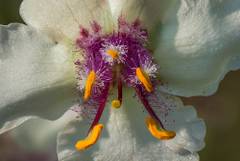
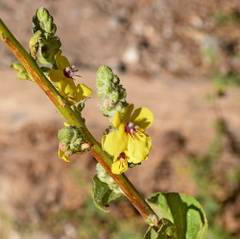
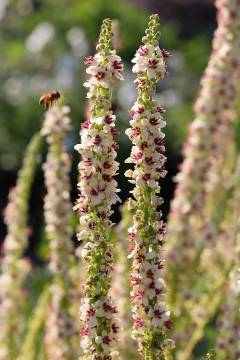
Mixed pastels on the same plant: apricot, blush-pink, buff-cream, and soft lilac-pink; flat-faced five-petaled flowers 1 inch (2.5 cm) with a small fuzzy purple-stamened center; carried on branching stemsFoliage Description
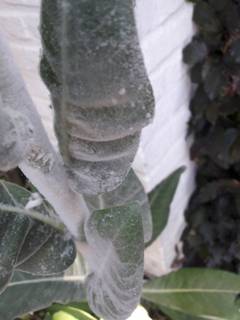
Gray-green, ovate to elliptic, 4-8 inches (10-20 cm), softly hairy on both surfaces; forms a basal rosetteGrowing Conditions
Sun Requirements
Requires 6-8 hours of direct sunlight daily
• Full Sun: 6+ hours of direct sunlight
• Partial Shade: 3-6 hours of direct sunlight
• Full Shade: Less than 3 hours of direct sunlight
Care & Maintenance
Care Guide
Plants grow in full sun in lean to average, sharply drained, neutral soil with a pH of 6.0-7.5, including sand and chalk. Hardy in USDA zones 5-9 (-20°F / -29°C). Rich or consistently moist soils produce soft, sprawling, overly vegetative growth with reduced flowering and shorter lifespan; lean, free-draining ground produces the most compact flowering plants. Cutting all stems back by two-thirds after the first flush induces a reliable second flush. In Pacific Northwest winters, sites with sharp drainage extend lifespan; in heavy wet soils, crown rot limits plants to a single year. Replacement every 2-3 years is standard, with self-sown seedlings substituting in open ground.Pruning
Cut all stems back by two-thirds immediately after the first bloom flush in late July to early August to induce a second flush in September-October. Cut all remaining stems to 2-3 inches (5-8 cm) above ground in late fall or early spring. A small number of plants left uncut after the second flush drop seed and produce self-sown seedlings the following spring in open or disturbed soil.Pruning Schedule
Prune: March & July–August
summerearly spring