Verbascum, Genus, phoeniceum, Species,
- Genus & species
purple verbascum
Central and eastern Europe through to Central Asia; dry grasslands, steppes, and open rocky slopes.
Overview
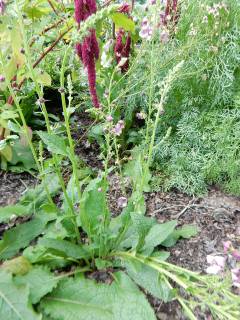
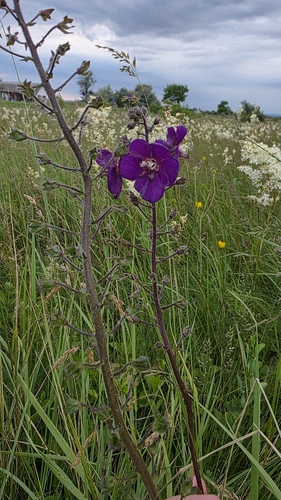
Verbascum phoeniceum is a short-lived herbaceous perennial or biennial reaching 24-36 inches (60-90 cm) tall and 12-18 inches (30-45 cm) wide. The specific epithet 'phoeniceum' means 'purple-red', referencing the flower color of the type species. Plants form basal rosettes of ovate to oblong dark green leaves 3-6 inches (8-15 cm) long with slightly rugose upper surfaces and lightly hairy undersides. Slender erect branching stems carry loosely arranged flat-faced five-petaled flowers 1 inch (2.5 cm) across from May through July in purple to violet-purple, with pink and white color forms in cultivation; each flower has a central cluster of white-woolly filaments. Hardy in USDA zones 4-9 (-30°F / -34°C). Cutting all stems back by two-thirds after the first flush induces side-shoot reblooming into July-August. Plants are short-lived at 2-3 years before declining; modest self-seeding on open ground produces replacement plants, and in lean soils a self-sustaining colony can persist for decades through successive seedling generations. The species is the primary parent of most garden hybrid mulleins, including 'Southern Charm' and other pastel color strains in the V. × hybridum group.
Native Range
Verbascum phoeniceum is native to dry grasslands, steppes, open scrub, and rocky slopes from central Europe (Austria, Hungary, Slovakia, Romania) east through Ukraine, Russia, Turkey, the Caucasus, and Central Asia. Plants grow in well-drained, neutral to alkaline, lean soils in full sun.Suggested Uses
Planted in cottage gardens, meadow gardens, gravel gardens, and naturalistic plantings at 12-18 inch (30-45 cm) spacing in USDA zones 4-9, with self-seeding allowed on bare open ground to produce a self-sustaining colony. The slender branching flower stems and early-season (May-June) bloom combine with Allium, early Salvia, Nepeta, and silver-leaved companions such as Stachys byzantina. The species is the primary parent of garden hybrid mulleins including 'Southern Charm'. Cut stems cut when the lower flowers on a branch are half-open hold 5-7 days in a vase. Not grown in heavy clay or consistently wet soils, where crown rot limits lifespan to 1-2 years.How to Identify
Appearance
Size & Dimensions
Height2' - 3'
Width/Spread1' - 1'6"
Bloom Information
Slender branching flower stems carry loosely arranged flat-faced five-petaled flowers 1 inch (2.5 cm) across from May through July, for a total bloom span of 6-8 weeks in the first flush. Cutting all stems back by two-thirds immediately after the first flush induces side-shoot reblooming into July-August. Individual flowers last 2-4 days; new flowers open continuously on the branching inflorescence during the bloom period.
Detailed Descriptions
Flower Description
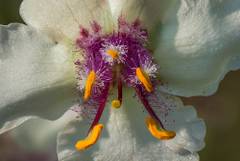
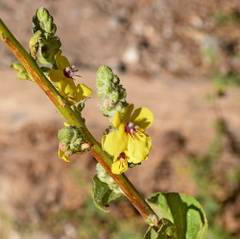
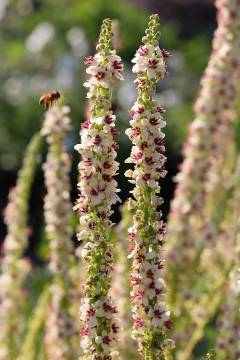
Purple to violet-purple in the type species, with white and pink color forms in cultivation; flat-faced five-petaled flowers 1 inch (2.5 cm) across with a central cluster of white-woolly filaments; carried loosely on slender branching stemsFoliage Description
Dark green; ovate to oblong, slightly rugose on the upper surface, lightly hairy beneath; forms a basal rosetteGrowing Conditions
Sun Requirements
Requires 6-8 hours of direct sunlight daily
• Full Sun: 6+ hours of direct sunlight
• Partial Shade: 3-6 hours of direct sunlight
• Full Shade: Less than 3 hours of direct sunlight
Care & Maintenance
Care Guide
Plants grow in full sun in lean, sharply drained, neutral to slightly alkaline soil with a pH of 6.0-8.0, including sand, rocky ground, and chalk. Hardy in USDA zones 4-9 (-30°F / -34°C). In heavy or consistently moist soils, crown rot develops within one or two wet winters and plants are short-lived at 1-2 years. In lean free-draining soils, plants persist 2-3 years and self-seed readily on bare ground; self-sown seedlings substitute for declining parent plants in established colonies. Rich or moist soils reduce flowering and shorten lifespan. Division is not practiced; propagation is from seed or from self-sown seedlings.Pruning
Cut all stems back by two-thirds immediately after the first bloom flush in late June to early July to induce side-shoot reblooming into August. Cut all remaining stems to 2-3 inches (5-8 cm) above ground in late fall or early spring before new growth begins. Plants left unpruned after the second flush set seed and produce self-sown seedlings on nearby bare ground; seedlings can be thinned to 12-18 inch (30-45 cm) spacing.Pruning Schedule
Prune: March & July
summerearly spring