Tragopogon, Genus, spp., Multiple species,
- Genus
- Multiple species
salsifies
Europe, North Africa, and temperate Asia
SunFull Sun
Overview
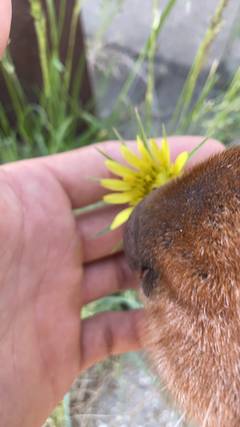
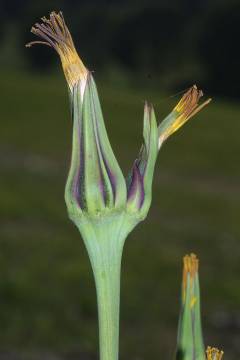
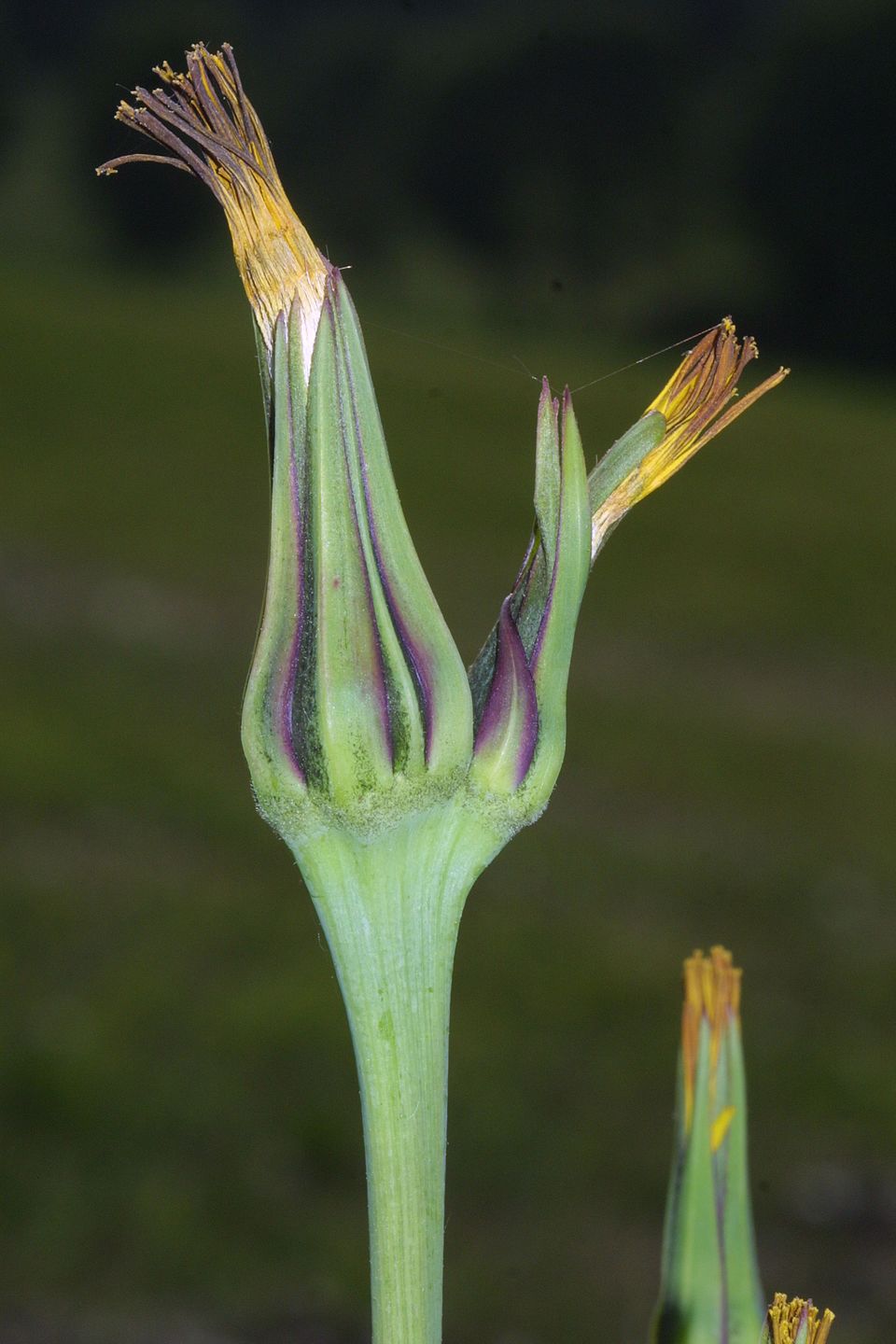
Tragopogon is a genus of about 140 species of biennial and perennial herbs in the family Asteraceae, native to Europe, North Africa, and temperate Asia, with several species now naturalized across North America and elsewhere. Plants form a basal rosette in the first season and send up branched flowering stems 12 to 48 inches (30 to 120 cm) tall, all parts exuding a milky latex when cut. The leaves are narrow, grass-like, and clasping, tapering to a long point and often slightly glaucous. Solitary flower heads open at the stem tips and consist entirely of strap-shaped ray florets, coloured yellow in species such as T. pratensis or dull purple to violet in T. porrifolius; the heads close by midday in bright weather. Surrounding the florets is a ring of long, pointed bracts that extend beyond the petals. After flowering, each head develops into a large spherical seed cluster up to 4 inches (10 cm) across, each seed carried on a feathery parachute resembling an oversized dandelion clock. T. porrifolius is grown as a root vegetable. Most species behave as biennials, dying after setting seed, and spread readily from the wind-borne seed.
Native Range
Native to Europe, North Africa, and temperate Asia, with the center of diversity around the Mediterranean and western Asia. Several species, including T. dubius and T. pratensis, have naturalized widely across North America.Suggested Uses
T. porrifolius is grown in vegetable gardens for its edible taproot, which has a mild flavour. The wild species appear in meadows, verges, and disturbed ground, and the seed heads are cut for dried arrangements. The flowers are visited by bees and hoverflies.How to Identify
Appearance
Size & Dimensions
Height1' - 4'
Width/Spread8" - 1'6"
Colors
Foliage Colors
Bloom Information
Detailed Descriptions
Flower Description
yellow or purple to violetFoliage Description
green to grey-greenGrowing Conditions
Sun Requirements
Requires 6-12 hours of direct sunlight daily
• Full Sun: 6+ hours of direct sunlight
• Partial Shade: 3-6 hours of direct sunlight
• Full Shade: Less than 3 hours of direct sunlight
Water & Climate
Water Needs
Drought Tolerance
Drought tolerant when established
Care & Maintenance
Care Guide
Tragopogon species grow in full sun on a wide range of well-drained soils, including poor, stony, and sandy ground. They tolerate drought once the deep taproot is established and need little supplementary water. Soil pH from 6.0 to 7.5 suits the genus, and overly rich soil produces forked, misshapen roots in the cultivated salsify. Seed of biennial species is sown in spring for a root harvest the following autumn and winter. Plants self-seed freely and can spread beyond where they are sown.Pruning
Pruning is not practised on these herbaceous plants. Removal of developing seed heads limits self-sowing where the plants are not wanted to spread. Flowering stems can be cut to the base after seed set to tidy the plant.Toxicity
Non-toxicPlanting Guide
Planting Methods & Timing
Planting Method
direct sow
Direct Sow Timing
In early spring as soon as the soil can be worked
Days to Maturity
110–150 days
Plant Spacing
3 inches