Tradescantia, Genus, spp., Multiple species,
- Genus
- Multiple species
spiderworts
Overview
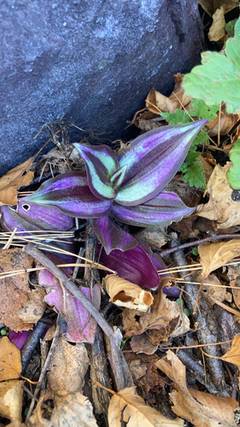
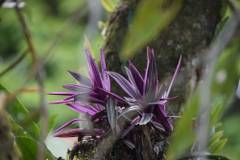
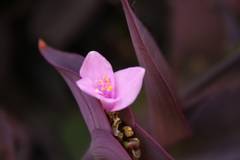
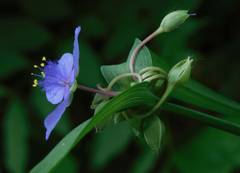
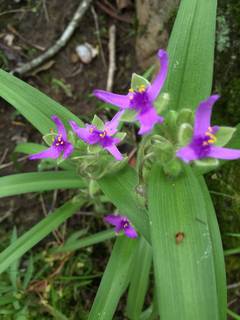
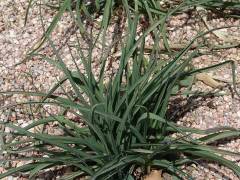
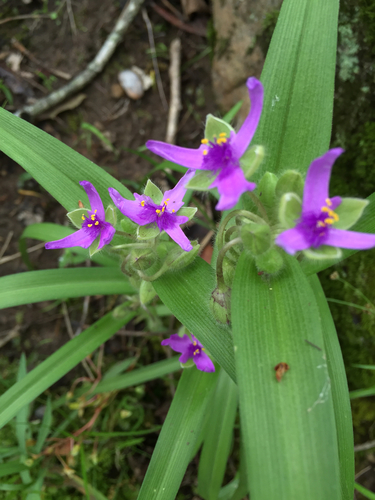
Tradescantia is a genus of about 75 species of herbaceous perennials in the family Commelinaceae, native to the Americas from southern Canada to northern Argentina. Most species form clumps 15–60 cm (6–24 in) tall of arching, grass-like to lance-shaped leaves 15–45 cm (6–18 in) long that clasp jointed, somewhat fleshy stems. The stems exude a mucilaginous sap when broken. Flowers have three rounded petals in shades of blue, violet, purple, pink, or white, 2–4 cm (0.8–1.6 in) across, carried in terminal clusters above two leaf-like bracts. Each flower opens for a single day, usually closing by afternoon, with new buds opening in succession over several weeks. Trailing species such as T. zebrina and T. fluminensis root at the nodes and creep rather than form upright clumps. Six yellow-tipped stamens sit at the center of each flower, often fringed with hairs. The sap can cause skin irritation on contact in sensitive individuals. After flowering, upright species may become floppy and can be cut back. Plants spread by rhizomes and self-seeding, and some species naturalize aggressively outside their native range.
Native Range
The genus is native to the Americas, ranging from southern Canada through the United States, Mexico, and Central America into South America as far as northern Argentina. Centers of diversity occur in Mexico and the eastern United States.Suggested Uses
Used in borders, cottage plantings, rain gardens, and naturalized areas where the arching foliage and daily flowers fill mid-height gaps. Trailing species are grown in hanging baskets and as indoor foliage plants. The spreading habit and self-seeding limit use in tightly controlled formal beds.How to Identify
Appearance
Size & Dimensions
Height6" - 2'
Width/Spread1' - 2'
Bloom Information
Flowering runs from late spring through summer, generally May to August in temperate gardens, with individual flowers lasting a single day. Clusters open a few flowers at a time over a period of six to ten weeks. In hot climates flowering may pause during peak summer heat and resume as temperatures fall.
Detailed Descriptions
Flower Description
blue, violet, purple, pink, or whiteFoliage Description
greenGrowing Conditions
Sun Requirements
Requires 4-8 hours of direct sunlight daily
• Full Sun: 6+ hours of direct sunlight
• Partial Shade: 3-6 hours of direct sunlight
• Full Shade: Less than 3 hours of direct sunlight
Water & Climate
Water Needs
Care & Maintenance
Care Guide
Most species grow in full sun to part shade, flowering more freely with at least four hours of direct sun. They tolerate a wide range of soils but favor moist, fertile ground with a pH near 5.0 to 7.0. Hardy species such as T. virginiana survive winters across USDA zones 4–9, while tender trailing species are limited to zones 9–11 or grown as houseplants. Consistent moisture keeps foliage from browning, though established plants tolerate short dry spells. Clumps spread steadily by rhizomes and may need division every few years. Some species self-seed and can spread beyond their intended area.Pruning
Cutting stems back by half after the first flush of bloom reduces flopping and can prompt a second round of flowers. Foliage that yellows in midsummer can be sheared to the ground to produce fresh growth. Removing spent flower clusters limits self-seeding.Pruning Schedule
Prune: June–July
summer
Container Growing
Suitable for container growing
Minimum container size: 1 gallons